If you run or work in a catering business, this guide will help you get food hygiene right without overcomplicating it. We’ll walk through a practical 10-point food handler code and explain how good food safety management, supported by a digital system, helps you stay compliant, consistent, and inspection-ready.
Contents
Why a food handler code matters
1–2. Personal hygiene and illness reporting
3–5. Clothing and behaviour in food areas
6–8. Safe food handling and temperature control
9–10. Cleaning and hygienic handling
Making it stick day to day
Why a food handler code matters
Every food business in the UK must have controls in place to protect customers from foodborne illness. Inspectors don’t just look at paperwork — they look at what staff actually do. A clear food handler code gives everyone simple rules to follow, whether they’re prepping salads, cooking burgers, or washing up.
When these rules are backed up with proper HACCP records and daily checks, they form the backbone of effective food safety management.
1–2. Personal hygiene and illness reporting
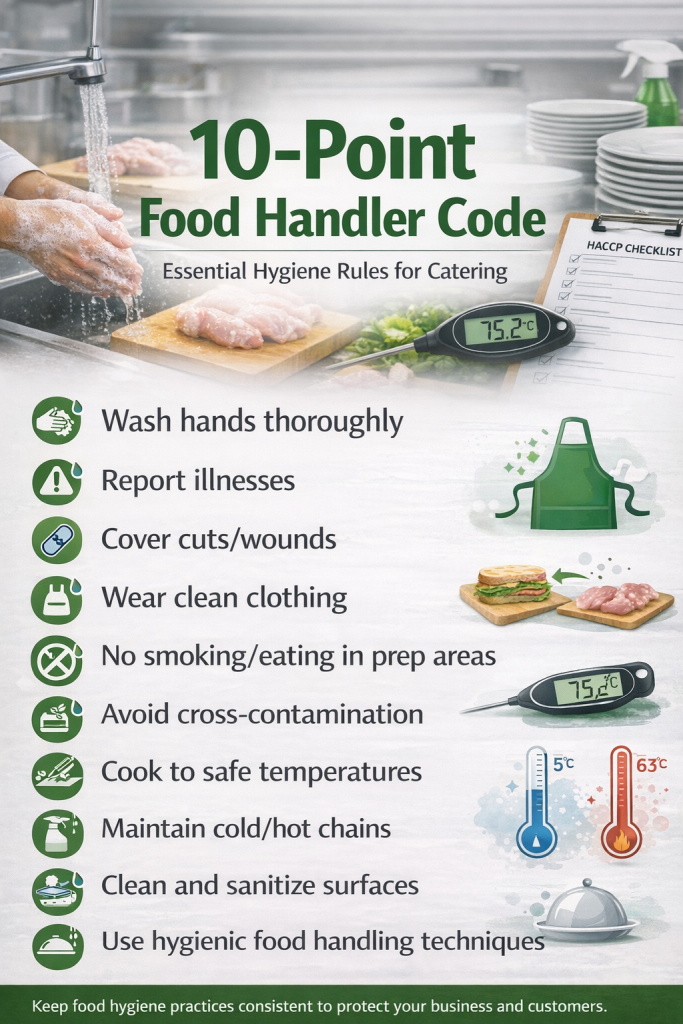
Wash hands thoroughly and often
Handwashing is one of the biggest factors inspectors focus on. Hands should be washed before touching food, between tasks, after handling raw meat, and after using the toilet. In a busy kitchen, it’s easy to rush, but shortcuts here can undo all other controls.
Soap, hot water, and proper drying are essential. Gloves don’t replace handwashing — they’re only effective when used correctly.
Report illness immediately
Staff with vomiting, diarrhoea, or infected cuts must not handle food. Even “mild” symptoms can spread bacteria. In practice, this means creating a culture where staff feel able to report illness without fear.
Recording fitness-for-work decisions digitally helps show inspectors you’re managing this risk properly.
3–5. Clothing and behaviour in food areas
Cover cuts and wear clean clothing
Any cut or wound must be covered with a brightly coloured, waterproof dressing. Protective clothing such as aprons should be clean and changed when contaminated. This is especially important in open kitchens where customers can see food being prepared.
No eating, drinking, or smoking
Eating or chewing gum in prep areas is a common compliance failure. These habits introduce contamination risks and look unprofessional during inspections.
Clear rules, backed by training records, make expectations obvious for all staff.
6–8. Safe food handling and temperature control
Avoid cross-contamination
Raw meat, poultry, and seafood must be kept separate from ready-to-eat foods. In a café, that might mean storing raw bacon on the bottom shelf of the fridge and using separate boards for sandwiches.
This is where good systems matter. Logging cleaning between tasks and tracking fridge layouts supports consistent food safety management.
Cook food thoroughly
Food must be cooked thoroughly to kill harmful bacteria. While guidance allows different time-temperature combinations, the key is proving food reaches a safe internal temperature.
Digital probes and recorded checks make this easier and more reliable than paper logs.
Maintain hot and cold chains
Cold food should be kept at 5°C or below, and hot food above 63°C unless you’re using controlled time limits. Buffets, hot holding units, and delivery bags are common weak points.
Keeping clear temperature records helps protect customers and supports your aim to improve food hygiene rating scores.
9–10. Cleaning and hygienic handling
Clean and sanitise properly
Cleaning removes visible dirt; sanitising reduces bacteria. Both are required. Surfaces, utensils, and equipment should be cleaned between tasks and at the end of service.
Digital cleaning schedules reduce missed tasks and give inspectors confidence in your controls.
Use hygienic food handling techniques
Food handlers should avoid coughing or sneezing over food and keep food covered when stored. Ready-to-eat foods should be handled as little as possible.
These basics are easy to forget under pressure, which is why reminders and checklists matter.
Making it stick day to day
The challenge isn’t knowing the rules — it’s applying them every day. Staff turnover, busy services, and paperwork fatigue all get in the way.
This is where digital food safety records help. Instead of chasing paper logs, managers can see at a glance whether checks are being done, including temperature logs, cleaning tasks, and allergen management controls.
All guidance used here aligns with advice from the Food Standards Agency, which inspectors rely on when assessing compliance.
Conclusion
A clear 10-point food handler code gives staff confidence and protects your customers. When those rules are supported by consistent records and simple daily checks, compliance becomes routine rather than stressful.
Food-Safety.app is a food safety management system for UK catering businesses that helps turn these principles into everyday habits. If you’re looking for a simpler way to manage checks, records, and inspections, a digital food safety app is a practical next step worth exploring.