If you run a catering or hospitality business, understanding the 5 key food safety rules makes food safety management simpler and more consistent. This guide explains what they mean in practice and how a food safety app can help you stay organised and compliant.
Table of Contents
- Why the 5 food safety rules matter
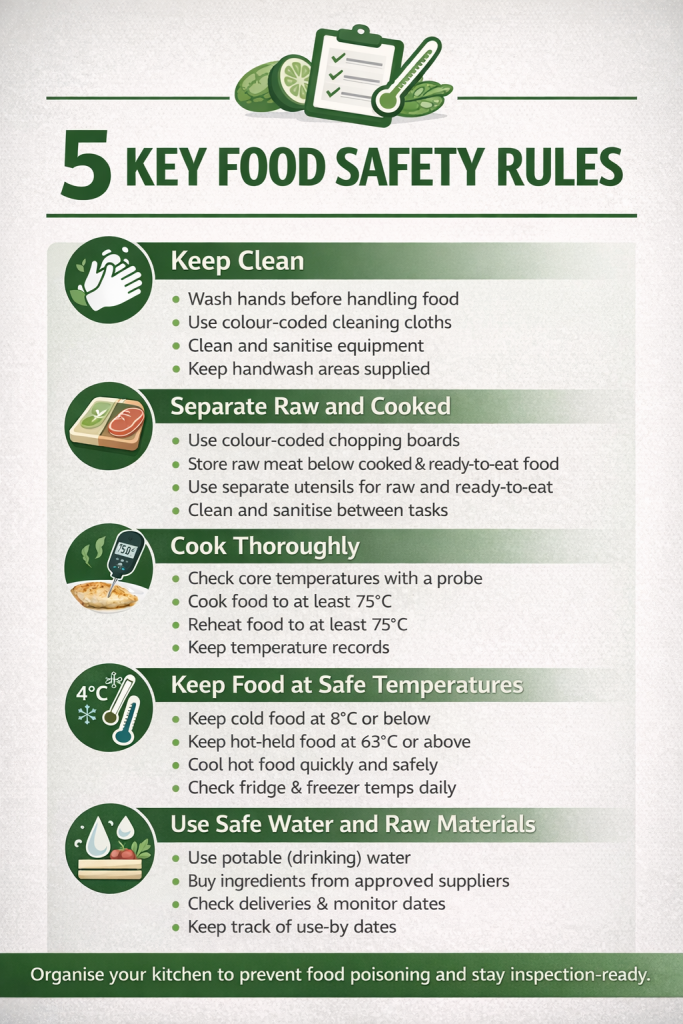
- 1. Keep clean
- 2. Separate raw and cooked
- 3. Cook thoroughly
- 4. Keep food at safe temperatures
- 5. Use safe water and raw materials
- Turning the 5 rules into daily food safety management
Why the 5 food safety rules matter
The World Health Organization’s 5 keys to safer food line up closely with UK legal requirements. In the UK, you must follow hygiene laws under the Food Safety Act 1990 and retained EU Regulation 852/2004.
In simple terms, you’re legally required to:
- Keep food safe
- Prevent contamination
- Control temperatures
- Work to a documented food safety system
The Food Standards Agency makes it clear that every food business must base its procedures on HACCP principles.
For busy kitchens, cafés and takeaways, the five rules are a practical way to organise your food safety management so nothing important gets missed during a rush.
1. Keep clean
Cleaning isn’t just about appearances. It’s about stopping harmful bacteria from spreading.
Personal hygiene in real kitchens
Staff must wash their hands:
- Before handling food
- After handling raw meat
- After using the toilet
- After cleaning or handling waste
You also need dedicated handwash basins with hot and cold water, soap and hygienic drying. Using the prep sink for handwashing is a common reason for enforcement action.
Cleaning schedules and records
Every catering business should have a clear cleaning schedule. That includes what gets cleaned, how often, and with what chemicals.
This is where digital food safety records can make life easier. Instead of paper sheets going missing, staff can log cleaning tasks as they’re completed, creating a clear audit trail for inspections.
2. Separate raw and cooked
Cross-contamination remains one of the biggest causes of foodborne illness in the UK.
In practice, this means keeping raw meat completely separate from ready-to-eat foods like salads, cooked meats and desserts.
What separation looks like day to day
In a typical catering kitchen, you should:
- Store raw meat on the bottom shelf of the fridge
- Use colour-coded chopping boards
- Clean and disinfect between tasks
- Keep raw and ready-to-eat prep areas separate where possible
Preparing a chicken fillet and then slicing tomatoes on the same board without proper disinfection is exactly the type of risk Environmental Health Officers look for.
Clear procedures supported by accurate HACCP records show that you’ve identified and controlled these hazards properly.
3. Cook thoroughly
Cooking food to the right temperature kills harmful bacteria.
UK guidance states that food should reach a core temperature of 75°C for at least 30 seconds, or an equivalent time and temperature combination.
Practical examples for caterers
- Burgers must be cooked all the way through
- Large joints need temperature checks at the thickest point
- Reheated food should reach 75°C again
Relying on appearance alone isn’t enough. A calibrated probe thermometer is essential.
Recording cooking temperatures as part of your HACCP records helps demonstrate due diligence if anything is ever questioned.
4. Keep food at safe temperatures
Temperature control is one of the most common areas where businesses lose marks during inspections.
In England, chilled high-risk food must be kept at 8°C or below by law, although best practice is 5°C or below. Hot food must be held at 63°C or above.
Common pressure points
- Overloaded fridges during busy service
- Cooked food left out to cool too slowly
- Hot holding units not properly checked
You should be checking and recording fridge, freezer and hot holding temperatures daily.
Using digital food safety records makes this quicker and more reliable, especially when multiple team members are involved across shifts.
Consistent monitoring not only protects customers, it can also help improve food hygiene rating scores by showing strong management control.
5. Use safe water and raw materials
Safe food starts with safe ingredients.
You must:
- Use potable (drinking-quality) water
- Buy from reputable, traceable suppliers
- Check deliveries for damage, temperature and date codes
- Never use food past its use-by date
Stock rotation (first in, first out) is essential in busy kitchens.
Supplier checks and delivery logs should form part of your documented system. If you can’t show where your food came from, you’re exposed during an inspection or food safety incident.
Turning the 5 rules into daily food safety management
The five rules are straightforward. The challenge is applying them consistently when you’re short-staffed, busy, or covering multiple services.
That’s why structured food safety management is so important.
Instead of relying on memory or scattered paperwork, many UK catering businesses now use digital systems to:
- Store HACCP records
- Log temperature checks
- Track cleaning schedules
- Manage allergen management
- Maintain clear audit trails
Food-Safety.app is a food safety management system for UK catering businesses. It’s designed to bring these daily tasks into one simple, structured platform so nothing gets overlooked.
The 5 key food safety rules aren’t complicated, but they do require consistency and evidence. If you’re looking to make compliance easier and more organised, it may be worth exploring how a food safety app can support your team and help you stay confidently inspection-ready.