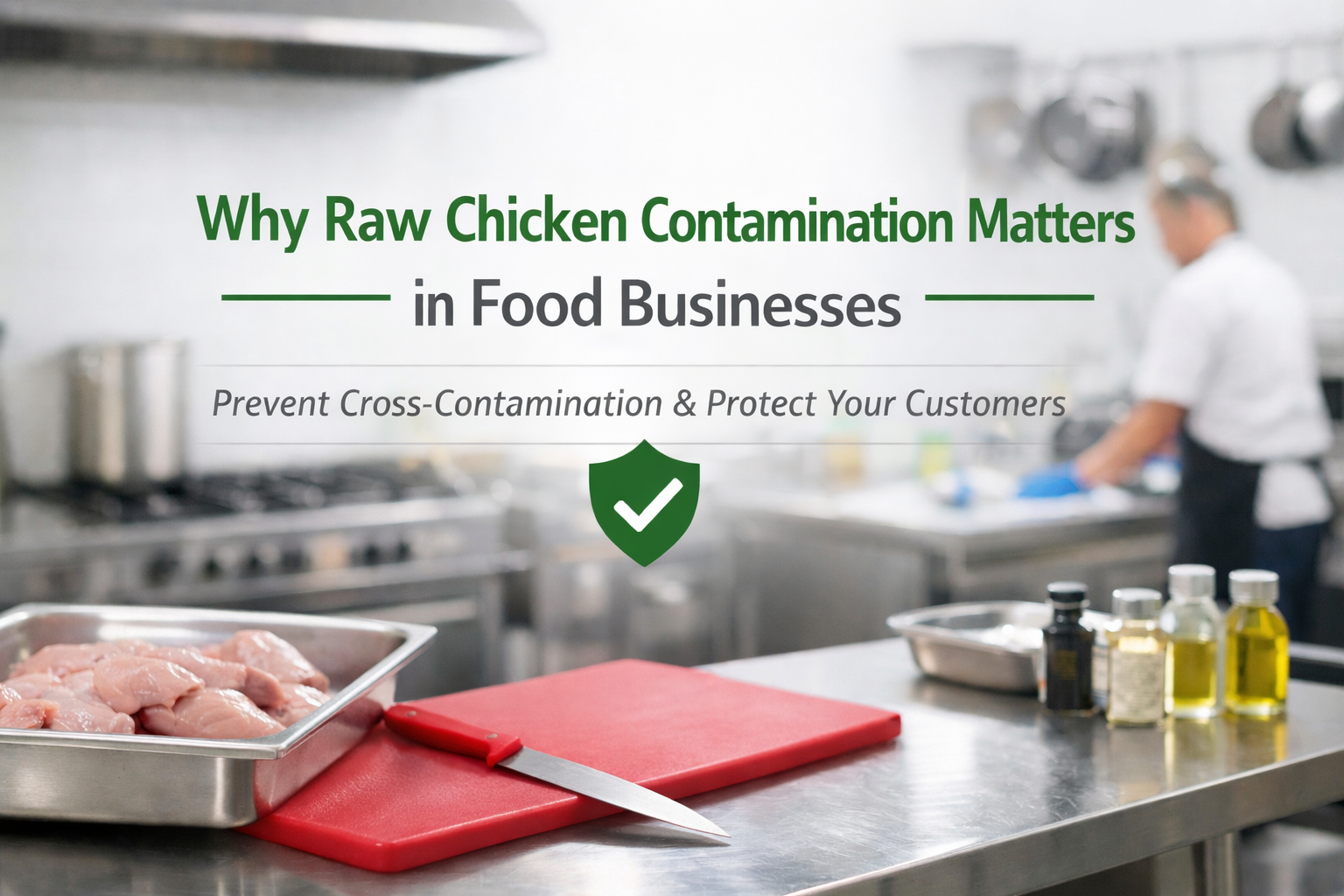
Raw chicken is one of the main causes of food poisoning in kitchens when it’s not handled safely. Bacteria like Campylobacter and Salmonella are commonly found in raw poultry and can spread easily without careful controls. (Food Standards Agency)
For food businesses, preventing contamination from raw chicken is part of your food safety management system and something Environmental Health Officers will check during inspections.
What makes raw chicken risky
Raw poultry often carries bacteria that don’t make the meat look or smell unsafe. These bacteria can transfer to other food, surfaces or hands. This movement of bacteria is called cross-contamination. (Food Standards Agency)
The main issues include:
- Contact with ready-to-eat food
Juices from raw chicken can drip onto salads or cooked food. - Shared equipment
Using the same board or knife for raw and ready food without cleaning can spread bacteria. - Poor hand hygiene
Touching other items before washing hands spreads germs.
Even a tiny bit of contamination can undo good processes and cause food poisoning. (food-safety.app)
Key steps to prevent raw chicken contamination
1. Separate raw chicken from other food
- Store raw poultry below ready-to-eat food in fridges.
- Keep it covered in leak-proof containers.
- Don’t let raw meat touch other foods.
These steps stop juices from dripping or spreading. (Food Standards Agency)
2. Use dedicated tools
- Have a separate chopping board and knife for raw chicken.
- Label or colour-code equipment so staff know what’s for raw prep.
- Clean and sanitise immediately after use.
This avoids bacteria moving from raw chicken to other foods or surfaces.
3. Wash hands and surfaces
- Staff should wash hands before and after handling raw chicken.
- Surfaces and tools should be cleaned and disinfected right away.
Hand hygiene is one of the simplest but most effective steps.
4. Cook chicken properly
Cooking to the correct internal temperature kills harmful bacteria. Chicken should be cooked thoroughly until hot all the way through. (Pilla)
How a food safety management system helps
A strong food safety management system means you have clear processes to prevent issues like raw chicken contamination. Ready-made plans and checklists make daily routines easier to follow and record. (food-safety.app)
Paper vs digital
Paper records can get lost, ticked late or ignored. Digital systems like the Food-Safety App help by:
- Keeping accurate, time-stamped records
- Prompting staff with reminders
- Making it easy to show compliance during inspections
This improves food hygiene paperwork and consistency. (food-safety.app)
Simple checklist for staff (use every day)
When handling raw chicken:
- Store chicken at the bottom of the fridge in a sealed container.
- Use separate boards and knives for raw chicken.
- Wash hands before and after touching poultry.
- Clean surfaces immediately after use.
- Record all checks in your food safety logs.
This list helps teams stay in control and supports your food hygiene training resources.
Why this matters for your food hygiene rating
Environmental Health Officers will look for underlying control, not just clean floors. They want to see that you:
- Understand risks like raw chicken contamination
- Have effective routines in place
- Keep clear and complete records
Good practices help you get and keep a strong food hygiene rating.
Related reading
- For more on what makes foods high risk and how to control them, see High-risk vs low-risk foods: what you really need to control on Food-Safety.app. (food-safety.app)
- For a step-by-step food safety plan that supports daily checks and training, see Build a simple food safety system your team will use. (Assuming internal site article exists; adjust title to match your site’s exact content.)
Takeaways
Raw chicken contamination is one of the most common causes of foodborne illness when it’s not handled right. The good news is that simple, consistent steps like separation, cleaning and recording make risk manageable.
Using a good digital food safety management system helps your team follow checks reliably, supports training and gives you organised control of food hygiene paperwork.
If you want tools that help staff keep contamination under control and make compliance easier, explore the Food-Safety App for checklists, records and resources that fit your business.