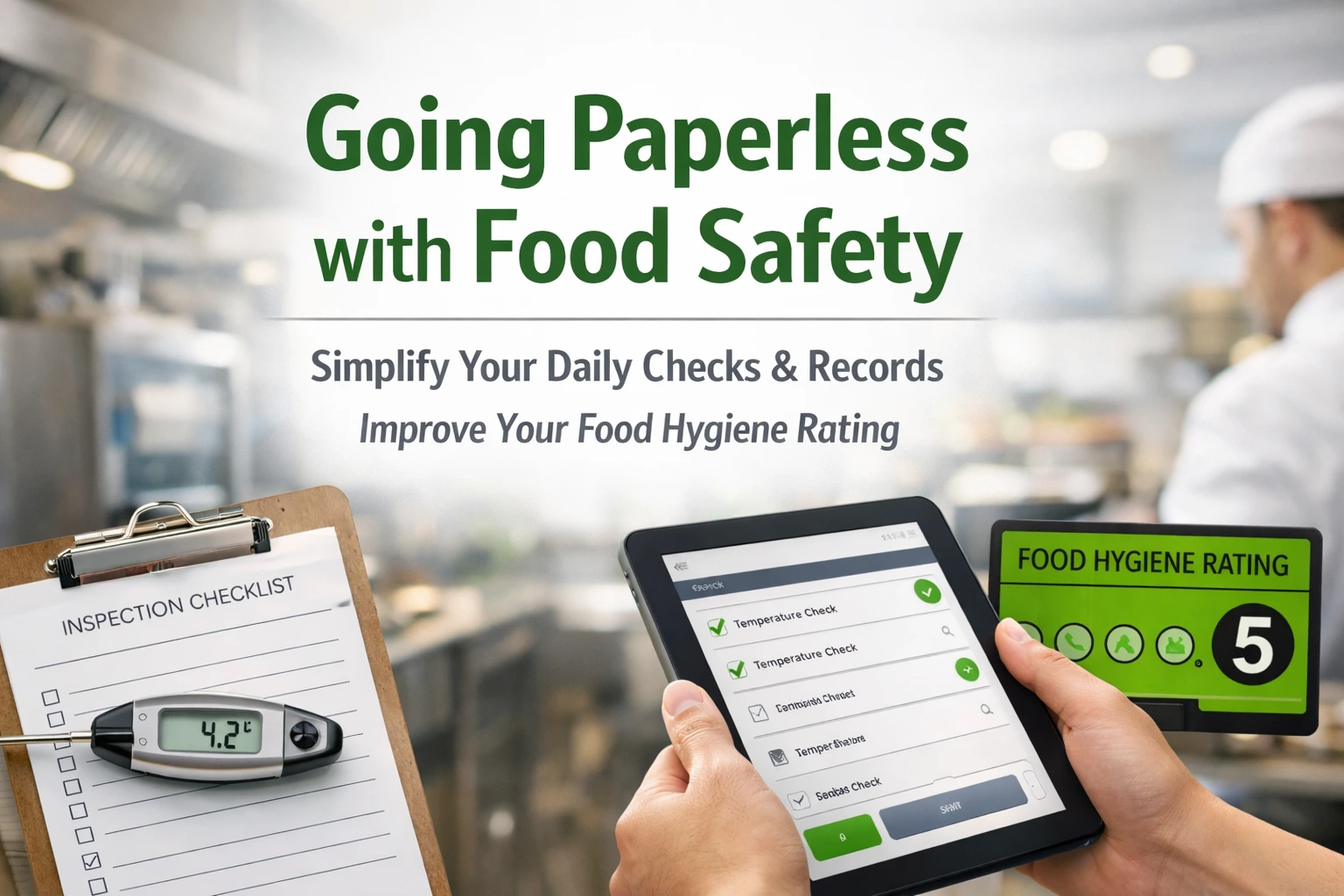
If you want an easier way to protect your food hygiene rating and stay on top of food safety without drowning in paperwork, you’re in the right place. This guide explains simple steps busy UK hospitality owners can use to improve compliance with a practical digital food safety management system.
Table of Contents
- Why Food Hygiene Ratings Matter
- What Inspectors Look For
- Daily checks and records
- Training and consistency
- The Limits of Paper-Based Systems
- How Digital Food Safety Helps
- Faster daily checks
- Clear records for inspections
- Tips to Improve Your Score
- Conclusion
Why Food Hygiene Ratings Matter
If you run a café, restaurant, takeaway or catering business in the UK, your food hygiene rating matters. Customers see it before they walk in. Local authorities use it when they inspect you. A good score builds trust and shows you take food safety seriously.
Inspectors assess how well you manage risks and how confident they are that you’ll keep food safe day after day. Good practices count, but they must also be backed up with solid records of what you do. (food-safety.app)
What Inspectors Look For
When an inspector comes, they’re checking a few key areas. One big part is your food safety management system and the evidence you keep to show it’s working.
Daily Checks and Records
Inspectors want to see that you’re doing key tasks every day. These include:
- Temperature checks for hot and cold food
- Cleaning and sanitising schedules
- Delivery and goods-in checks
- Corrective actions when something goes wrong
If these checks are inconsistent or missing, it can hurt your score even if the kitchen looks clean. Many businesses miss marks here because paperwork gets lost or rushed. (food-safety.app)
Training and Consistency
Training isn’t a one-off task. Inspectors check that your team know what to do and that records show they’ve been trained and are following your procedures. A reliable food safety management system should help with this.
The Limits of Paper-Based Systems
Traditional paper food hygiene paperwork has limits. It’s easy for sheets to go missing. Busy teams may forget to fill things in. Managers often spend time chasing logs instead of solving issues.
When an inspection happens, a pile of paper can be hard to present in a clear way. That increases stress and can impact your score, even if the kitchen itself is safe.
Paper systems are also hard to update. Changes in process or training can leave you with old forms in circulation.
How Digital Food Safety Helps
A digital food safety management system makes records easier to create, find and use. It supports busy teams and can help your business stay consistent.
Faster Daily Checks
With a digital tool, your team can complete temperature and cleaning checks on a phone or tablet as they go. There’s no need to print sheets or hunt for forms.
Digital checks are automatically time-stamped and stored. That saves time and reduces errors.
Clear Records for Inspections
One of the biggest benefits is having inspection-ready records. If an inspector asks for yesterday’s temperatures or last week’s training log, you can show them instantly.
This makes your food hygiene paperwork easier to manage and far more reliable than stacks of printed sheets.
Consistent Training Support
Many digital systems include food safety training resources. These make it easy to share short training tasks or refreshers with your team. That helps build consistency across shifts and supports compliance.
Tips to Improve Your Score
Here are practical steps you can take now, with or without a digital tool, to support a higher food hygiene rating:
1. Do Checks at Quiet Times
Plan daily tasks into quieter parts of your day. That makes it easier for staff to complete them properly instead of rushing.
2. Keep Records Short and Clear
Long, complex forms are harder to fill in. Use simple checklists and clear instructions so staff know what’s expected.
3. Train Little and Often
Short toolbox talks, team huddles and quick refreshers help keep food safety front of mind. When your team understand why checks matter, they’re more likely to do them right.
You can learn more about common hazards like cross-contamination and how to stop it in this guide on how cross-contamination happens and how to stop it which explains the different ways contamination spreads and how to prevent it. (food-safety.app)
4. Focus on High-Risk Foods
High-risk foods need tighter control because they support rapid bacterial growth. Learn more about these foods and the rules that help you control them in this article on high risk vs low risk foods which breaks down what makes foods risky and how to handle them safely. (food-safety.app)
5. Review Your Practices Regularly
Don’t wait for inspectors to tell you what needs fixing. Use your records to spot patterns or gaps. Regular review helps reduce mistakes and improves consistency over time.
Conclusion
Your food hygiene rating doesn’t have to be a source of stress. With a clear system and reliable records, you can show inspectors you’re in control of food safety every day.
Paper-based systems often lead to missing or rushed paperwork. Switching to a digital food safety management system helps you do daily checks faster, keeps training up to date and gives you clear, inspection-ready records.
If you’re ready to make food safety easier for your team and more reliable for inspections, a food safety app can be a practical next step. Think of it as a tool that supports your compliance, helps reduce paperwork and lets you focus on serving great food.