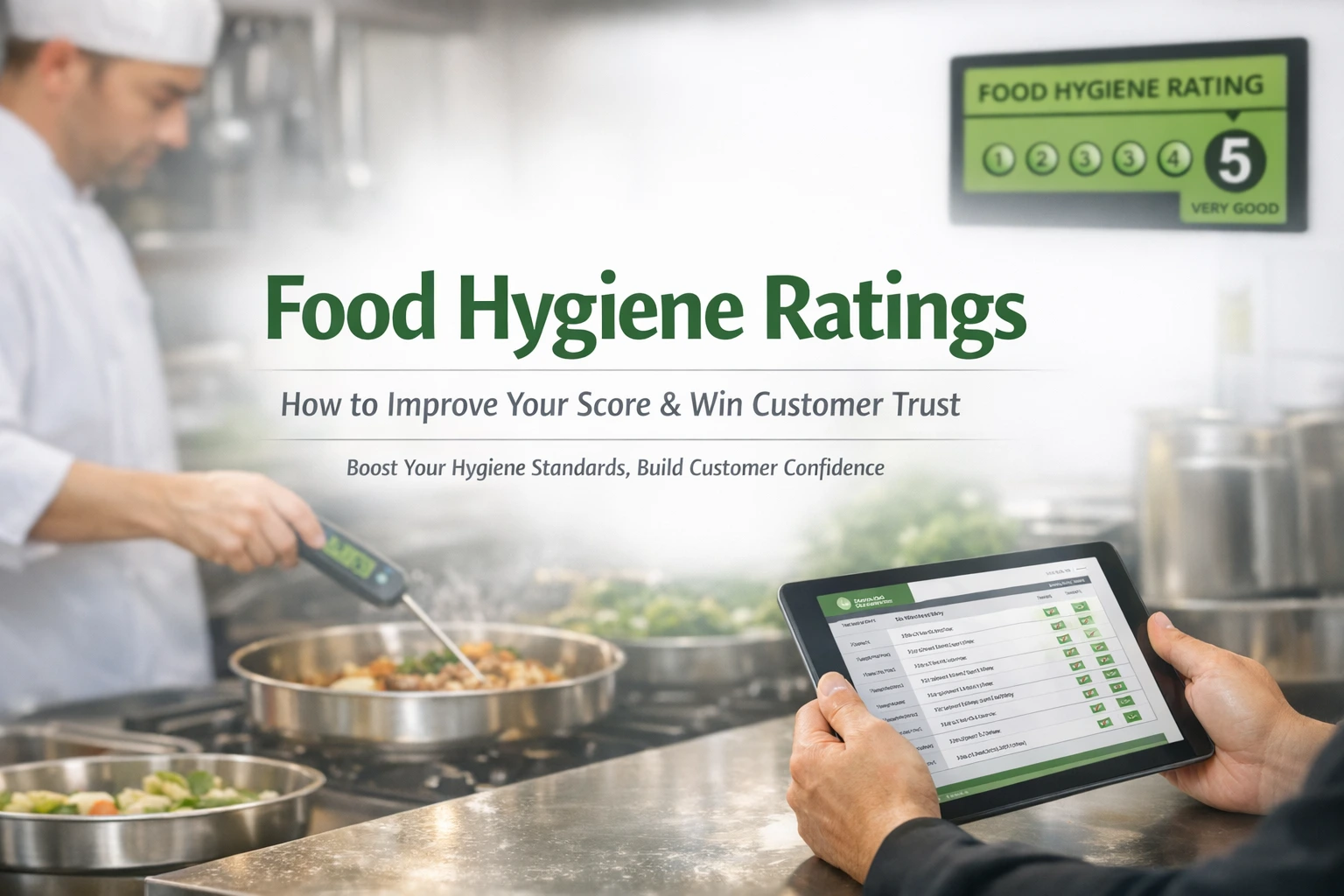
Food safety management, digital food safety records, HACCP records and allergen management all influence your food hygiene rating and how customers choose where to eat or book.
If you run a busy kitchen, café or catering business in the UK, you already know that a good food hygiene rating builds customer trust and protects your reputation. This article explains how hygiene ratings work, what customers think of them, and practical ways to improve yours — without extra stress.
Contents
- What the Food Hygiene Rating Scheme (FHRS) is
- Why your rating matters to customers
- How ratings are assessed
- Practical steps to improve your score
- Common problems that hurt hygiene scores
- Conclusion: make food safety simpler and consistent
What the Food Hygiene Rating Scheme (FHRS) is
The Food Hygiene Rating Scheme (FHRS) is a UK system run by the Food Standards Agency and local authorities that gives every food business a hygiene score from 5 (very good) down to 0 (urgent improvement needed). These ratings are usually shown on premises, on council websites and in online listings. Customers see them when they’re deciding where to eat or order from.
If you’re not familiar with the details, you might find this guide useful: FHRS Scores Broken Down: What Affects Your Food Hygiene Rating — it explains how scores are calculated and what inspectors look for.
Why your rating matters to customers
Customers increasingly use hygiene ratings as a decision-making tool. Many people won’t book a table or visit a takeaway with a low score, especially if they’re choosing somewhere new. A high score gives them confidence that you care about food safety and that you’re compliant with food law.
Even in casual dining, hygiene scores influence online reviews and social recommendations — so a good score can boost footfall and protect reputation.
How ratings are assessed
Inspectors from local councils assess three main areas during a visit:
- Food hygiene practices – how food is handled, cooked, cooled, stored and served.
- The condition of premises – cleanliness, layout, equipment and pest control.
- Management systems – documentation, staff training, checks and records.
Your food safety management system — and the records you keep — play a big part here. If you can’t show consistent, accurate checks, even good practices on the day can look weak on paper.
Practical steps to improve your score
Better food safety management every day
Instead of thinking about inspections as occasional events, build simple routines into daily operations. Consistent checks and documented procedures reduce the chance of slips when you’re busy.
A strong culture around food safety makes it easier for staff to follow best practice without reminders.
Digital food safety records to support compliance
Traditional paper logs can be hard to maintain — sheets go missing, entries get back-dated, and it can take forever to prepare for inspections. Replacing paper with digital food safety records helps you stay organised and inspection-ready.
Going digital means every cooking, cooling and storage temperature, cleaning job and check is time-stamped, clear and easy to retrieve. That gives inspectors confidence in your control systems and reduces stress around paperwork.
Tracing records quickly also helps you spot recurring issues before they affect your hygiene rating.
Strong allergen management and HACCP records
Allergen management is a key part of modern food safety. With 14 recognised allergens in UK law, businesses must be able to show what’s in every dish and how cross-contamination is controlled.
Digital tools that integrate allergen information into your food safety management system make this easier and more visible, not just on menus but in daily operations.
Similarly, keeping HACCP records up to date shows you’re identifying hazards, monitoring controls and fixing problems fast. These records are a major focus in assessments and give inspectors solid evidence of control.
You might find practical tips in the Allergen Control Training for Staff article on the Food-Safety.app blog — it explains how training supports allergen management and compliance.
Another useful read from the blog is High-Risk vs Low-Risk Foods: What You Really Need to Control — helping you focus checks where the food safety risk is highest.
Common problems that hurt hygiene scores
There are a few recurring themes in low scores:
Missing or incomplete records – you might do checks, but if they’re not logged properly, it looks like they didn’t happen.
Out-of-date paperwork – HACCP plans and daily logs must reflect current operations.
Lack of visible allergen controls – failure to show how allergens are managed can damage trust and scores.
Inconsistent staff training – inspectors want to see that every team member knows their part.
These issues often come from being too busy rather than careless — but smart systems help you avoid them.
Conclusion: make food safety simpler and consistent
A good food hygiene rating isn’t just about impressing an inspector — it’s about building trust with customers, protecting your reputation and running your business with confidence.
By focusing on day-to-day food safety management, keeping accurate digital food safety records, maintaining clear HACCP records and managing allergens properly, you make compliance part of how your business naturally operates.
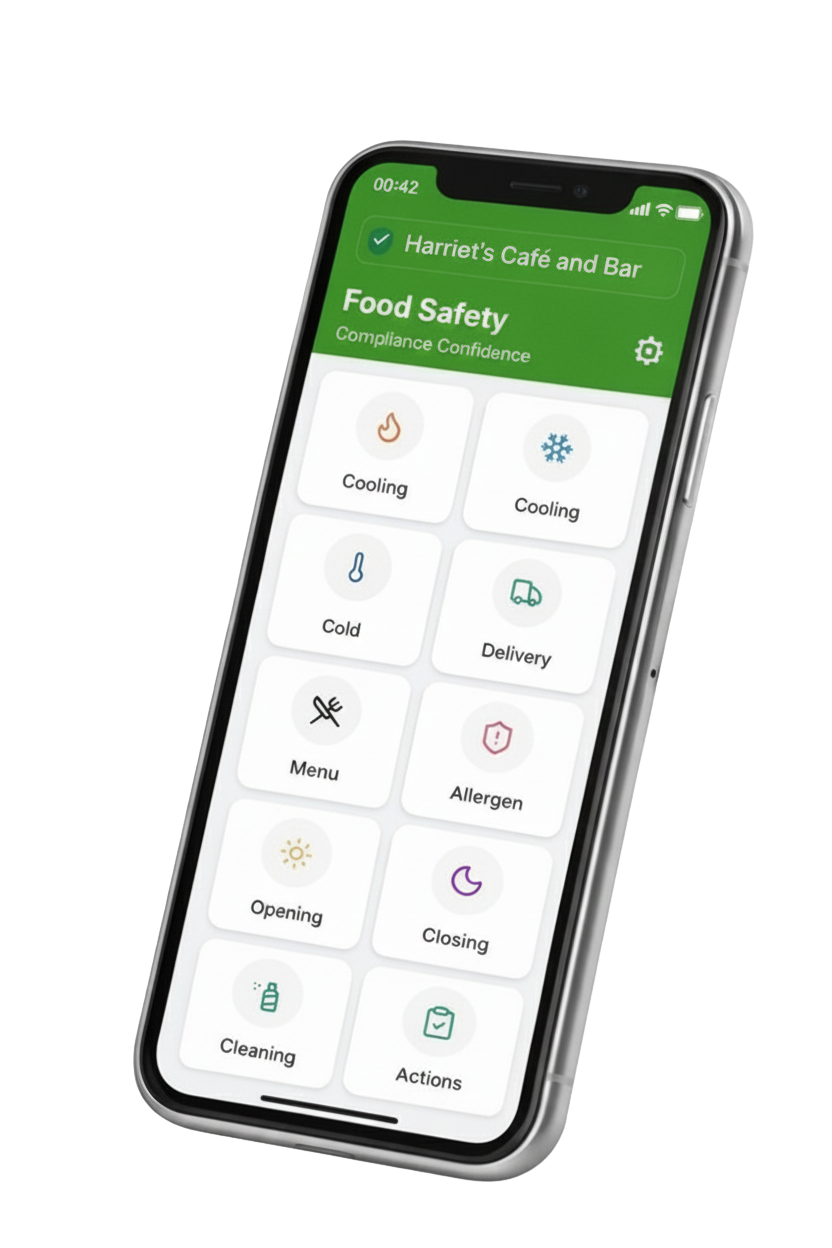
Food-Safety.app is a food safety management system for UK catering businesses. It helps you bring all your records together, stay organised and show evidence of good practice when it matters most. For busy food businesses looking to stay compliant without drowning in paperwork, simple digital tools can make a real difference.
Improve your food hygiene rating
Use Food-Safety.app to manage food safety records, HACCP checks, allergen information, and staff routines in one practical system. Clear digital workflows help UK catering businesses stay organised, reduce paperwork, and show consistent evidence of good practice.