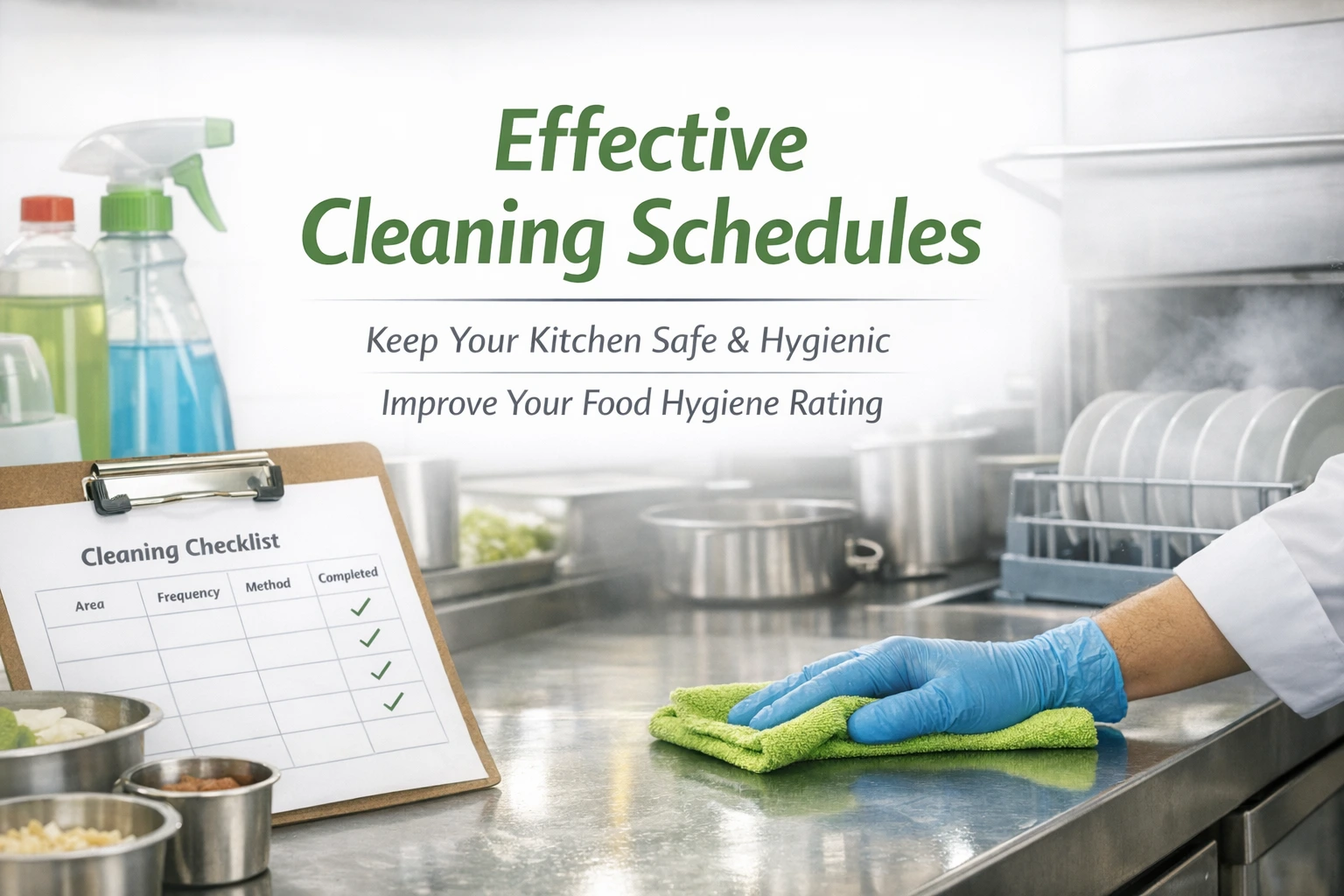
If you run a catering business, keeping on top of cleaning can feel relentless. This guide explains how simple cleaning schedules support food safety management, help you stay compliant, and work smoothly with Food-Safety.app as a food safety management system for UK catering businesses.
- Why cleaning schedules matter
- What does “clean as you go” really mean?
- How to build a clear cleaning matrix
- Planning deep cleaning properly
- Don’t forget high-risk touch points
- Dishwashers and safe rinse temperatures
- Cleaning records and food hygiene ratings
Why cleaning schedules matter
Cleaning isn’t just about looking tidy. In UK catering businesses, it’s a legal requirement and a key part of effective food safety management. Inspectors expect you to show how you control risks like contamination, allergens, and pests.
A written cleaning schedule proves that cleaning is planned, consistent, and checked. It also supports your HACCP records, showing you’ve identified hygiene risks and put sensible controls in place.
Without a clear schedule, cleaning often becomes reactive. Jobs get missed during busy services, and that’s when problems build up.
What does “clean as you go” really mean?
“Clean as you go” sounds obvious, but it’s one of the most common things inspectors see done poorly.
In practice, it means staff deal with spills, crumbs, and waste immediately rather than leaving them until the end of service. For example:
- Wiping prep surfaces between tasks
- Cleaning slicers straight after use
- Emptying bins before they overflow
This approach reduces bacteria growth, allergen cross-contact, and slip risks. It also makes end-of-day cleaning faster and more manageable.
How to build a clear cleaning matrix
A cleaning matrix is simply a table that shows who cleans what, how often, and how. It’s a practical way to turn good intentions into routine actions.
A useful matrix should include:
- Item or area (for example, grill, fridge handles, prep tables)
- Cleaning frequency (continuous, daily, weekly)
- Method (wipe, scrub, degrease)
- Chemicals used
- Person responsible
Digital systems make this easier to manage. Using digital food safety records reduces paperwork, keeps everything in one place, and makes checks quicker during inspections.
Planning deep cleaning properly
Deep cleaning is often forgotten because it’s not part of the daily routine. However, inspectors regularly check behind and underneath equipment.
Deep cleaning should be scheduled weekly, monthly, or quarterly depending on risk. Typical areas include:
- Behind fryers and ovens
- Extractor fans and filters
- Ceilings, vents, and high ledges
These areas collect grease and dust, which can attract pests and create fire risks. Recording deep cleaning tasks shows long-term control, not just surface-level cleaning.
Don’t forget high-risk touch points
Touch points are areas that many hands contact throughout the day. They’re easy to overlook but play a big role in spreading contamination.
Common examples include:
- Fridge and freezer handles
- Microwave buttons
- Light switches and tap handles
These should appear clearly in your cleaning schedule, often with higher cleaning frequencies than surrounding surfaces. This also supports good allergen management, especially in shared kitchens.
Dishwashers and safe rinse temperatures
Commercial dishwashers don’t just wash dishes – they disinfect them. For thermal disinfection to work properly, machines usually need final rinse temperatures above 80°C.
Staff should know how to:
- Check the temperature display
- Spot faults or low readings
- Record checks consistently
If a dishwasher isn’t reaching temperature, manual washing alone may not provide adequate disinfection.
Cleaning records and food hygiene ratings
Good cleaning systems directly support your inspection outcomes. Clear records help inspectors see that hygiene is under control day to day, not just on inspection day.
This consistency plays a big role in your ability to improve food hygiene rating scores over time.
Official guidance from the Food Standards Agency confirms that documented cleaning procedures are an expected part of food safety management systems.
Conclusion
Cleaning schedules don’t need to be complicated, but they do need to be clear, realistic, and followed every day. When cleaning is planned properly, it reduces risk, saves time, and makes inspections far less stressful.
Many catering businesses now choose digital tools to manage cleaning schedules and records more reliably. Food-Safety.app is a food safety management system for UK catering businesses that helps keep cleaning tasks organised, recorded, and inspection-ready without adding extra admin.
Taking a structured approach now can make day-to-day compliance simpler and far more consistent.