Want to strengthen your food safety management and feel more confident at inspection time? This guide explains how to improve food safety culture in your catering business using practical systems and digital food safety records.
- What is food safety culture?
- Why food safety management culture matters
- Start with leadership and accountability
- Make HACCP records meaningful
- Improve training and day-to-day behaviours
- Strengthen allergen management
- Use digital food safety records to stay consistent
- Simple steps you can take this month
What is food safety culture?
Food safety culture is the way your team thinks and behaves about food safety when no one’s watching. It’s not just your paperwork. It’s whether temperature checks are done properly during a busy lunch rush, whether cleaning is thorough at the end of a long shift, and whether staff feel confident raising concerns.
The Food Standards Agency (FSA) has formally recognised the importance of organisational culture in food businesses. In its guidance on Organisational Culture and Food Safety, the FSA explains that leadership, communication, and staff engagement all influence whether food safety systems are actually followed in practice.
In short, culture is what turns written procedures into safe outcomes.
Why food safety management culture matters
Strong food safety management isn’t just about avoiding enforcement. It directly affects:
- Your ability to improve food hygiene rating scores
- How smoothly inspections run
- Staff consistency across shifts
- Risk of foodborne illness or allergen incidents
Inspectors assess “confidence in management” as part of the Food Hygiene Rating Scheme. If records are incomplete, corrective actions aren’t clear, or managers don’t understand their own system, it can lower that score.
For example, if a fridge has been running above 8°C for days but no one has acted, that suggests weak management control. A stronger culture means someone notices, records it properly, and takes corrective action immediately.
Start with leadership and accountability
Food safety culture begins at the top. If owners and managers don’t take food safety seriously, staff won’t either. That doesn’t mean being heavy-handed. It means being visible, consistent, and engaged.
Set clear responsibilities
Make sure everyone knows who is responsible for:
- Opening and closing checks
- Temperature monitoring
- Cleaning verification
- Allergen information updates
If responsibility is vague, tasks get missed or assumed to be someone else’s job.
Lead by example
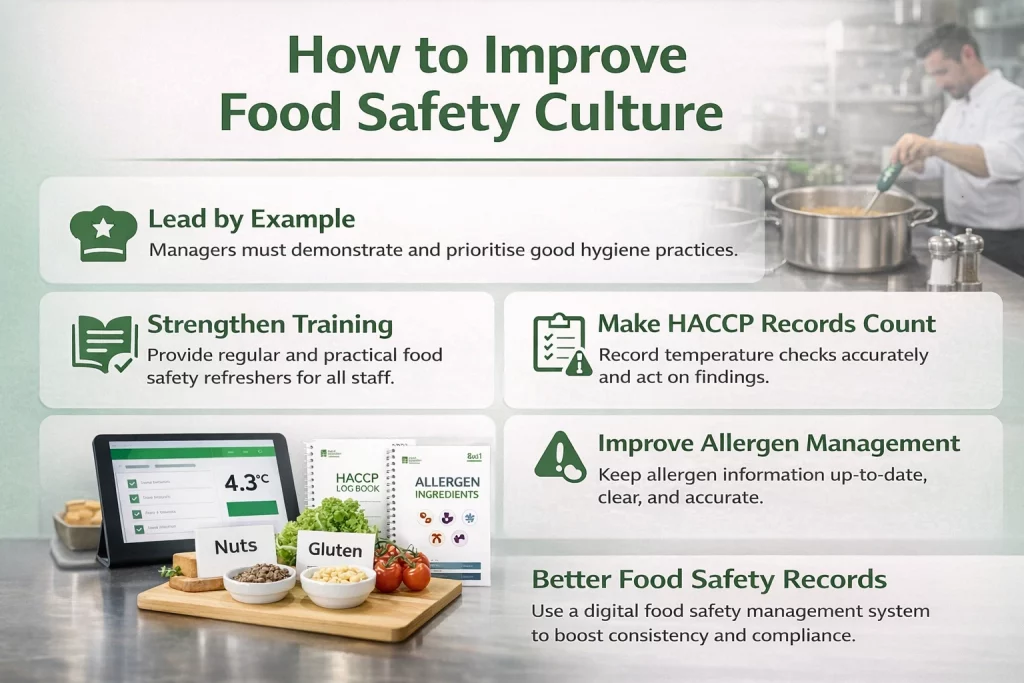
Managers should follow the same rules as everyone else. Washing hands properly, wearing correct protective clothing, and challenging unsafe behaviour all send a clear message about standards.
Make HACCP records meaningful
Your HACCP records shouldn’t feel like a tick-box exercise.
A common compliance issue in catering is completing records at the end of the week rather than in real time. Environmental Health Officers can often identify back-filled paperwork. It undermines trust and weakens your legal defence if something goes wrong.
Focus on critical controls
Keep it practical:
- Are cooking temperatures checked and recorded properly?
- Are chilled foods kept below 8°C (and ideally 5°C)?
- Are corrective actions clearly written down when something goes wrong?
Staff should understand why each check matters, not just how to fill in a form.
Improve training and day-to-day behaviours
UK law requires food handlers to be supervised and instructed or trained in food hygiene matters appropriate to their role. High staff turnover in hospitality can quickly weaken standards. A new starter working a busy Saturday shift without proper induction is a common risk point.
Keep training practical
Short, focused refreshers often work better than long annual sessions. For example:
- Five-minute reminders on probe calibration
- Quick discussions on cross-contamination risks
- Scenario-based allergen questions
Make food safety part of everyday conversation, not just inspection week.
Strengthen allergen management
Allergen management is one of the clearest indicators of food safety culture.
Mistakes often happen when recipes change, suppliers switch, or temporary staff give verbal assurances without checking written information.
Strong culture means:
- Up-to-date allergen matrices
- Clear communication between kitchen and front of house
- No guessing when customers ask about ingredients
Given the serious consequences of allergen incidents, this area must be treated as a core safety issue, not a customer service extra.
Use digital food safety records to stay consistent
Paper systems can work, but they’re harder to monitor consistently across shifts and locations.
Using digital food safety records helps managers spot gaps quickly. If a check hasn’t been completed, it’s visible straight away rather than discovered days later.
Digital systems can:
- Time-stamp entries automatically
- Reduce retrospective record completion
- Make inspection preparation simpler
- Keep documents organised in one secure place
Food-Safety.app is a food safety management system for UK catering businesses. It’s designed to support practical compliance with HACCP-based procedures and everyday monitoring.
When systems are easier to use, teams are more likely to follow them properly and consistently.
Simple steps you can take this month
Improving culture doesn’t require a complete overhaul overnight. Small, steady improvements build strong foundations.
You could:
- Review one key procedure with your team each week
- Carry out a short internal audit of cleaning standards
- Check that allergen information matches current recipes
- Confirm records are completed at the correct time, not retrospectively
Even simple questions like “What would we do if this fridge failed today?” can highlight gaps and strengthen awareness.
Conclusion
Improving food safety management culture is about consistency, clarity and leadership. When responsibilities are clear, records are accurate, and issues are dealt with promptly, inspections feel less stressful and standards are easier to maintain.
Food-Safety.app is a food safety management system for UK catering businesses, designed to support reliable HACCP records, allergen management and day-to-day checks. If you’re looking to make compliance more consistent and less paper-heavy, exploring a structured food safety app could be a practical next step.