If you run a catering business, understanding the 4 C’s of food hygiene is essential for effective food safety management. This guide explains what they mean in practice and how a digital food safety app can help you stay organised and compliant.
What are the 4 C’s of food hygiene?
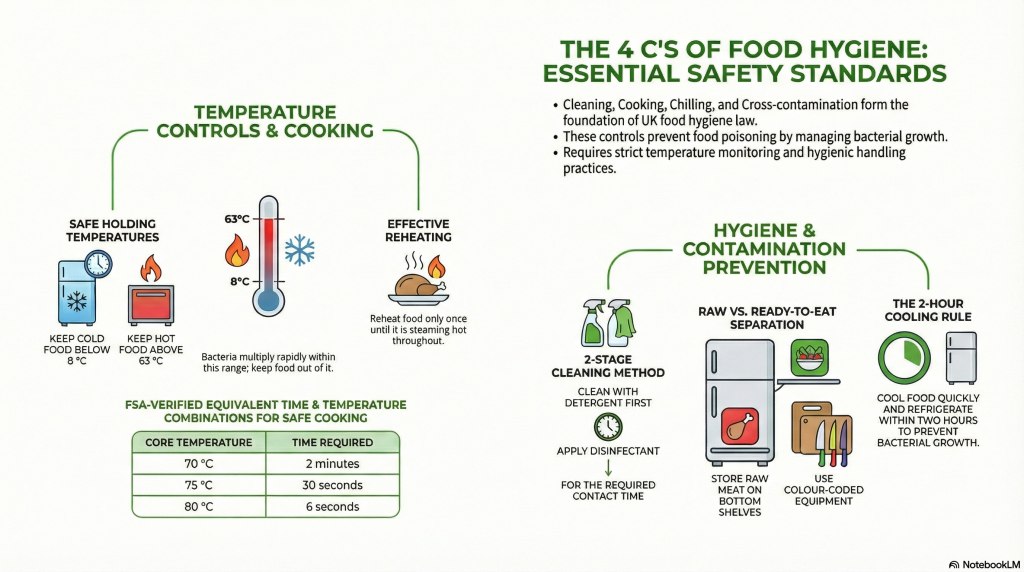
The 4 C’s – Cleaning, Cooking, Chilling and Cross-contamination – are the foundation of UK food hygiene practice. They’re simple principles, but they sit at the heart of your legal duties under food hygiene law.
Every catering business must have a documented food safety management system based on HACCP principles. The 4 C’s are the practical controls that make that system work in day-to-day service.
Whether you run a café, takeaway, pub kitchen or care home, these four areas directly affect your risk of food poisoning – and your inspection outcome.
The Food Standards Agency (FSA) sets out national guidance, including temperature controls that businesses are expected to follow.
Watch: The 4 C’s of Food Hygiene
Cleaning: getting the basics right
The 2-stage cleaning method
Effective cleaning isn’t just wiping down surfaces. It’s a two-stage process:
- Stage 1 – Clean: remove food debris using hot water and detergent.
- Stage 2 – Disinfect: apply a food-safe disinfectant and leave it for the correct contact time.
Skipping the disinfectant stage is a common mistake. If contact time isn’t followed, harmful bacteria can survive and spread.
High-risk cleaning points
In busy kitchens, contamination often happens through touchpoints rather than obvious spills. Think fridge handles, tap handles, slicers, control panels and probe thermometers.
For example, if a slicer is used for cooked ham after slicing raw meat and hasn’t been properly disinfected, bacteria can transfer straight onto ready-to-eat food.
Clear cleaning schedules and accurate HACCP records help show due diligence during inspections.
Cooking: safe temperatures that matter
Core cooking temperatures
Cooking kills harmful bacteria – but only if the right temperature is reached for long enough.
Food should achieve one of these equivalent standards:
- 70°C for 2 minutes
- 75°C for 30 seconds
- 80°C for 6 seconds
This is especially important for high-risk foods like poultry, burgers, sausages and minced meat.
Hot holding and reheating
Once cooked, hot food must be kept at 63°C or above. If it drops below this, it must be used immediately, reheated until steaming hot, or safely chilled.
Reheating should bring food to steaming hot all the way through and should only be done once.
Using and disinfecting a probe thermometer correctly is essential. Relying on colour alone isn’t enough to prove food is safe.
Recording cooking and hot holding checks digitally can reduce paperwork errors and support consistent digital food safety records.
Chilling: staying out of the danger zone
Understanding the danger zone
Bacteria multiply rapidly between 8°C and 63°C. This is known as the danger zone.
Cold food must be kept at 8°C or below by law, though best practice is 5°C or below. Fridges should be set to 5°C to stay safely within limits.
Freezers should operate at -18°C or below as industry best practice.
Cooling food safely
When cooling cooked food, time matters. It should be cooled as quickly as possible and ideally refrigerated within two hours.
Dividing large batches into smaller portions and using shallow containers helps speed up cooling.
A common issue during inspections is large pots of food left at room temperature for too long. That extended time in the danger zone allows bacteria to multiply quickly.
Cross-contamination: preventing spread
Separating raw and ready-to-eat food
Cross-contamination is one of the most common causes of food poisoning in UK kitchens.
Raw meat should always be stored below ready-to-eat food in the fridge. Separate equipment, colour-coded chopping boards and clear prep areas reduce risk.
In smaller premises, physical barriers and strict time separation can help where space is limited.
Personal hygiene and allergen controls
Handwashing between tasks is critical. Handling raw chicken and then preparing salad without washing hands can transfer harmful bacteria such as Campylobacter.
Good separation practices also support effective allergen management, reducing the risk of undeclared allergens reaching customers.
Staff illness reporting, clean protective clothing and blue waterproof plasters for cuts are all part of the control measures inspectors expect to see.
Putting the 4 C’s into practice
The 4 C’s aren’t separate tasks – they work together. Cleaning reduces contamination, cooking kills bacteria, chilling slows growth, and separation prevents spread.
For business owners, the challenge is consistency. Busy services, staff changes and paperwork pressures can make it harder to maintain standards every day.
That’s where structured systems help. Food-Safety.app is a food safety management system for UK catering businesses. It supports digital monitoring, structured checks and organised records so you can demonstrate compliance clearly.
Using a practical system to manage temperature checks, cleaning schedules and documentation can make it easier to improve food hygiene rating outcomes and stay inspection-ready.
If you’re reviewing your procedures, the 4 C’s are the place to start. A clear, consistent approach backed by reliable records gives you confidence that your controls are working as they should.
For many businesses, moving to a digital food safety app is a straightforward next step to make compliance simpler and more consistent across the whole team.
Take control of your food safety management
Food-Safety.app helps UK catering businesses replace paper records with a structured digital food safety management system. Record temperatures, manage cleaning schedules and organise HACCP documentation in one place so your team stays inspection-ready and demonstrates compliance with confidence every day.
Learn more