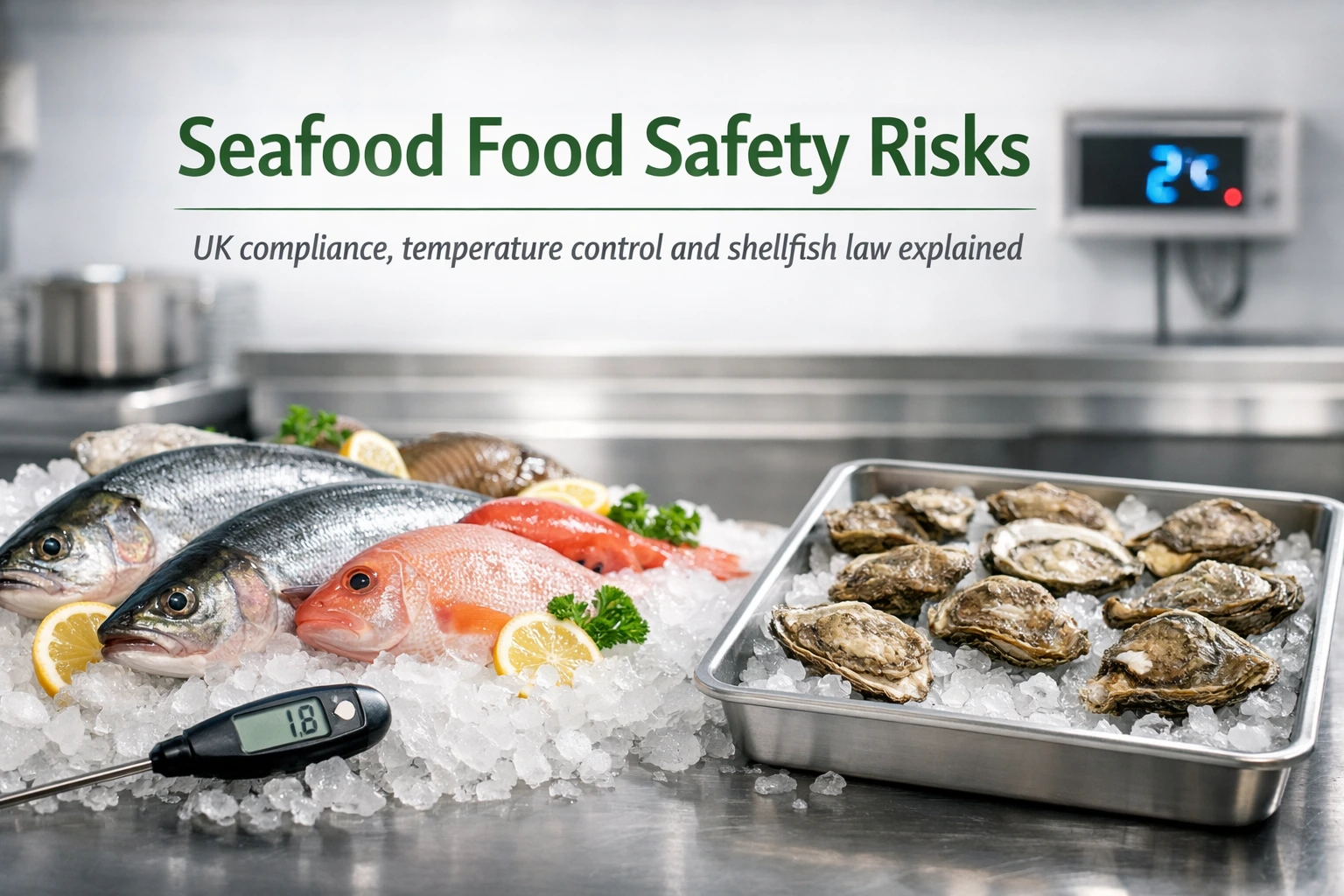
Managing seafood safely is a vital part of food safety management in UK catering businesses. This guide explains the key risks, legal duties and practical steps you need to stay compliant and protect your food hygiene rating using a reliable system like Food-Safety.app
- Why is seafood considered high risk?
- What are the UK legal requirements?
- Temperature control and storage rules
- Shellfish, biotoxins and traceability
- Parasites and serving raw fish
- Allergen management in seafood dishes
- Common seafood compliance mistakes
- How digital food safety records can help
Why is seafood considered high risk?
Seafood is more perishable than most other foods. Bacteria multiply quickly if temperature control slips, and some fish can develop toxins that cooking won’t destroy.
There are also natural hazards to consider. Oysters and mussels can carry viruses from contaminated waters. Certain fish, such as tuna and mackerel, can form histamine if not chilled quickly after catch. This can cause scombroid poisoning, even if the fish looks and smells normal.
If you serve sushi, ceviche or lightly cooked fish, you also need to manage parasite risks.
For busy kitchens, this means seafood requires tighter controls and clearer HACCP records than many other menu items.
What are the UK legal requirements?
All UK food businesses must comply with the Food Safety Act 1990 and retained EU hygiene regulations. In simple terms, you must not sell unsafe food and you must have procedures based on HACCP principles.
For seafood, Regulation (EC) 853/2004 sets additional hygiene requirements for food of animal origin. These include rules on temperature, sourcing and traceability.
The Food Standards Agency provides detailed guidance, and your local authority Environmental Health Officer (EHO) will check compliance during inspections.
You must be able to show:
- Approved suppliers
- Traceability records (one step back, one step forward)
- Documented critical controls
- Effective monitoring and corrective actions
Clear, organised digital food safety records make this far easier to demonstrate.
Temperature control and storage rules
Fresh fish
Fresh fish must be kept at a temperature close to melting ice, typically between 0°C and 4°C. On delivery, it should be well iced, firm to the touch and free from strong odours.
In a catering setting, this means:
- Checking and recording delivery temperatures
- Storing fish immediately in a dedicated fridge area
- Keeping raw fish below ready-to-eat foods
Frozen seafood
Frozen products must be stored at -18°C or below. Once thawed, they shouldn’t be refrozen unless they’ve been cooked or otherwise processed safely.
EHOs frequently identify gaps in temperature monitoring. Missing records can affect your ability to improve food hygiene rating scores, even if the food itself is safe.
Histamine-forming species
Fish such as tuna, mackerel and sardines require particular attention. If they aren’t chilled rapidly after catch, bacteria can produce histamine. Cooking won’t remove it.
Your supplier approval process should confirm that these fish are handled under strict temperature controls from catch to delivery.
Shellfish, biotoxins and traceability
Live bivalve molluscs, including oysters, mussels and clams, are filter feeders. They can accumulate viruses and marine biotoxins from the water.
UK law requires that they are harvested from classified production areas (A, B or C). Unless from Class A and sold directly, they must go through an approved purification (depuration) process.
In practical terms, you must:
- Keep shellfish identification documents
- Check they’re alive on delivery (closed shells or close when tapped)
- Store them correctly and avoid submerging in fresh water
Selling dead shellfish or failing to retain traceability paperwork is a common reason for enforcement action.
Parasites and serving raw fish
If you serve raw or lightly cured fish, you must control parasite risks. The standard treatment is freezing at -20°C for at least 24 hours (or an equivalent validated method).
This applies to dishes such as:
- Sushi and sashimi
- Ceviche
- Gravlax
Some farmed fish may be exempt if evidence shows negligible parasite risk, but this must be documented in your food safety management system.
Allergen management in seafood dishes
Seafood includes several of the 14 legally recognised allergens, including fish, crustaceans and molluscs.
Strong allergen management is essential in mixed kitchens where seafood and non-seafood dishes are prepared side by side.
Practical controls include:
- Clear ingredient information
- Separate storage and utensils where possible
- Thorough cleaning between tasks
- Staff training on cross-contact risks
Natasha’s Law also requires full ingredient labelling for prepacked for direct sale (PPDS) products.
Common seafood compliance mistakes
Environmental Health Officers often identify:
- Poor temperature monitoring records
- No evidence of parasite control for raw fish
- Incomplete shellfish traceability documents
- Weak separation between raw seafood and ready-to-eat foods
- Inadequate allergen controls
In many cases, the issue isn’t deliberate non-compliance. It’s inconsistent paperwork or unclear procedures during busy service periods.
How digital food safety records can help
Seafood safety relies on consistency. Temperatures must be checked. Deliveries must be recorded. Critical limits must be monitored.
Paper systems can easily become incomplete, especially in fast-paced kitchens.
Food-Safety.app is a food safety management system for UK catering businesses. It helps you maintain structured HACCP records, organise supplier checks and keep digital food safety records in one place.
For seafood-heavy menus, that means:
- Clear monitoring of chilling and freezing controls
- Documented parasite treatments
- Shellfish traceability records stored securely
- Allergen controls integrated into daily checks
When your EHO visits, being able to show organised, up-to-date records builds confidence in how your kitchen operates.
Seafood doesn’t have to feel risky or complicated. With a clear food safety management approach and the right digital support, you can manage hazards confidently and protect both your customers and your food hygiene rating. If you’re reviewing your current system, it may be worth exploring how a dedicated food safety app can make compliance simpler and more consistent.