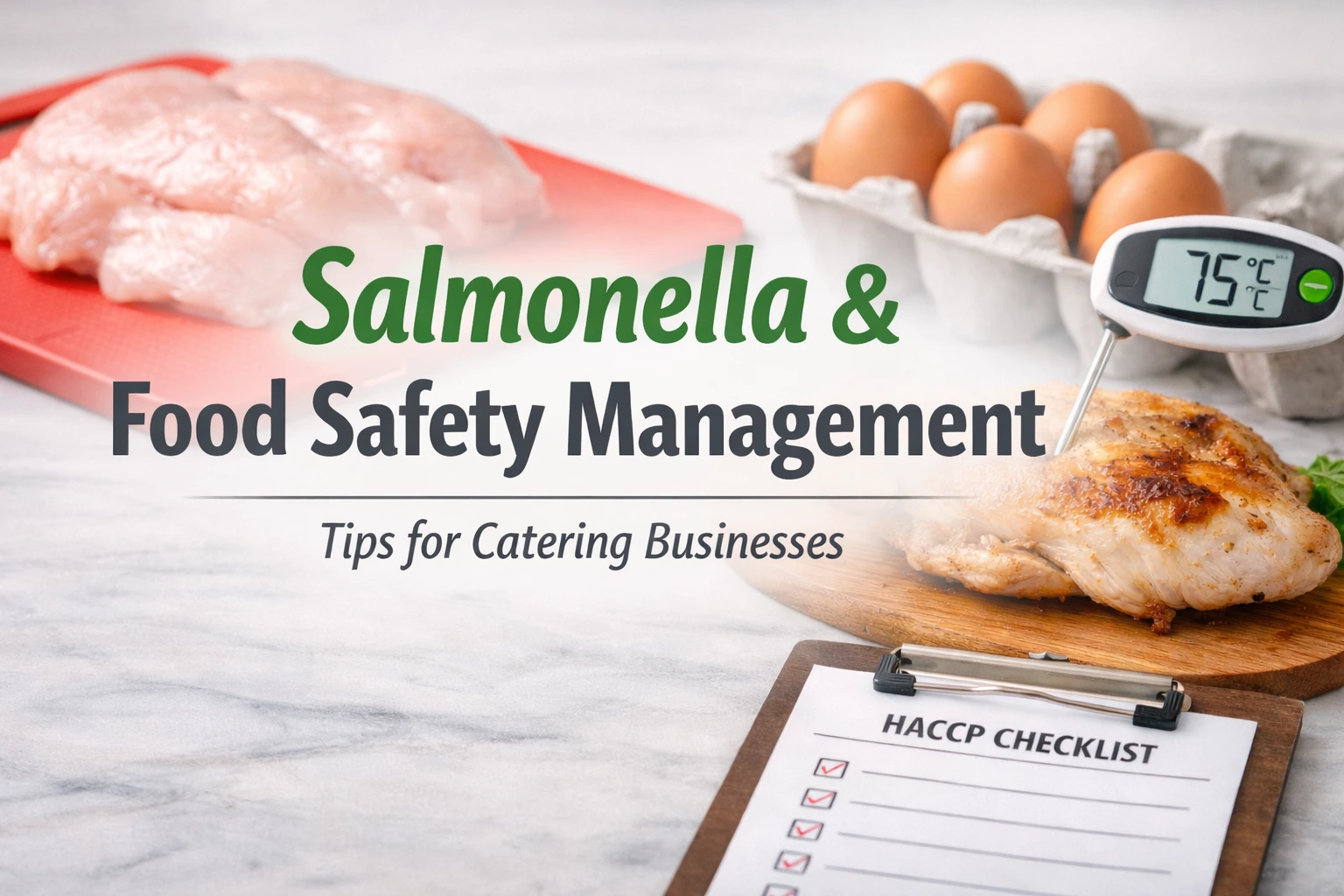
If you run a catering business, understanding Salmonella and your food safety management duties is essential. This guide explains the risks, UK legal requirements, and how digital food safety records can help you stay organised and compliant.Contents
- What is Salmonella?
- Why Salmonella matters for caterers
- Your legal duties under UK food safety law
- Practical controls that reduce risk
- Common compliance mistakes
- How a food safety management system can help
What is Salmonella?
Salmonella is a type of bacteria that causes food poisoning. In the UK, it’s most often linked to raw or undercooked poultry, eggs, and cross-contaminated ready-to-eat foods.
Symptoms usually include diarrhoea, stomach cramps and fever. For most healthy adults, illness passes within a few days. But for elderly people, young children, pregnant women and those with weakened immune systems, it can be far more serious.
For caterers, the key point is simple: if food contaminated with Salmonella is served to customers, it can quickly become a legal and reputational issue.
Why Salmonella matters for caterers
In busy kitchens, the risk isn’t usually dramatic or obvious. It’s small gaps in routine that cause problems.
For example:
- Raw chicken prepared next to salad ingredients
- Staff handling raw eggs, then plating desserts without washing hands
- Cooked food not reaching a safe core temperature
- Fridges running slightly too warm during a busy service
Salmonella spreads easily through poor separation and poor hygiene. That’s why it should be clearly addressed in your food safety management system and day-to-day procedures.
Your legal duties under UK food safety law
Under the Food Safety Act 1990 and retained EU hygiene regulations, food placed on the market must not be unsafe. You must have a documented, HACCP-based system that identifies hazards such as Salmonella and shows how you control them.
The Food Standards Agency sets out national guidance, while your local authority Environmental Health Officer enforces the law.
HACCP and documented controls
You’re required to:
- Identify Salmonella as a biological hazard
- Put controls in place (cooking, chilling, separation, cleaning)
- Monitor those controls
- Keep appropriate HACCP records
If there’s a problem, officers will want to see evidence that your system is working in practice, not just on paper.
Microbiological standards
UK microbiological criteria require Salmonella to be absent in specified food categories, particularly certain meat and ready-to-eat products. If testing ever shows a positive result, you must act quickly and review your controls.
Practical controls that reduce risk
Controlling Salmonella isn’t complicated, but it does require consistency.
1. Cook thoroughly
Poultry should reach at least 75°C at the core for 30 seconds, or an equivalent time/temperature combination. Use a calibrated probe thermometer and record checks as part of your routine.
2. Prevent cross-contamination
Keep raw poultry and raw meat completely separate from ready-to-eat foods such as salads, bread and cooked meats.
This means:
- Separate preparation areas where possible
- Dedicated chopping boards and utensils
- Strict handwashing between tasks
- Effective cleaning and disinfection
3. Manage eggs safely
In the UK, British Lion eggs are vaccinated against certain strains of Salmonella and are considered safe for lightly cooked dishes. Even so, you must store eggs correctly and avoid pooling large batches unless you have strict time controls in place.
4. Maintain temperature control
Chilled food must be kept at 8°C or below in England (with best practice at 5°C or below). Regular checks and clear corrective actions are essential.
Keeping reliable digital food safety records makes it much easier to spot patterns, such as a fridge that regularly drifts above target temperature.
Common compliance mistakes
Environmental Health Officers frequently identify the same issues:
- Raw and ready-to-eat foods stored too close together
- Inconsistent temperature records
- Staff unsure of correct cooking temperatures
- Cleaning schedules not followed or signed off
- Out-of-date documentation
Another common issue is poor integration between food safety and allergen management. For example, using shared equipment for raw chicken and allergen-free ready-to-eat dishes without proper cleaning in between.
These aren’t usually deliberate breaches. They’re often the result of busy teams, paper-based systems, and unclear accountability.
How a food safety management system can help
A clear, practical system is the backbone of Salmonella control. But paper folders can be difficult to keep up to date, especially across multiple shifts or sites.
Food-Safety.app is a food safety management system for UK catering businesses. It’s designed to help you manage daily checks, store HACCP records, and maintain consistent standards without adding unnecessary admin.
Digital prompts can remind staff to complete cooking and temperature checks. Records are stored securely and are easy to retrieve during an inspection. Trends can be reviewed quickly, helping you identify issues before they become enforcement problems.
For businesses looking to improve food hygiene rating outcomes, having accurate, accessible records and clear evidence of control can make a meaningful difference during inspections.
Conclusion
Salmonella remains a real but manageable risk in UK catering. With thorough cooking, strict separation, good hygiene and consistent monitoring, you can significantly reduce the likelihood of contamination.
The key is consistency and clear documentation. A structured food safety management approach, supported by digital tools, makes it easier to protect your customers and demonstrate compliance with confidence.
If you’re reviewing your current system, it may be worth exploring how a dedicated digital solution could simplify your processes and support safer, more consistent kitchen standards.