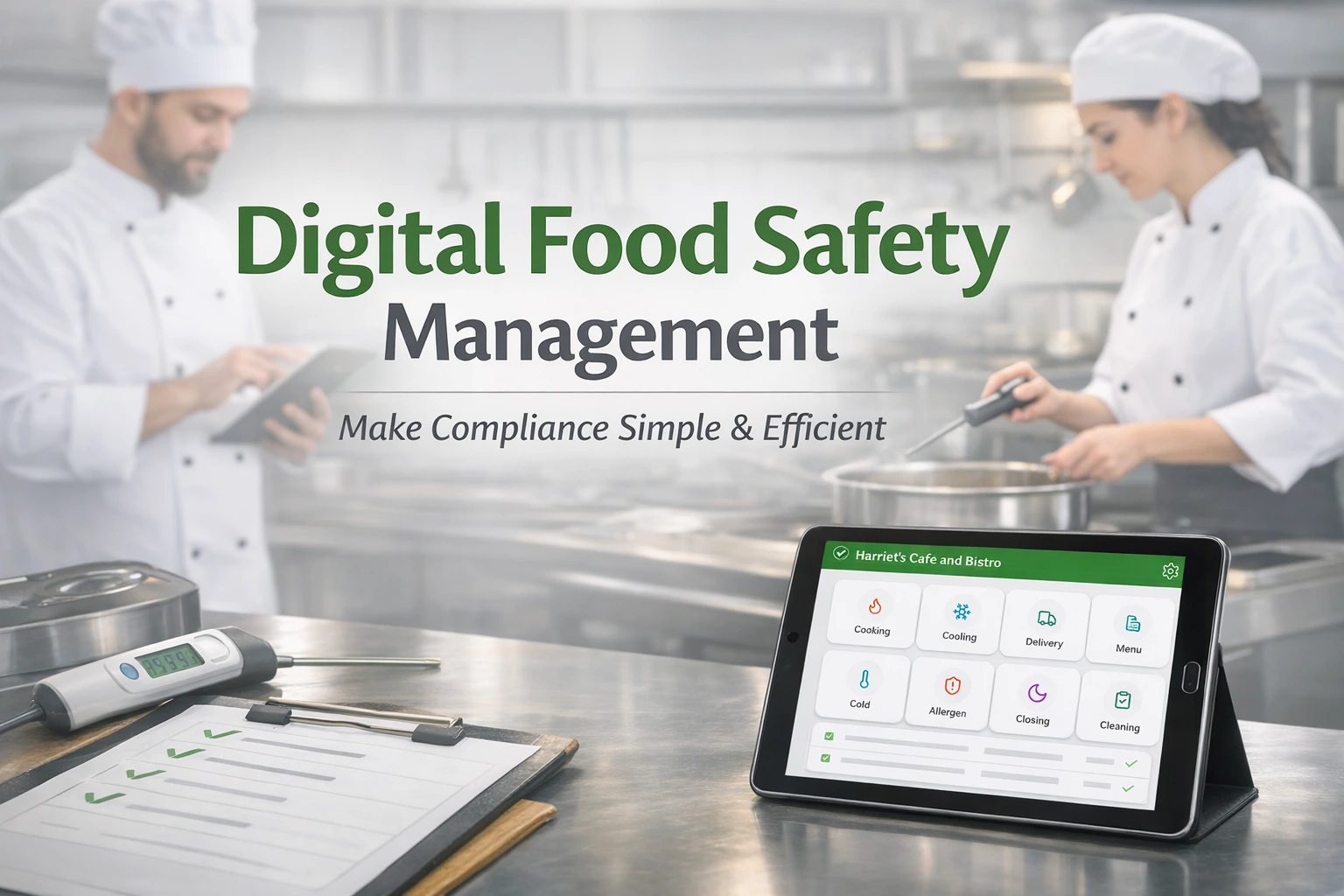
Running a café or restaurant is demanding enough without drowning in paperwork. This guide explains how digital food safety management systems help UK catering businesses stay compliant, organised and inspection-ready using simple, reliable tools like Food-Safety.app. Contents
- Why move to digital food safety management?
- What are the UK legal requirements?
- How digital records help in daily kitchen life
- Allergen management made clearer
- Can digital systems improve food hygiene rating?
- Choosing the right system for your business
Why move to digital food safety management?
Every UK food business must have a documented system for managing food safety hazards. For many independents, that’s traditionally meant printed folders, temperature sheets and a well-used copy of Safer Food Better Business.
But paper gets lost. Pages tear out. Staff forget to sign entries. And when an Environmental Health Officer asks to see your last three months of HACCP records, it can turn into a stressful search.
A digital food safety management system keeps everything in one place. Temperatures, cleaning schedules, delivery checks and corrective actions are logged on a phone or tablet. Entries are date- and time-stamped automatically, so there’s clear evidence that checks were done.
For a busy café during a Saturday brunch rush, that simplicity matters. Instead of hunting for a clipboard, a chef can log a probe temperature in seconds and get back to service.
What are the UK legal requirements?
Under UK law, food businesses must operate procedures based on HACCP principles. The Food Standards Agency provides the Safer Food Better Business (SFBB) pack as a practical way for small businesses to meet this requirement.
In simple terms, you must:
- Identify food safety hazards.
- Put controls in place (for example, safe cooking temperatures).
- Monitor those controls.
- Keep records to prove you’re doing it.
Digital systems don’t replace your legal responsibilities. They help you organise and evidence them properly.
When an EHO visits, they’ll look for consistent monitoring, completed diaries and clear corrective actions. Well-kept digital food safety records make it easier to show that your controls are working in practice, not just on paper.
How digital records help in daily kitchen life
In the real world, compliance has to fit around service.
Think about a small pub kitchen:
- The fridge temperature needs checking before prep starts.
- Deliveries arrive mid-morning and must be recorded.
- Hot food needs probing during lunch service.
- Cleaning checks must be completed before closing.
With paper, it’s easy for a sheet to be missed or filled in at the end of the day from memory. Digital prompts and structured checklists reduce that risk.
Food-Safety.app is a food safety management system for UK catering businesses. It allows staff to log cooking, cooling and refrigeration temperatures, complete opening and closing checks, record deliveries and note corrective actions in one place. Because everything is time-stamped, managers can see exactly when checks were done.
For multi-site operators, digital dashboards can also highlight gaps. If one branch regularly misses a weekly cleaning task, you’ll know quickly and can address it before it becomes an inspection issue.
Allergen management made clearer
Allergen compliance remains one of the biggest risks for cafés and restaurants. Natasha’s Law means prepacked for direct sale foods must carry full ingredient and allergen labelling. Even where that doesn’t apply, you must provide accurate allergen information for customers.
Relying on memory or outdated printed sheets is risky. A structured allergen management tool helps keep ingredient information consistent across menus.
In practice, this might mean:
- Maintaining an up-to-date allergen matrix.
- Recording recipe changes centrally.
- Ensuring front-of-house staff can access clear information.
Digital systems reduce the chance of an old recipe sheet being used by mistake. That clarity protects both your customers and your business.
Can digital systems improve food hygiene rating?
Your Food Hygiene Rating is influenced by three areas: hygienic food handling, condition of the premises, and confidence in management.
That final point is where strong record keeping makes a real difference. If an EHO sees consistent monitoring, documented corrective actions and organised records, it supports confidence in management.
Using a digital system won’t automatically improve food hygiene rating, but it can help you demonstrate control more clearly. For example:
- Showing historical temperature trends.
- Providing instant access to training records.
- Evidence of probe calibration and pest checks.
When everything is easy to access, inspections tend to feel more straightforward and less pressured.
Choosing the right system for your business
Not every kitchen needs complex analytics or integrated sensors. For many independent cafés, reliability and simplicity matter most.
When choosing a system, consider:
- Does it align with UK HACCP and SFBB principles?
- Can staff use it confidently during busy shifts?
- Does it work offline if your signal drops?
- Can you export records easily for inspections?
Food-Safety.app is a food safety management system for UK catering businesses designed with these realities in mind. It brings together temperature logs, cleaning schedules, delivery checks, training records and allergen tools in one straightforward platform, without unnecessary complexity.
The goal isn’t to add another task to your day. It’s to make compliance part of your normal routine, rather than a separate paperwork exercise.
Final thoughts
Paper systems have served the industry for years, but they’re not always practical in fast-moving kitchens. Digital food safety management offers a clearer, more organised way to handle HACCP records, allergen information and daily checks.
For busy UK cafés, pubs and restaurants, the right system can reduce stress, support consistent standards and make inspections feel more manageable.
If you’re reviewing your current setup, it may be worth exploring whether a dedicated digital system could make compliance simpler and more consistent for your team.