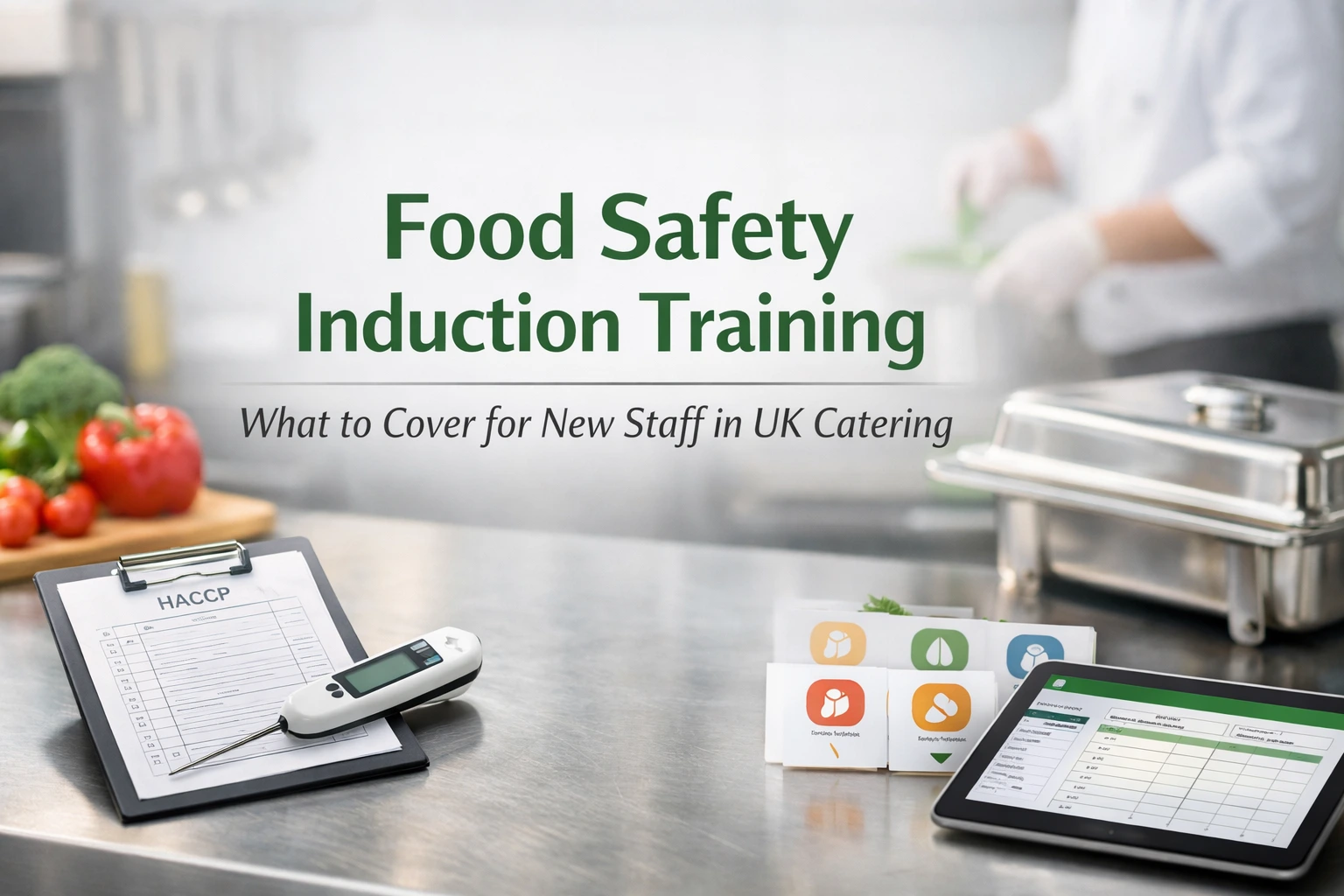
Starting a new team member properly protects your business, customers and reputation. This guide explains what to cover in food safety induction training and how a simple food safety management system can help you stay compliant and organised from day one.
Table of Contents
- Why food safety induction matters
- Your legal duties as a food business
- What to cover in induction training
- Making induction practical and consistent
- Common induction mistakes to avoid
- How a digital system can help
Why food safety induction matters
Every food business in the UK must make sure staff are supervised and trained to handle food safely. That applies whether you run a café, pub kitchen, care home, takeaway or catering company.
New starters are often at highest risk of making mistakes. They’re learning your layout, equipment and pace of service. Without proper induction, simple errors – like using the wrong chopping board or giving incorrect allergen information – can lead to food poisoning, allergen incidents or enforcement action.
A clear induction process is a core part of good food safety management. It shows environmental health officers that you take training seriously and helps protect your food hygiene rating.
Your legal duties as a food business
Under UK food hygiene law, food handlers must be supervised and instructed and/or trained in food hygiene matters appropriate to their work activities.
In practice, this means:
- Training must be relevant to the job they’re doing
- You must be able to show evidence of training
- Staff must understand your procedures, not just sign a form
The Food Standards Agency provides guidance for food businesses on meeting these obligations.
There’s no set number of training hours required. What matters is that staff are competent and that you can demonstrate this through supervision and records.
What to cover in induction training
Your induction doesn’t need to be complicated. It does need to be structured and relevant to your operation.
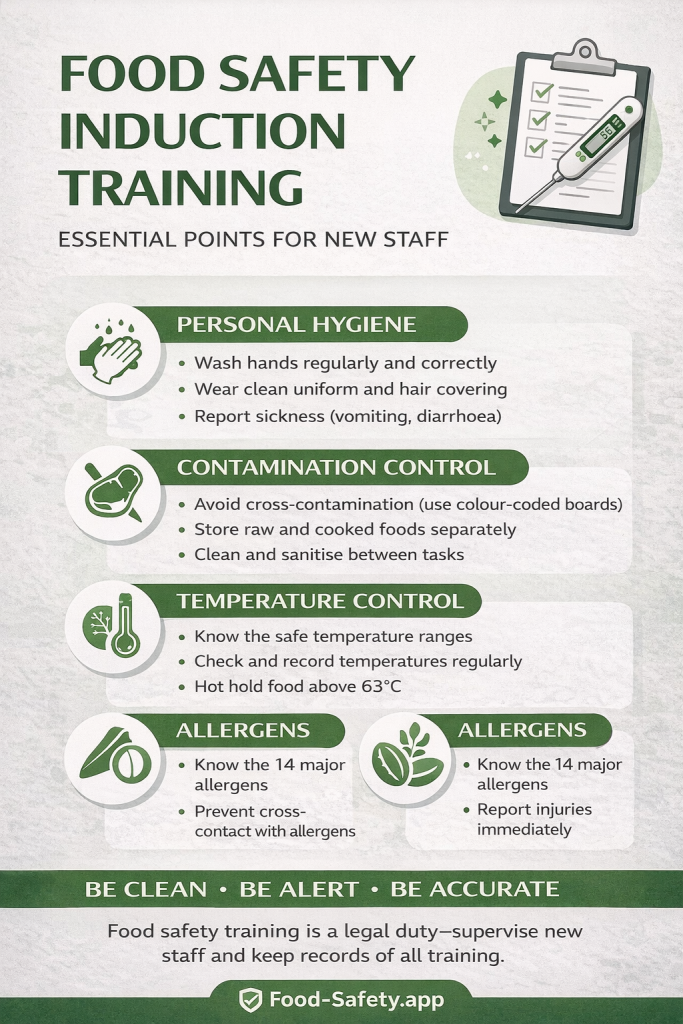
Personal hygiene and illness reporting
Start with the basics:
- When and how to wash hands properly
- When gloves are needed (and when they’re not)
- Clean uniform policy and hair restraints
- No jewellery rules
- What symptoms must be reported (vomiting, diarrhoea, jaundice)
For example, a new kitchen porter must know they can’t return to work for 48 hours after symptoms of sickness or diarrhoea stop. That’s a legal and safety requirement, not just a preference.
Make sure they know who to report illness to and that they won’t be penalised for raising concerns.
Preventing cross-contamination
Cross-contamination is one of the most common causes of food safety failures.
During induction, explain clearly:
- Separation of raw and ready-to-eat foods
- Correct use of colour-coded chopping boards
- Cleaning and sanitising between tasks
- Safe storage in fridges (raw meat below ready-to-eat food)
- Safe waste handling
Walk them around the kitchen. Show them where raw poultry is stored. Show them which sink is for handwashing only. Real examples stick far better than written rules.
This also links directly to your HACCP records, as these controls should reflect the hazards you’ve identified.
Temperature control basics
Temperature control is central to safe food.
New staff should understand:
- The danger zone (where bacteria grow fastest)
- Minimum cooking temperatures
- Hot holding requirements
- Chilling and refrigeration standards
- How to use and clean a probe thermometer
If you run a busy carvery, for instance, your team must know how often to check hot holding temperatures and what action to take if food drops below safe limits.
They should also know how to record these checks accurately, whether on paper or using digital food safety records.
Allergen management essentials
Allergen errors can have serious consequences. Induction must include:
- Awareness of the 14 legally recognised allergens
- How allergen information is communicated to customers
- The risk of cross-contact during preparation
- The importance of checking recipes and labels
Front-of-house staff need clear instruction on never guessing allergen information. If they don’t know, they must check with a responsible person.
Back-of-house staff must understand cleaning and segregation procedures as part of effective allergen management.
Making induction practical and consistent
Keep induction focused and manageable.
Break it into:
- A structured first-day session
- On-the-job demonstrations
- A short knowledge check
- Ongoing supervision during the first weeks
Tailor training to the role. A barista’s food safety risks are different from a chef’s. Make sure training reflects that.
Most importantly, keep records. Date them. Note what was covered. Record who delivered the training. This supports your wider food safety management system and helps you improve food hygiene rating outcomes during inspections.
Common induction mistakes to avoid
Common issues seen during inspections include:
- Generic online certificates with no site-specific training
- No evidence of allergen training
- Staff unsure about illness reporting rules
- Incomplete or missing training records
- No follow-up to check understanding
Induction shouldn’t be a tick-box exercise. It’s about building safe habits from day one.
How a digital system can help
Managing induction alongside rotas, stock and service is challenging.
Food-Safety.app is a food safety management system for UK catering businesses. It helps you organise training records, monitor checks and maintain consistent standards using digital food safety records.
By keeping everything in one place – including HACCP records, temperature logs and allergen management procedures – you reduce paperwork and make inspections less stressful.
Clear, structured induction sets the tone for your whole operation. With the right systems in place, you can make training simpler, more consistent and easier to evidence. If you’re reviewing your current approach, it may be worth exploring how a dedicated food safety app could support your team and help you stay confidently compliant.