Not sure whether staff can wear jewellery or watches when handling food? This quick guide explains the rules in food safety management and how simple systems like Food-Safety.app help UK catering businesses stay compliant.
- Why jewellery is restricted in food preparation
- UK food safety management rules on jewellery
- Common examples in catering kitchens
- Avoiding compliance issues in daily operations
- Using food safety management systems to keep standards consistent
Why jewellery is restricted in food preparation
Jewellery and watches may seem harmless, but in a busy kitchen they can create real food safety risks. Rings, bracelets, and watches can trap dirt, grease, and bacteria. These areas are difficult to clean properly, even with thorough handwashing.
Food businesses rely on strong food safety management practices to prevent contamination. Personal hygiene rules, including restrictions on jewellery, play a key role in keeping food safe.
There are three main risks associated with jewellery in food preparation areas:
Bacteria and hygiene risks
Small gaps around rings or watch straps can collect food debris and moisture. Bacteria can build up in these areas and transfer to food when staff handle ingredients or equipment.
Foreign object contamination
Stones, clasps, or small decorative parts can fall off jewellery and end up in food. This is known as foreign body contamination and can lead to customer complaints or enforcement action.
Handwashing effectiveness
Jewellery makes it harder to wash hands properly. Soap and water may not reach the skin underneath rings or bracelets, which means bacteria can remain after washing.
UK food safety management rules on jewellery
UK food hygiene legislation requires food handlers to maintain high standards of personal cleanliness when preparing food.
Guidance from the Food Standards Agency states that food handlers should generally avoid wearing watches or jewellery when preparing food. The most common exception is a plain wedding band.
These expectations sit within wider food safety regulations, including Regulation (EC) No. 852/2004 on the hygiene of foodstuffs. Businesses must put controls in place to prevent contamination as part of their food safety management system.
That’s why jewellery rules usually appear in staff hygiene policies and HACCP records. They form part of the day-to-day controls that help businesses demonstrate safe food handling.
Common examples in catering kitchens
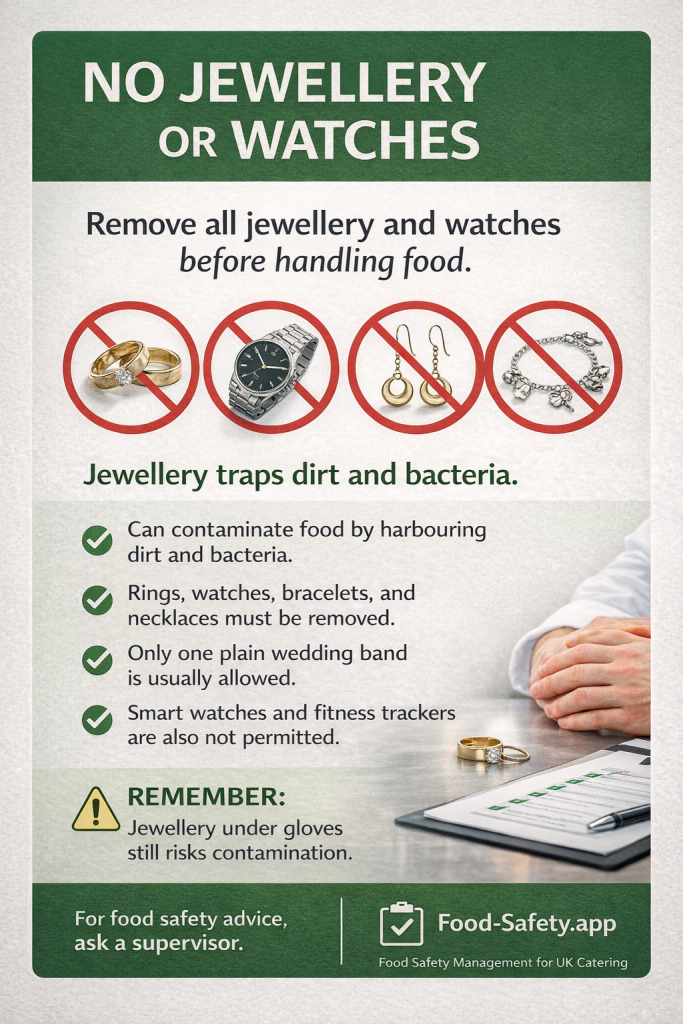
Most catering businesses apply a straightforward rule: remove jewellery before entering food preparation areas.
In practice, this usually means staff should remove:
- Watches and smart watches
- Bracelets or bangles
- Decorative rings
- Necklaces that could fall forward
- Dangling earrings
For example, a chef preparing salads or sandwiches should remove their watch and bracelets before starting work. This prevents contamination when handling ready-to-eat ingredients.
Similarly, a café worker assembling cakes or pastries should avoid wearing rings with stones that could loosen or collect food residue.
Some higher-risk environments, such as food manufacturing or large production kitchens, may require staff to remove all jewellery with no exceptions.
Avoiding compliance issues in daily operations
Environmental health officers frequently spot jewellery issues during inspections. These are usually small oversights rather than deliberate rule breaking.
Some of the most common issues include:
Smart watches and fitness trackers
These devices are increasingly common, but they’re still considered watches and can harbour bacteria or contaminate food.
Multiple rings
Some staff wear engagement rings alongside wedding bands. Decorative rings should be removed before food handling.
Jewellery worn under gloves
Disposable gloves don’t eliminate the risk. Rings underneath gloves can still trap bacteria and may tear the glove material.
Addressing these issues is part of good allergen management and hygiene practice. Anything that increases contamination risk can affect food safety standards.
Clear policies, regular reminders, and consistent supervision help staff follow hygiene rules without confusion.
Using food safety management systems to keep standards consistent
Jewellery rules are only one part of maintaining strong hygiene standards. Food businesses also need reliable processes for training staff, checking hygiene practices, and documenting compliance.
This is where structured digital food safety records can make a difference. When hygiene checks and staff procedures are recorded consistently, it becomes much easier to show inspectors that standards are being maintained.
Food-Safety.app is a food safety management system for UK catering businesses designed to simplify these daily tasks. Instead of relying on paperwork, teams can manage checks, procedures, and hygiene records digitally.
For example, kitchen managers can ensure personal hygiene checks are completed, staff training is documented, and key records are stored in one place.
This type of system also supports businesses looking to improve food hygiene rating outcomes by keeping compliance organised and consistent.
Conclusion
Jewellery and watches might seem like a small detail, but they play an important role in food safety. Removing them before food preparation helps prevent contamination, improves hand hygiene, and supports professional kitchen standards.
For busy catering businesses, maintaining these standards every day can be challenging. Clear policies, good staff training, and reliable record-keeping all help keep hygiene practices consistent.
Many businesses are now turning to digital tools to make compliance easier. Food-Safety.app is a food safety management system for UK catering businesses that helps manage hygiene procedures, track records, and keep food safety tasks organised in one place.
For teams looking to simplify compliance and keep food safety standards consistent, exploring a dedicated food safety management app can be a practical next step.