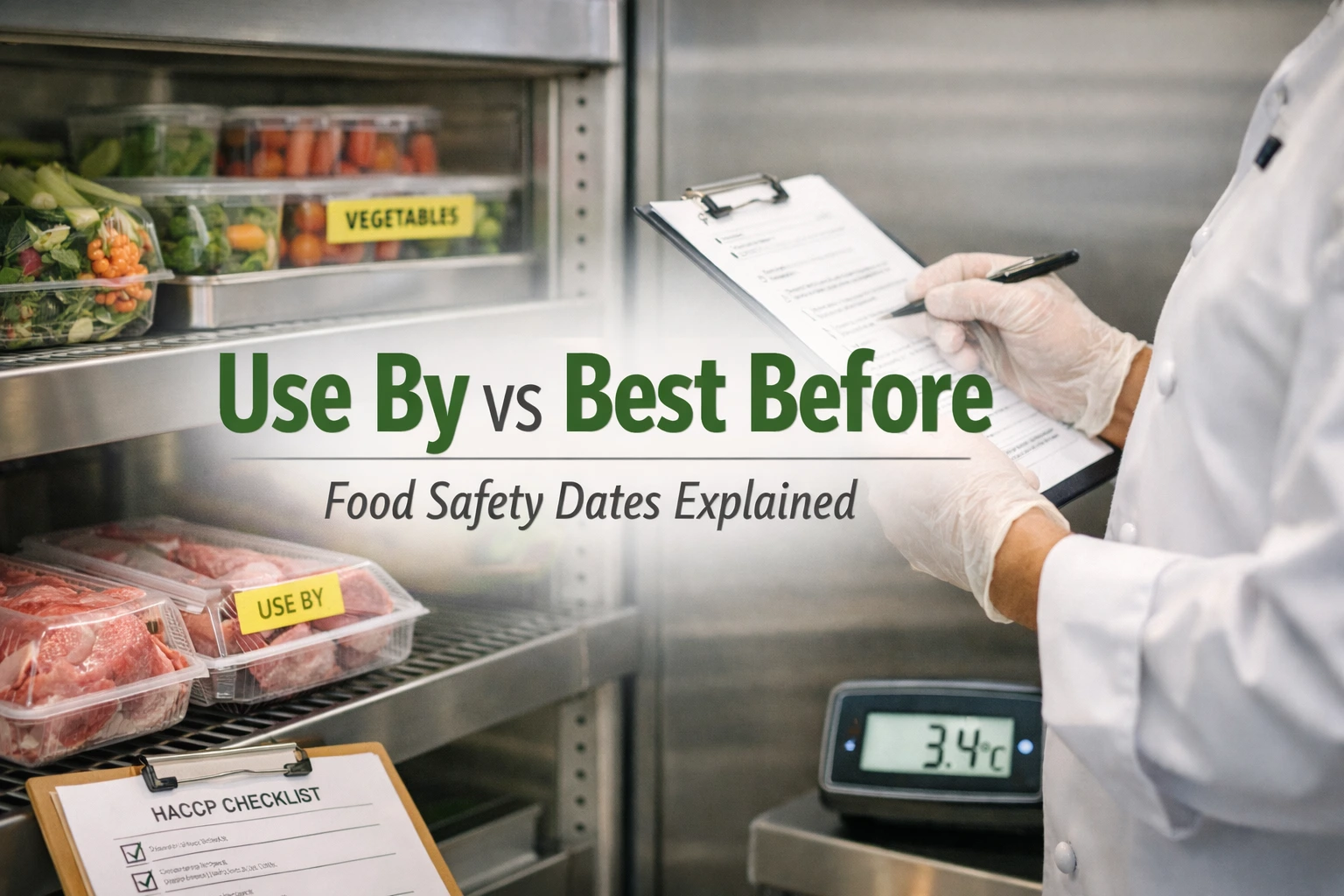
Confused about use by and best before dates? This practical guide explains what UK catering businesses must know to manage dates safely using a food safety management system.
Table of Contents
- What’s the Difference Between Use By and Best Before?
- What Does a Use By Date Mean?
- What Does a Best Before Date Mean?
- What Do These Dates Mean for Food Businesses?
- Common Mistakes With Date Marking
- Managing Date Checks With Digital Food Safety Records
- Conclusion
What’s the Difference Between Use By and Best Before?
Understanding the difference between use by and best before dates is essential for safe food handling in catering businesses.
In simple terms:
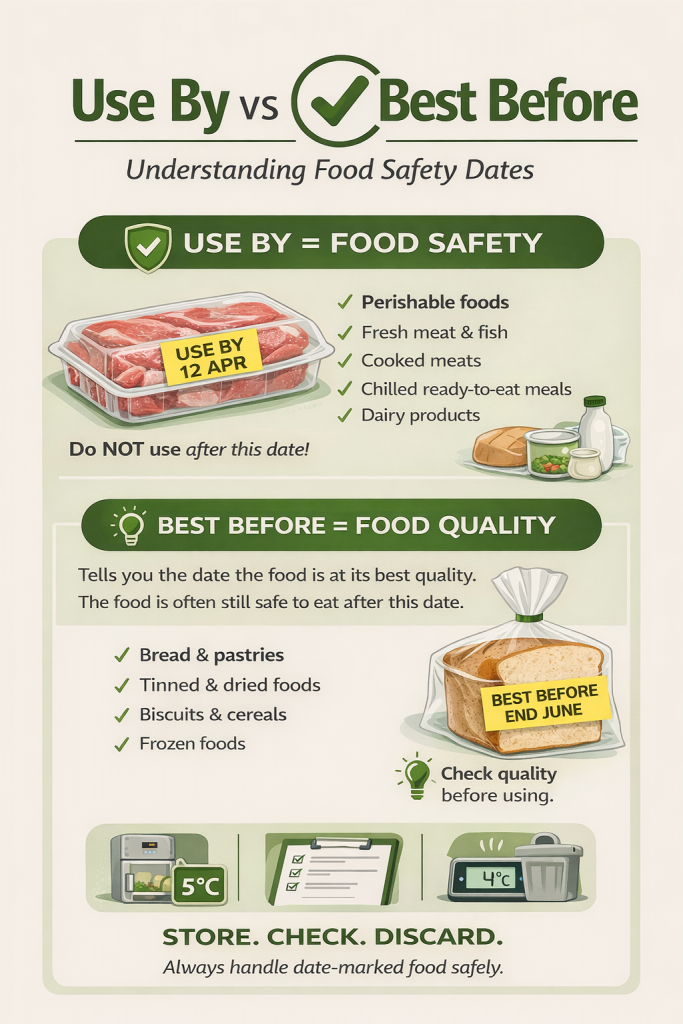
- Use by dates relate to safety
- Best before dates relate to quality
This distinction matters because food that passes its use by date must not be sold or used, while food past a best before date may still be safe if quality remains acceptable.
For busy kitchens, cafés, and restaurants, getting this right is part of maintaining proper HACCP records and demonstrating good control during inspections.
What Does a Use By Date Mean?
A use by date is the final date a food is considered safe to eat when stored correctly.
These dates are applied to foods that spoil quickly and may become unsafe due to bacterial growth.
Typical examples include:
- Fresh meat and poultry
- Cooked meats
- Ready-to-eat chilled meals
- Fresh fish
- Prepared salads
- Dairy products
Once the use by date has passed, the food must not be eaten, cooked, sold, or served.
Even if it smells or looks fine, harmful bacteria such as Listeria can grow without obvious signs.
Selling food past a use by date is illegal in the UK.
The Food Standards Agency guidance explains that use by dates are based on scientific shelf-life testing to ensure food remains safe.
For catering businesses, this means use by dates should always be treated as strict safety limits.
What Does a Best Before Date Mean?
A best before date relates to food quality rather than safety.
After this date, food may start to lose:
- flavour
- texture
- appearance
However, it’s often still safe to eat if it has been stored correctly.
Best before dates are typically used for longer-life foods such as:
- dried foods
- canned goods
- biscuits
- cereals
- frozen products
Unlike use by dates, it isn’t illegal to sell food after the best before date.
However, food businesses should ensure products remain in good condition and safe to eat.
If the food has deteriorated or packaging is damaged, it shouldn’t be sold.
What Do These Dates Mean for Food Businesses?
For catering businesses, managing date labels properly is part of everyday food safety management.
Environmental Health Officers often look closely at how kitchens control shelf life and stock rotation.
Checking dates when food is delivered
When receiving deliveries, staff should check that:
- products have enough shelf life remaining
- chilled food hasn’t exceeded its use by date
- packaging is intact
Accepting food that expires the same day can create problems later in service.
Using FIFO stock rotation
Most kitchens follow the First In, First Out (FIFO) rule.
This means older stock is used before newer deliveries.
Staff often rotate stock by moving older products to the front of fridges or shelves.
Checking fridges daily
Many food businesses include daily date checks as part of their kitchen routine.
This helps ensure food approaching its use by date is used promptly or safely disposed of.
Recording these checks supports consistent food safety management and helps demonstrate compliance during inspections.
Common Mistakes With Date Marking
Even well-run kitchens sometimes misunderstand date labels.
Here are some common issues Environmental Health Officers see during inspections.
Treating best before dates like safety limits
Some staff throw away food unnecessarily when it passes its best before date.
While caution is understandable, these dates relate to quality rather than safety.
Ignoring use by dates
This is the most serious mistake.
Food must never be used after the use by date, even if it will be cooked.
Cooking doesn’t always eliminate the risks associated with bacterial growth.
Poor stock rotation
When deliveries are placed in front of older stock, earlier items may remain unused until they expire.
Clear labelling and organised storage help prevent this.
Staff not trained on date rules
If staff don’t understand the difference between the two date types, mistakes can happen during busy service periods.
Regular training helps maintain good compliance and can support efforts to improve food hygiene rating results during inspections.
Managing Date Checks With Digital Food Safety Records
Many catering businesses now use digital food safety records to track date checks, stock rotation, and daily kitchen tasks.
Instead of relying on paper checklists, digital systems allow staff to log:
- fridge and storage checks
- stock rotation tasks
- food disposal records
- cleaning schedules
- allergen controls
This can help ensure important tasks aren’t missed during busy shifts.
Food-Safety.app is a food safety management system for UK catering businesses designed to simplify everyday compliance.
By keeping records organised and accessible, it helps teams stay on top of routine safety tasks such as shelf-life checks, while supporting broader requirements like allergen management and documented HACCP procedures.
Conclusion
Understanding the difference between use by and best before dates is essential for any catering business.
Use by dates are about food safety, while best before dates relate to food quality.
Managing these correctly helps prevent unsafe food being served, reduces waste, and demonstrates strong food safety practices during inspections.
Simple routines like stock rotation, delivery checks, and daily fridge inspections make a big difference.
Many businesses are now using digital systems to keep these checks consistent and easy to manage.
If you’re looking for a simpler way to organise records and support your food safety management, it may be worth exploring how a dedicated system like Food-Safety.app can help your team stay organised and inspection ready.