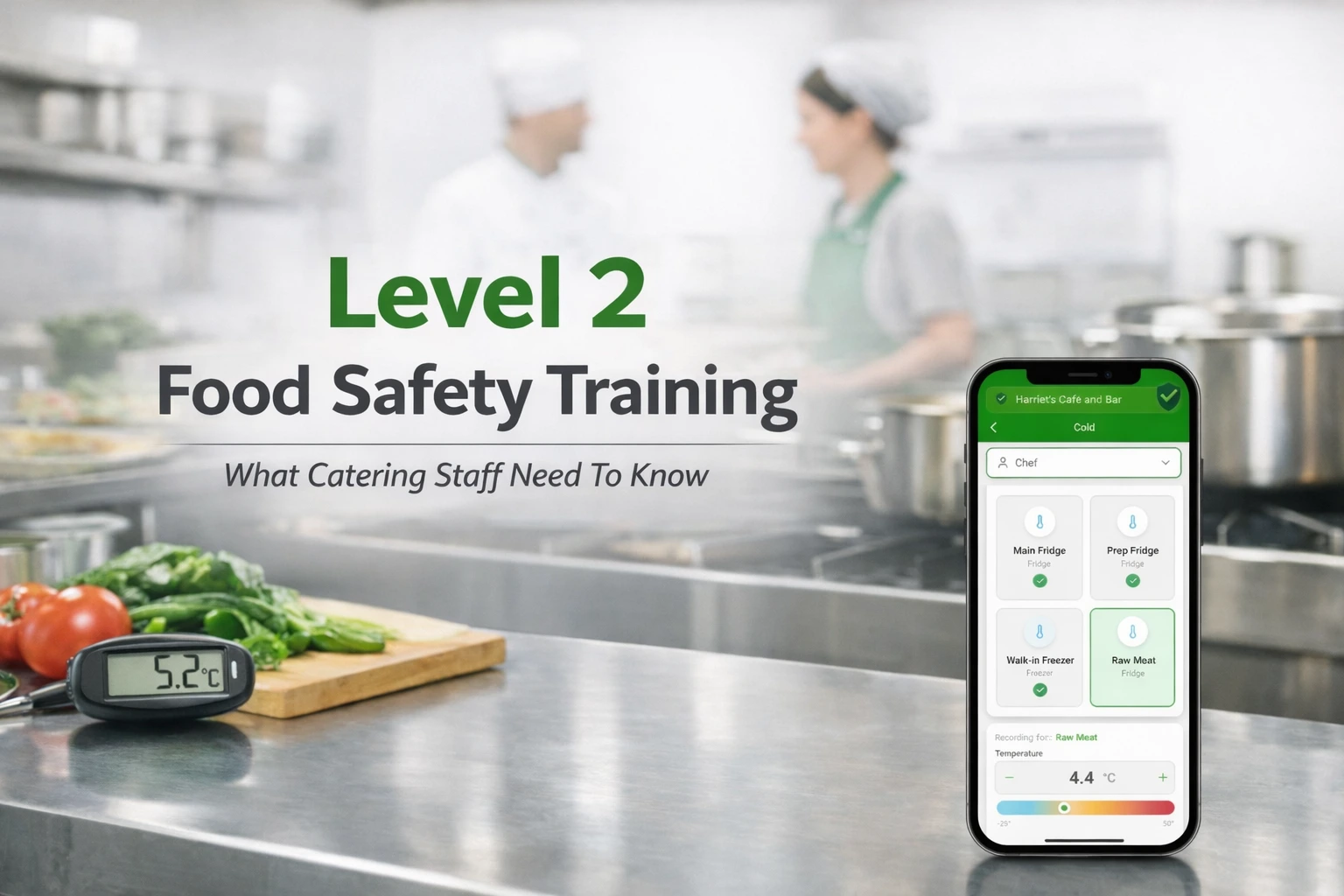
If you’re responsible for training kitchen staff, understanding the Level 2 Award in Food Safety for Catering/Retail/Manufacturing helps you meet legal duties and manage food safety management more confidently. This guide explains what the course covers, why it matters for UK catering businesses, and how digital tools like Food-Safety.app can help keep training knowledge consistent in daily practice.
Table of Contents
- What is the Level 2 Award in Food Safety?
- Who needs Level 2 food safety training?
- What does the Level 2 syllabus cover?
- UK legal requirements for staff training
- Turning training into practical kitchen habits
- Using digital tools to support compliance
What is the Level 2 Award in Food Safety?
The Level 2 Award in Food Safety is the standard training course for staff who handle or prepare food in UK catering, hospitality, retail, and food manufacturing businesses.
It’s designed to teach practical knowledge that helps prevent contamination, food poisoning, and poor hygiene practices. The course focuses on the day-to-day tasks food handlers perform, such as preparing ingredients, cooking meals, storing food correctly, and cleaning equipment.
Most Level 2 courses take between two and four hours to complete online or around one day in a classroom. They usually end with a short multiple-choice assessment.
While the course is relatively short, it introduces the core knowledge that supports safe kitchens and effective food safety management in any food business.
Who needs Level 2 food safety training?
Level 2 training is typically expected for any employee who handles open food.
This may include:
- Chefs and cooks
- Kitchen assistants
- Takeaway staff
- Deli and counter workers
- Bakery staff
- Catering assistants
Food law doesn’t specify exact training courses, but it does require that staff are trained and supervised appropriately for their role.
Environmental Health Officers often expect food handlers to hold Level 2 knowledge because it demonstrates an understanding of basic hygiene risks and safe working practices.
What does the Level 2 syllabus cover?
The syllabus focuses on practical food safety risks that commonly occur in commercial kitchens.
Food safety hazards
Staff learn about the different types of hazards that can make food unsafe. These include bacteria, viruses, chemicals, and physical contamination such as glass or metal.
Understanding how these hazards occur helps staff recognise risks early and prevent food poisoning incidents.
Cross-contamination prevention
Cross-contamination is one of the most common causes of food safety issues.
Training explains how bacteria can spread between raw and ready-to-eat foods through equipment, hands, surfaces, or cloths.
Practical controls such as colour-coded chopping boards, separate storage, and correct cleaning routines are usually emphasised.
Temperature control
Temperature management is essential for controlling bacterial growth.
The course covers safe chilling, freezing, cooking, and reheating practices. Staff also learn how to use temperature probes and why regular monitoring matters.
Recording temperatures correctly also supports reliable HACCP records, which form part of a food business’s safety management system.
Personal hygiene
Food handlers themselves can be a major source of contamination.
Training reinforces the importance of proper handwashing, reporting illness, wearing protective clothing, and covering cuts or wounds.
Cleaning and pest control
Maintaining clean kitchens and preventing pests are essential parts of food hygiene.
The syllabus explains cleaning schedules, safe chemical use, and the importance of reporting pest activity quickly.
Allergen awareness
Many Level 2 courses also introduce basic allergen management.
This includes recognising the 14 regulated allergens and understanding how cross-contact can occur in food preparation areas.
UK legal requirements for staff training
Food businesses in the UK must comply with food hygiene regulations that require staff to be trained according to their responsibilities.
These rules come from food hygiene legislation including Regulation (EC) 852/2004 and UK food hygiene regulations.
The law expects businesses to operate food safety procedures based on HACCP principles and ensure employees understand their role in those procedures.
The Food Standards Agency guidance explains that food handlers must receive supervision, instruction, or training appropriate to their duties.
Level 2 training helps demonstrate that staff understand the basics, but it should always be supported by workplace procedures and supervision.
Turning training into practical kitchen habits
Completing a training course is useful, but the real benefit comes from applying that knowledge consistently.
In busy kitchens it’s easy for hygiene routines to slip if systems aren’t clear. Temperature checks might be forgotten, cleaning tasks missed, or stock rotation overlooked.
This is where strong food safety management becomes important.
Businesses that maintain organised procedures, clear monitoring records, and consistent staff routines are far more likely to improve food hygiene rating outcomes during inspections.
Many Environmental Health inspections focus on whether staff follow the same safe practices every day.
Using digital tools to support compliance
Many catering businesses now use digital systems to manage their food safety tasks.
Food-Safety.app is a food safety management system for UK catering businesses designed to simplify daily compliance.
The system helps teams organise monitoring tasks, maintain consistent hygiene routines, and keep clear digital records. Instead of relying on paper files, businesses can track digital food safety records in one place.
This makes it easier to maintain accurate HACCP records, demonstrate good hygiene practices, and ensure staff follow the same standards taught in Level 2 training.
Conclusion
The Level 2 Award in Food Safety provides essential knowledge for anyone working with food. It helps staff understand contamination risks, safe food handling practices, and the responsibilities that come with preparing meals for the public.
However, training works best when it’s supported by clear procedures and consistent monitoring in the workplace. Tools that help manage daily checks, temperature records, and cleaning routines can make those standards easier to maintain.
Food-Safety.app is a food safety management system for UK catering businesses designed to support this process by keeping food safety tasks organised and records easy to manage. For many businesses, combining good training with simple digital systems makes compliance far more manageable.