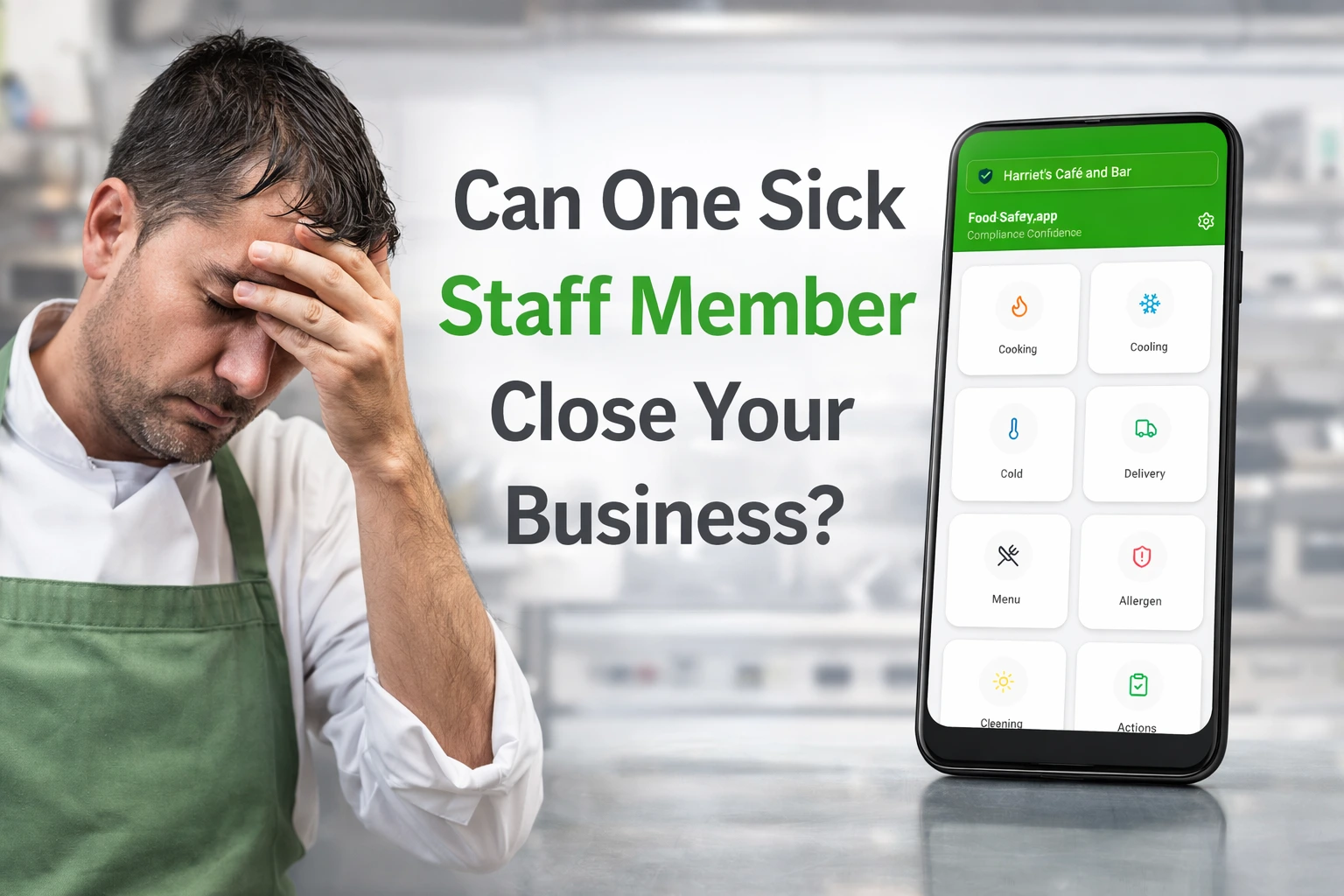
If you run a catering business, one unwell staff member can quickly undermine your food safety management and even force closure. Here’s what you need to know to stay compliant and protect your food hygiene rating.
Table of Contents
- Why one sick staff member matters
- What do UK food safety rules say?
- Real examples of closure
- How to manage staff illness in practice
- Return-to-work checklist
- Common mistakes that lead to problems
- How digital food safety records help
Why one sick staff member matters
In a busy kitchen, it’s easy to overlook mild illness. But symptoms like vomiting or diarrhoea can spread harmful bacteria or viruses onto food, surfaces, and equipment within minutes.
If that food reaches customers, the consequences can escalate quickly:
- Customer illness complaints
- Environmental Health involvement
- Loss of your food hygiene rating
- Temporary or emergency closure
This isn’t rare. Norovirus alone is linked to hundreds of thousands of UK food-related cases each year. One person working while unwell can trigger a chain reaction across your entire operation.
What do UK food safety rules say?
UK food safety law is clear: food handlers must not work if they could contaminate food.
The FSA fitness to work guidance sets out practical expectations for businesses:
When must staff be excluded?
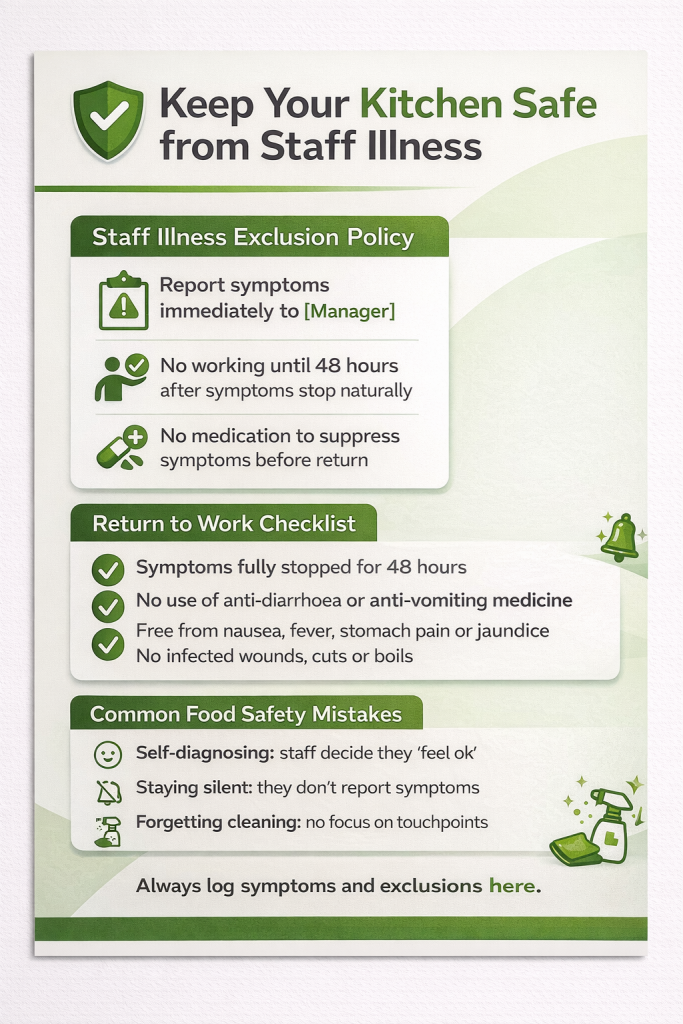
- Vomiting or diarrhoea → must stay off work
- Must not return until 48 hours after symptoms stop naturally
- Applies even if symptoms seem mild
What must staff report?
- Nausea, stomach cramps, fever
- Infected cuts, boils, or skin conditions
- Illness in their household
This isn’t optional. It’s part of your legal duty under food hygiene regulations and forms a key part of your food safety management system.
Real examples of closure
Closures don’t just happen to poorly run businesses.
Well-known UK restaurants have temporarily shut after outbreaks linked to staff illness. In some cases, businesses closed voluntarily as soon as patterns of sickness appeared among staff and customers.
What these examples show:
- Closure can happen quickly
- It’s often precautionary, not punitive
- The financial and reputational impact can be significant
Even without formal enforcement, losing a few days of trading can be costly.
How to manage staff illness in practice
A clear, simple system is essential. Staff shouldn’t have to guess what to do.
Set a clear exclusion policy
Make sure your team knows:
- What symptoms must be reported
- Who to report to
- That they must not “push through” a shift
Act quickly when illness is reported
- Send affected staff home immediately
- Identify any food or surfaces they’ve handled
- Carry out targeted cleaning
Your cleaning schedules for better food safety management should support this response.
Keep proper HACCP records
Document:
- Staff illness reports
- Actions taken
- Cleaning and disposal decisions
These HACCP records demonstrate control and are essential during inspections.
If you’re using SFBB, this aligns with the “safe method” approach. But records must be complete and up to date to be effective.
Return-to-work checklist
Before allowing a staff member back into food handling, run through a simple check:
- Have 48 hours passed since symptoms stopped?
- Were symptoms allowed to stop naturally (no medication masking)?
- Are they free from nausea, fever, or stomach pain?
- Do they have any infected wounds or skin conditions?
- Do they understand hygiene expectations on return?
Recording this is just as important as the decision itself. It shows due diligence and supports your food safety management system.
Common mistakes that lead to problems
Even well-run kitchens can slip up. Common issues include:
Letting staff decide for themselves
Team members often underestimate symptoms or feel pressure to work.
Relying on verbal reporting only
Without written or digital records, there’s no proof of control.
Forgetting contamination risks
It’s not just the person — it’s everything they touched:
- Fridge handles
- Utensils
- Taps and sinks
- Cloths and surfaces
Poor documentation
This directly affects your inspection outcome and confidence in management score.
How digital food safety records help
Managing staff illness properly comes down to consistency.
Paper systems like SFBB can work, but they’re often:
- Incomplete
- Forgotten during busy shifts
- Difficult to review quickly
Using digital food safety records makes it easier to:
- Log illness and exclusions in real time
- Track return-to-work checks
- Maintain accurate HACCP records
- Show clear evidence during inspections
Food-Safety.app is a food safety management system for UK catering businesses designed to simplify this. It helps ensure nothing is missed, even on your busiest days.
Conclusion
One sick staff member doesn’t automatically mean closure—but poor handling of that situation can.
Clear reporting, strict exclusion, proper cleaning, and accurate records are what protect your business. These are also the things inspectors look for when assessing your food hygiene rating.
Keeping everything organised and consistent isn’t always easy with paper systems alone. That’s why many businesses are moving towards digital tools to support their food safety management.
If you’re looking to make compliance simpler and more reliable, it’s worth exploring how a food safety app can support your day-to-day operations.