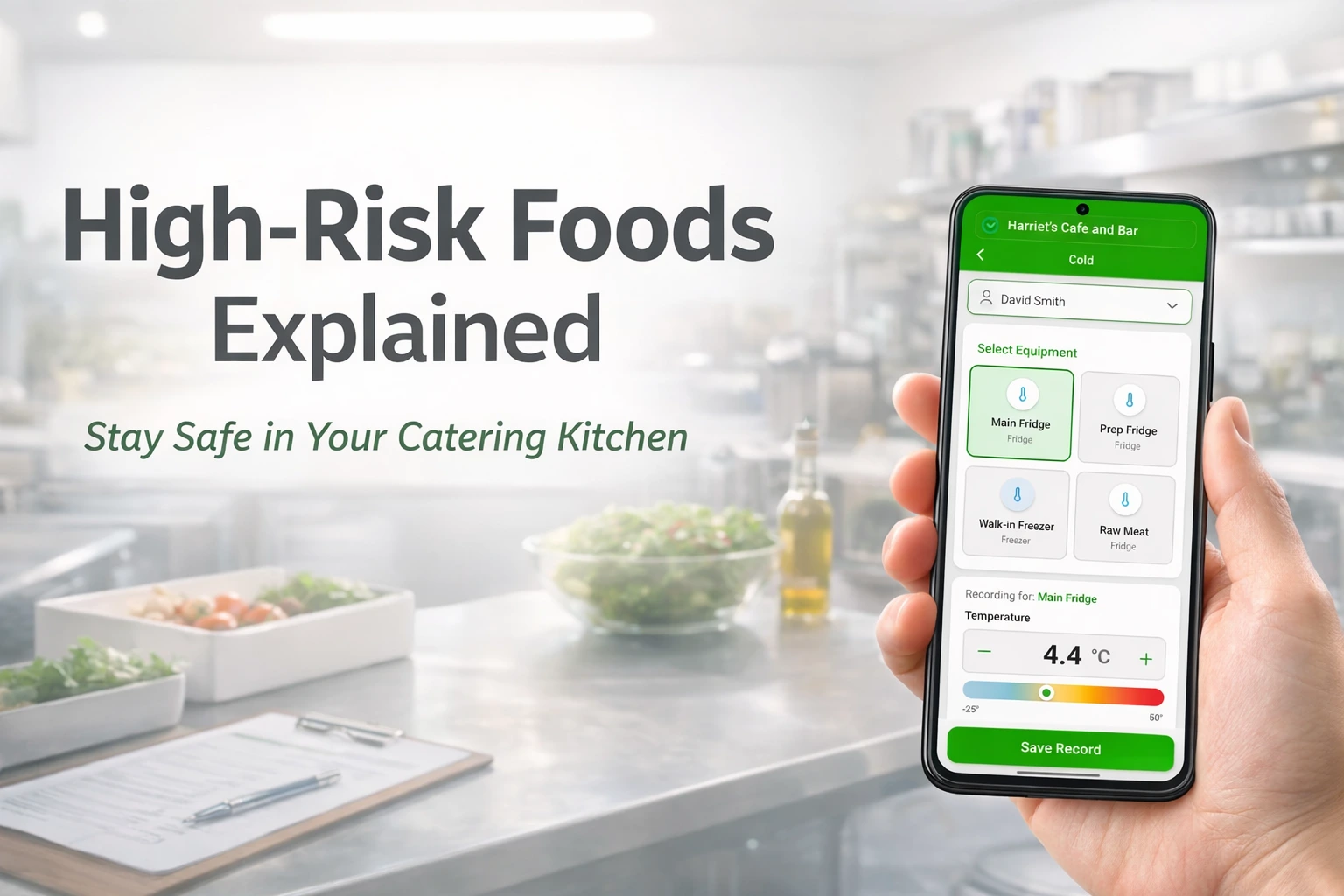
Running a catering business means keeping high-risk foods safe every day. This guide explains what they are, how to control them, and how a food safety management system helps you stay compliant.
Table of Contents
- What are high-risk foods?
- Which foods are high-risk in UK kitchens?
- Why do high-risk foods matter?
- Real-world catering examples
- Simple controls that keep you compliant
- Common mistakes to avoid
What are high-risk foods?
High-risk foods are foods that can easily grow harmful bacteria and are ready to eat without further cooking.
In practical terms, these are the foods where there’s no second chance to make them safe. Once contaminated or left at the wrong temperature, they can quickly become unsafe to serve.
For UK businesses following SFBB guidance, these foods require stricter time and temperature control, careful handling, and clear labelling.
If you’re using a food safety management system, high-risk foods should already be identified as key control points in your daily checks.
Which foods are high-risk in UK kitchens?
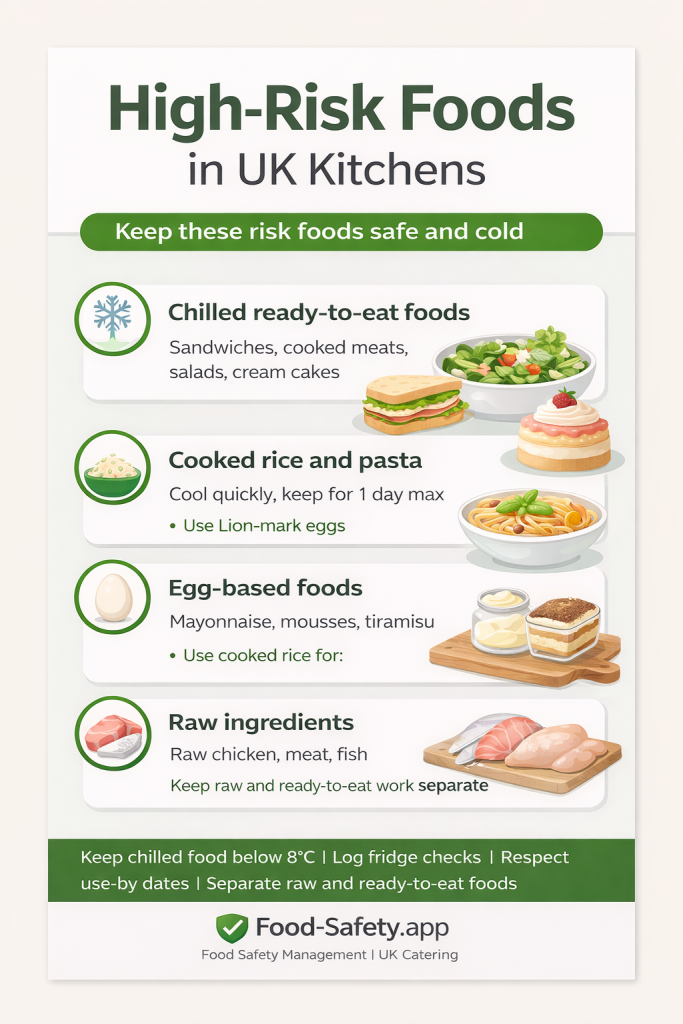
In most cafés, takeaways, and catering kitchens, high-risk foods fall into a few clear groups:
Chilled ready-to-eat foods
These include:
- Sandwiches and wraps
- Cooked meats (ham, chicken, beef)
- Salads and coleslaw
- Cream cakes and desserts
- Soft cheeses and smoked fish
These foods are high-risk because bacteria can grow during storage, and they won’t be cooked again before serving.
For more detail, see high-risk vs low-risk foods.
Cooked rice and pasta
Cooked rice is a well-known risk in UK kitchens. If left to cool slowly or stored incorrectly, it can develop toxins that reheating won’t remove.
This is why guidance typically limits storage time and requires rapid cooling.
A deeper explanation is covered here: reheating cooked rice safely.
Egg-based foods
Foods like mayonnaise, mousses, and tiramisu can carry risk if raw or lightly cooked eggs are used.
Using Lion-mark eggs or pasteurised products helps reduce this risk, especially in busy catering environments.
Raw ingredients (cross-contamination risk)
Raw chicken, raw meat, and raw fish aren’t usually served ready to eat, but they’re still high risk operationally.
They can easily contaminate ready-to-eat foods through:
- Shared chopping boards
- Knives and utensils
- Staff hands
- Poor cleaning routines
This is why cross-contamination control is essential in any kitchen.
Why do high-risk foods matter?
High-risk foods are one of the main causes of foodborne illness in the UK.
They’re also a key focus during inspections. Poor control can directly impact your food hygiene rating.
The main issue is the “danger zone” — where bacteria multiply quickly between 8°C and 63°C.
If you’re not confident on this, this guide explains it clearly: temperature danger zone explained.
The official Food Standards Agency guidance also covers safe handling practices: FSA food business guidance.
Real-world catering examples
Understanding risk is easier when you see how it plays out in real kitchens.
A café sandwich prep station
Cooked chicken is chilled overnight, then used in sandwiches the next day. If it’s not labelled or kept cold enough, bacteria can grow before service.
A brunch kitchen using raw and cooked foods
Raw bacon is prepared on the same surface as ready-to-eat items. Without proper separation, cross-contamination becomes a real risk.
A takeaway storing cooked rice
Rice is left at room temperature to cool. This creates ideal conditions for toxin formation, even if it’s reheated later.
These are everyday situations — and exactly where good HACCP records and routines make a difference.
Simple controls that keep you compliant
You don’t need complicated systems to manage high-risk foods. Consistency is what matters.
Temperature control
- Keep chilled food at 8°C or below
- Hot hold food at 63°C or above
- Cool food quickly before refrigeration
Time and shelf life
- Follow use-by dates strictly
- Label prepared and opened foods clearly
- Apply safe storage limits
This is where tools like use-by date guidance and stock rotation systems help keep things organised.
Separation and hygiene
- Keep raw and ready-to-eat foods separate
- Use different equipment where possible
- Clean and disinfect between tasks
Record keeping
Accurate records show you’re in control. Whether you’re using paper-based SFBB packs or moving towards digital food safety records, consistency is key.
Digital systems can make it easier to track checks, reduce missed tasks, and stay inspection-ready.
Common mistakes to avoid
Some of the most common issues seen in UK kitchens include:
- Relying on smell or appearance instead of use-by dates
- Not labelling prepared or opened food
- Poor fridge temperature checks
- Mixing raw and ready-to-eat prep areas
- Leaving food out during busy service periods
Even small slips can lead to bigger problems if they happen regularly.
For example, poor fridge control is a frequent issue: fridge check failures explained.
Conclusion
High-risk foods aren’t just a technical concept — they’re part of everyday kitchen decisions.
From sandwiches and salads to rice and desserts, these are the foods that need the most care. Getting the basics right — temperature, time, separation, and records — goes a long way.
Food-Safety.app is a food safety management system for UK catering businesses. It helps you manage high-risk foods with clear checks, simple HACCP records, and reliable digital routines that fit into busy kitchens.
When your controls are consistent, inspections feel easier — and your team can focus on serving safe food with confidence.