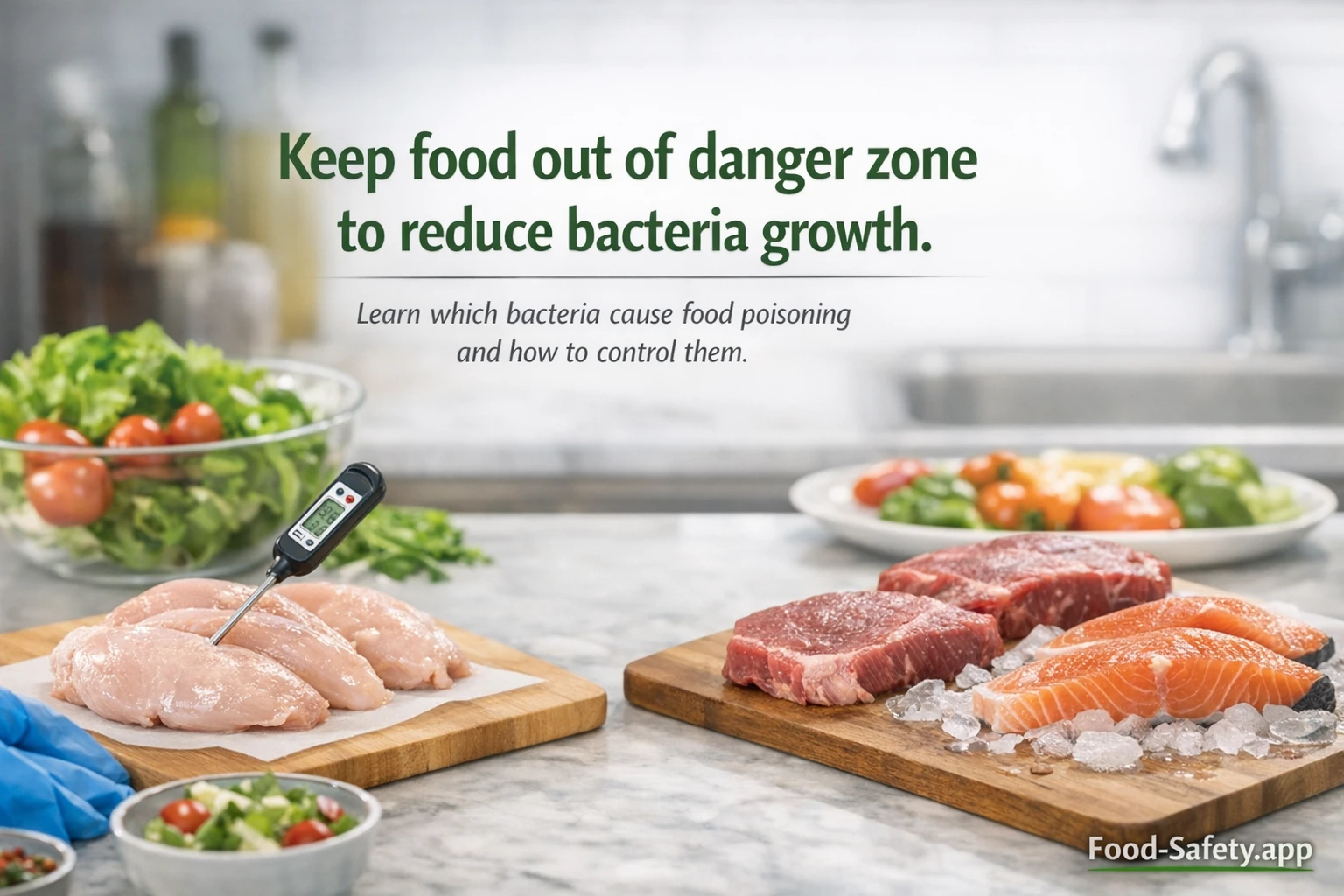
Learn which food poisoning bacteria cause illness in kitchens and how to control them with simple, effective safety practices.
Table of contents
- Types of food poisoning bacteria
- How bacteria spread in kitchens
- Common symptoms of food poisoning
- High-risk foods to watch
- Preventing food poisoning bacteria
- Practical control measures
Types of food poisoning bacteria
Food poisoning bacteria are a major risk in any kitchen, especially in busy catering environments. The most common types include Salmonella, Campylobacter, Listeria monocytogenes, Escherichia coli (E. coli), and Staphylococcus aureus. Each behaves differently but all can cause serious illness if not controlled. For example, Salmonella is often linked to raw poultry and eggs, while Listeria can grow at refrigeration temperatures, making chilled ready-to-eat foods a concern. Understanding these bacteria helps food handlers recognise risks and apply the right controls.
How bacteria spread in kitchens
Food poisoning bacteria spread easily through poor hygiene and unsafe handling practices. Cross-contamination is one of the biggest causes, where bacteria transfer from raw food, surfaces, or hands onto ready-to-eat items. This can happen when chopping boards, knives, or cloths aren’t cleaned properly. Inadequate cooking or incorrect storage temperatures also allow bacteria to survive and multiply. For practical guidance on preventing contamination, see cleaning, hygiene, and cross-contamination. Even small lapses, such as handling food without washing hands, can lead to outbreaks.
Common symptoms of food poisoning
Symptoms caused by food poisoning bacteria can vary depending on the organism but typically include nausea, vomiting, diarrhoea, stomach cramps, and fever. These symptoms can develop within hours or take several days to appear. In a food business setting, this delay can make it harder to trace the source of contamination. Vulnerable groups such as the elderly, young children, and pregnant women are at higher risk of severe illness. Staff must report symptoms immediately and avoid handling food to prevent spreading bacteria to customers.
High-risk foods to watch
Some foods are more likely to carry food poisoning bacteria due to how they’re produced or handled. High-risk items include raw meat and poultry, seafood, eggs, dairy products, and ready-to-eat foods like salads and sandwiches. Cooked rice and pasta can also pose risks if left at unsafe temperatures. These foods provide ideal conditions for bacterial growth, especially within the temperature danger zone. For more on safe temperature practices, visit temperature control and the danger zone. Managing these foods carefully is essential in any kitchen.
Preventing food poisoning bacteria
Preventing food poisoning bacteria relies on consistent, everyday practices. This includes proper handwashing, separating raw and cooked foods, cooking food thoroughly, and keeping food at safe temperatures. Cleaning schedules must be followed to avoid build-up of harmful bacteria on surfaces and equipment. Training staff regularly ensures everyone understands their responsibilities. According to the World Health Organization’s food safety guidance (WHO food safety facts), simple hygiene measures can significantly reduce foodborne illness. Prevention is always more effective than reacting to an incident.
Practical control measures
Effective controls are built into daily kitchen operations. This includes monitoring cooking, cooling, and storage temperatures, checking deliveries for quality, and maintaining clear cleaning routines. Digital tools such as Food-Safety.app, a food safety management system for catering businesses, can simplify record keeping and help ensure compliance with safety procedures. Features like temperature logs and cleaning schedules make it easier to identify risks early. Strong controls not only protect customers but also support inspections, reduce waste, and improve overall kitchen efficiency.
By understanding how food poisoning bacteria behave and applying practical controls, food businesses can reduce risks and maintain high safety standards every day.