Learn how food safety reminders help staff maintain food safety, reduce mistakes, and build consistent habits in busy kitchens and service environments.
Table of Contents
- How do visuals support food safety reminders?
- What signs improve staff compliance?
- How do habits reinforce food safety reminders?
- Why are briefings effective food safety reminders?
- How does monitoring strengthen food safety reminders?
- How does workplace culture support food safety reminders?
How do visuals support food safety reminders?
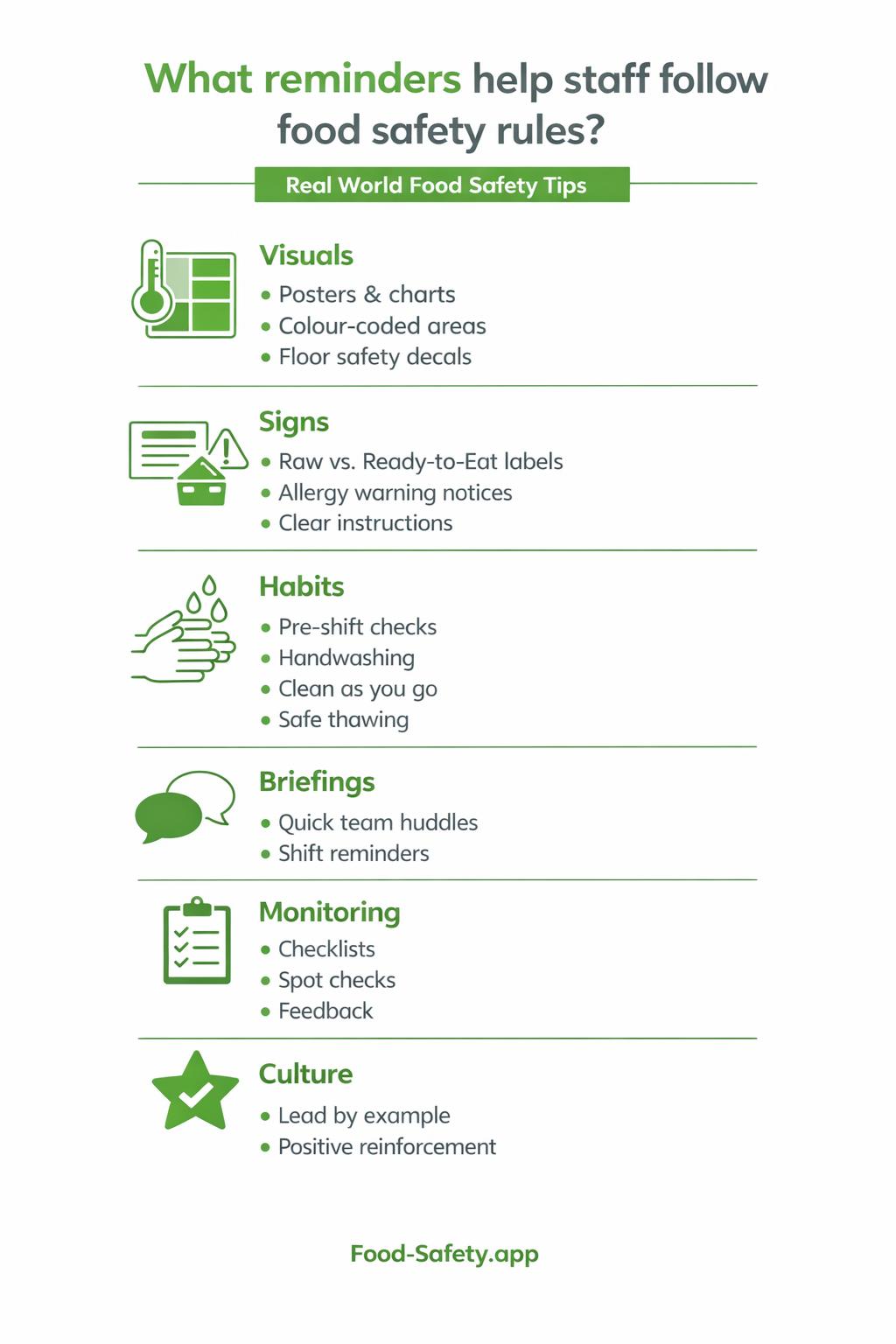
Visual cues are one of the simplest and most effective food safety reminders in a busy food environment. Staff often work under pressure, so clear visual prompts reduce the need to rely on memory alone. Colour-coded chopping boards, labelled storage areas, and simple wall charts help guide safe behaviour without interrupting workflow. These reminders are especially useful for temperature control, cleaning routines, and allergen handling.
Well-placed visuals can reinforce critical rules such as keeping raw and ready-to-eat foods separate or maintaining safe storage temperatures. Many businesses align these with guidance from authorities like the World Health Organization, ensuring staff follow recognised best practice. When visuals are consistent and easy to understand, they quietly shape safer habits every day.
What signs improve staff compliance?
Signs act as constant, visible food safety reminders that prompt immediate action. Placing signage at key decision points—such as handwashing stations, fridge doors, and preparation areas—helps reinforce correct behaviour at the exact moment it matters. Effective signs are short, clear, and action-focused rather than overly detailed.
Examples of useful signs include:
- “Wash hands before handling food” at sinks
- “Check temperature before service” near hot holding units
- “Use separate utensils for allergens” in prep areas
These reminders support compliance with hygiene and safety standards, especially when combined with guidance from cleaning and cross-contamination control practices. When signs are refreshed regularly, staff are more likely to notice and follow them.
How do habits reinforce food safety reminders?
Habits turn food safety reminders into automatic actions. Instead of relying on memory or supervision, staff begin to follow routines naturally. For example, checking fridge temperatures at the same time each day or cleaning as you go becomes part of normal workflow rather than an extra task.
Building habits requires consistency. Managers can support this by setting clear expectations, demonstrating correct practices, and reinforcing them during daily operations. Over time, these repeated actions reduce errors and improve overall compliance. Strong habits are particularly important in high-risk areas such as temperature control and allergen management, where small mistakes can have serious consequences.
Why are briefings effective food safety reminders?
Short team briefings are powerful food safety reminders that keep staff focused and informed. A quick pre-shift discussion can highlight key risks for the day, such as handling allergens, managing deliveries, or maintaining safe temperatures during busy periods. These briefings don’t need to be long—just clear and relevant.
They also provide an opportunity to reinforce training and address any recent issues. For example, if a temperature check was missed or a cleaning task was incomplete, a briefing can reset expectations. Linking these discussions to structured systems, such as HACCP-based food safety systems, helps ensure that reminders are aligned with documented controls and legal requirements.
How does monitoring strengthen food safety reminders?
Monitoring turns reminders into measurable actions. When staff know that checks are recorded and reviewed, they are more likely to follow procedures consistently. This includes logging temperatures, completing cleaning schedules, and recording delivery checks.
Digital tools can make this process easier and more reliable. For example, Food-Safety.app, a food safety management system for catering businesses, allows teams to track tasks with automatic timestamps and clear records. This reduces paperwork errors and ensures that reminders are backed up by evidence, which is essential during inspections or audits.
Monitoring also helps identify patterns. If certain tasks are regularly missed, it may indicate that reminders need to be clearer or better placed.
How does workplace culture support food safety reminders?
A strong food safety culture ensures that reminders are taken seriously rather than ignored. When managers lead by example and prioritise hygiene and safety, staff are more likely to follow suit. Culture is built through consistent messaging, fair accountability, and ongoing training.
Encouraging staff to speak up about risks or mistakes also strengthens food safety practices. This creates an environment where reminders are not just instructions but part of a shared responsibility. Over time, this approach reduces the need for constant supervision and helps maintain high standards across the business.
Ultimately, effective food safety reminders are not about adding more rules but about making safe behaviour easier, clearer, and more consistent in everyday work.