Food safety mistakes in kitchens are usually small, routine errors that happen when teams are busy, under-trained, or relying on weak systems. This guide explains the most common mistakes in commercial kitchens, why they happen, and the practical steps you can take to stop them before they lead to illness, failed inspections, or lost trust.
10 common food safety mistakes in kitchens
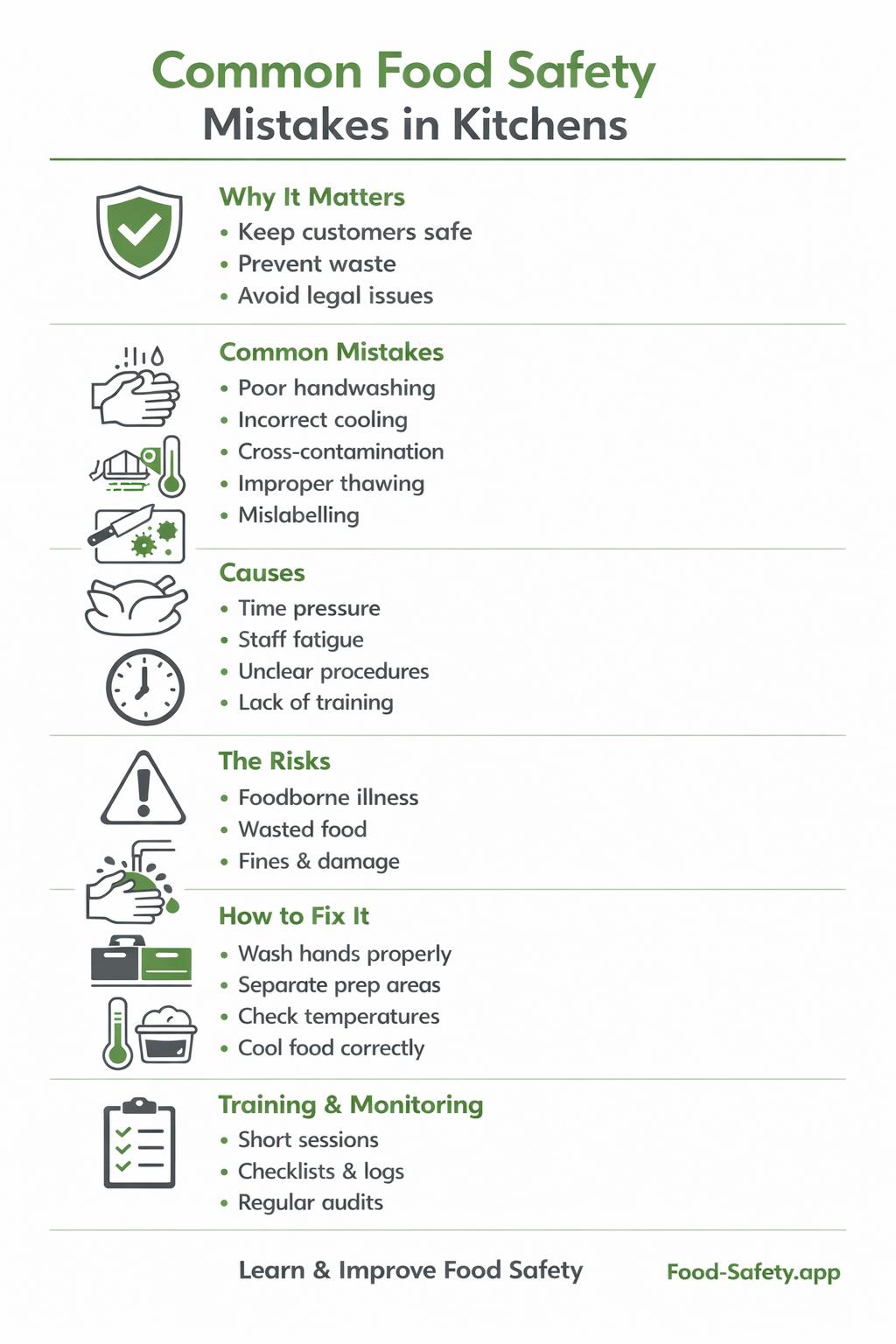
Most food safety failures are not dramatic. They are repeated basics that get missed during deliveries, prep, service, cleaning, or closing checks. The mistakes below are some of the most common in cafés, restaurants, takeaways, and catering businesses.
1. Poor temperature control
Food is often left too long at unsafe temperatures during delivery, prep, cooling, storage, or hot holding. This is one of the fastest ways to create a food safety risk. Staff should understand safe limits for chilled storage, cooking, reheating, cooling, and hot holding, not just “roughly cold” or “piping hot”. Read more about the temperature danger zone and why poor fridge checks lead to food safety failures.
2. Cross-contamination between raw and ready-to-eat food
Storing raw meat above ready-to-eat foods, using the same boards or utensils for different tasks, or failing to clean effectively between jobs can spread harmful bacteria. This is especially risky during busy prep periods when people move quickly between tasks. See how cross-contamination happens and how to stop it for practical controls.
3. Weak hand washing habits
Hand washing is often assumed rather than checked. Staff may rinse quickly, skip washing between tasks, or forget that gloves do not replace clean hands. Hand hygiene slips are common when teams are rushed or moving between raw prep, service, cleaning, and handling money. These two guides are worth linking into staff training: why hand washing is so important for UK food businesses and hand washing between tasks.
4. Dirty cloths, poor cleaning, and weak sanitiser use
Reusable cloths, incorrect sanitiser contact times, and rushed cleaning routines create hidden contamination risks. A kitchen can look clean while still being unsafe. Teams need clear cleaning methods, the right products, and checks that prove cleaning happened properly. More detail is covered in chemical safety and sanitisers.
5. Inaccurate date labelling and stock rotation
Food gets missed, relabelled badly, or kept too long when stock rotation is inconsistent. This creates waste at best and unsafe food at worst. Clear date marking and first-in, first-out routines should be part of everyday kitchen discipline. Useful supporting guidance includes use-by vs best-before date marking and stock rotation made simple.
6. Unsafe cooling and reheating
Cooling cooked food too slowly or reheating food unevenly gives bacteria time to grow. This often happens with rice, sauces, soups, and batch-cooked dishes. Staff need a simple process for rapid cooling, chilled storage, and safe reheating, especially in kitchens that prep ahead. See cooling food safely for busy kitchens and the risks of reheating cooked rice.
7. Poor allergen control
Allergen mistakes often happen when ingredients change, specials are introduced, labels are unclear, or staff guess instead of checking. These errors can have serious consequences very quickly. Good allergen control depends on accurate information, clear communication, and staff knowing when to stop and verify before serving.
8. Weak delivery and receipt checks
If food arrives damaged, warm, out of date, or poorly protected and no one checks it properly, problems enter the kitchen before prep even begins. Deliveries should be checked for temperature, condition, packaging, and labelling. See deliveries and receipt of food for the basics.
9. Incomplete records and backfilled paperwork
Paperwork often fails when the kitchen is busy. Temperature checks get missed, cleaning sheets get ticked later, and corrective actions are not recorded clearly. That creates two problems: the risk itself is missed, and there is no reliable proof that controls are working. This is covered well in why food safety paperwork fails in busy kitchens.
10. Training that is too vague or too infrequent
Some kitchens rely on one-off induction training, but food safety slips happen daily in real working conditions. Staff need refreshers, practical coaching, and role-specific instruction for the tasks they actually carry out. Training should not just explain the rules. It should show what can go wrong during service and what good practice looks like in that kitchen.
Why these mistakes keep happening in busy kitchens
Food safety mistakes are rarely caused by people deliberately ignoring standards. More often, they happen because the kitchen is under pressure and the systems are not strong enough. Common causes include rushed service, high staff turnover, poor supervision, unclear responsibilities, weak opening and closing routines, and training that sounds good on paper but is not reinforced in practice.
Another problem is that written procedures do not always match real behaviour. A kitchen may have cleaning schedules, temperature checks, and delivery records, but if these are hard to complete, confusing, or treated as paperwork rather than controls, people stop taking them seriously. That is when small mistakes become normal.
What inspectors are likely to notice first
Inspectors and environmental health officers usually spot the basics first. They look for the gap between what the business says it does and what is actually happening in the kitchen.
- raw and ready-to-eat foods stored badly
- poor fridge temperatures or missing temperature checks
- dirty cloths, poor cleaning methods, or weak sanitiser control
- unclear date labels and poor stock rotation
- staff washing hands poorly or moving between tasks without controls
- missing records, incomplete checks, or evidence of backfilled paperwork
- staff who cannot explain the procedure they are supposed to follow
If you are preparing for a visit, read preparing for official inspections and your food hygiene rating and what affects your food hygiene rating.
A simple daily checklist to stop mistakes happening
A practical daily routine is often more effective than a long policy document. A basic kitchen checklist should include:
- check fridge and freezer temperatures before service starts
- confirm hot holding and reheating equipment is working properly
- make sure raw and ready-to-eat storage is separated correctly
- check labels, date marks, and stock rotation during prep
- confirm cleaning chemicals are available and used correctly
- replace cloths and sanitise food contact surfaces properly
- review allergen information before service, especially for specials
- check deliveries for temperature, condition, and date coding
- record corrective actions when something goes wrong
- complete a manager review at the end of the day
This kind of routine works best when it is quick, visible, and assigned to named people rather than left as a vague team responsibility.
How to train staff properly to prevent food safety mistakes
Training should be practical, repeated, and linked to real kitchen tasks. New starters need clear onboarding before they handle food, but that is only the beginning. Good kitchens also use refresher sessions, short toolbox talks, shadowing, and spot checks to reinforce standards during normal work.
Focus training on the areas where mistakes happen most: temperature control, hand washing, cross-contamination, cleaning, allergen awareness, date marking, deliveries, and record keeping. Managers should also test understanding by asking staff to explain the process back or demonstrate it in practice. For related reading, see personal hygiene in food business and what the level 3 food safety syllabus covers.
When digital records actually help
Digital systems help when they make food safety controls easier to complete, easier to review, and harder to ignore. They are useful for daily checks, temperature records, cleaning schedules, delivery logs, corrective actions, and proving consistency during inspections. They are less useful when a business expects software to fix weak habits on its own.
Food-Safety.app fits naturally here because it can help kitchens replace missed paper checks with simple digital records, time-stamped monitoring, and clearer accountability. The benefit is not just less paperwork. It is having a system that staff can actually use during busy service without losing control of basic food safety tasks.
Quick self-audit: is your kitchen making these mistakes right now?
Ask these questions honestly:
- Are fridge, freezer, and hot holding temperatures checked consistently every day?
- Can staff explain how raw and ready-to-eat foods are kept separate?
- Are hand washing standards actively reinforced between tasks?
- Are cloths, sanitisers, and cleaning methods being used properly?
- Is every food item labelled clearly and rotated correctly?
- Is cooled food handled with a clear, repeatable process?
- Can staff answer allergen questions without guessing?
- Are delivery checks completed when goods arrive, not later?
- Are records completed accurately at the time of the check?
- Would a manager be confident showing today’s records to an inspector?
If the answer is “no” to three or more of these, there is a good chance your kitchen has avoidable gaps that need attention now.
Final thought
Most food safety mistakes are preventable when kitchens focus on daily discipline, clear procedures, and checks that match real working conditions. The goal is not perfect paperwork. It is a kitchen where people know what to do, do it consistently, and can prove it when it matters.