If you run a café, takeaway, restaurant, food truck or small food business, you’ll hear the term “danger zone” a lot. It sounds serious and it is. The danger zone is one of the biggest risks to food safety and to your customers’ health.
The good news is it’s easy to manage once you understand it. With a few simple habits, you can cut the risk, protect your food hygiene rating and save yourself stress.
Let’s break it down in plain English.
What is the danger zone?
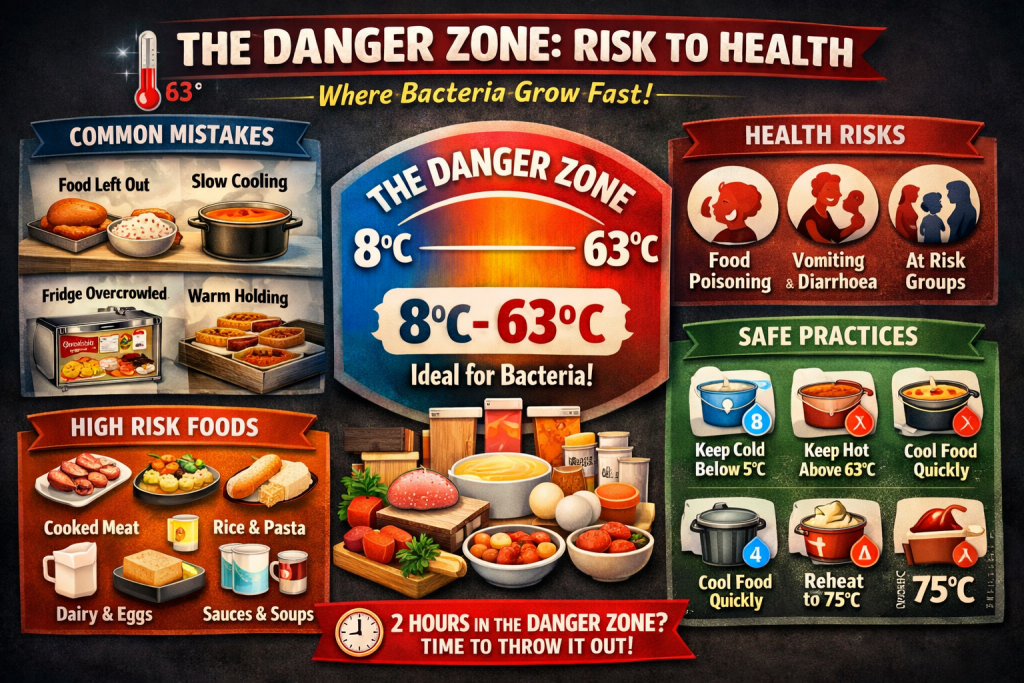
The danger zone is the temperature range where harmful bacteria grow fast in food.
In the UK, the danger zone is between 8°C and 63°C.
When food sits in this range, bacteria like to multiply. The longer food stays there, the higher the risk of food poisoning.
This applies to many everyday foods such as cooked meat, rice, pasta, sauces, soups, dairy and ready to eat meals.
You can’t see, smell or taste these bacteria. Food can look fine and still make someone ill.
Why the danger zone is a real risk to health
Bacteria double quickly in warm conditions. In the danger zone, they can double every 20 minutes.
That means food left out for just two hours can become unsafe.
For customers, this can lead to vomiting, diarrhoea, stomach cramps and fever. For vulnerable people like children, older adults or pregnant women, the effects can be much worse.
For your business, it can mean complaints, poor reviews, inspections and even closure.
Most food poisoning cases come from simple mistakes, not bad intentions.
Common danger zone mistakes in small food businesses
Many danger zone issues happen during busy periods or quiet ones.
Here are some common examples you might recognise.
Food left out during prep
You’re prepping for lunch service. Cooked chicken or rice sits on the counter while you rush to finish orders. Time passes fast.
Even short gaps add up if this happens every day.
Hot food cooling too slowly
Big pots of curry, chilli or soup are left to cool at room temperature. They stay warm for hours.
This is one of the most common causes of food poisoning in takeaways and caterers.
Fridge overcrowding
When fridges are too full, cold air can’t circulate. Some foods end up above 8°C without you realising.
The fridge looks cold but parts of it aren’t.
Hot holding not hot enough
Bain maries, heat lamps or hot counters don’t always keep food above 63°C. Food feels warm but it’s still in the danger zone.
Deliveries left standing
Chilled or frozen deliveries arrive during a rush. Boxes sit in the kitchen before being put away.
Even short delays can push food into unsafe temperatures.
Which foods are most at risk?
Some foods are more dangerous than others.
High risk foods include:
- Cooked meat and poultry
- Minced meat products
- Cooked rice and pasta
- Sauces, gravies and soups
- Dairy products
- Eggs and egg dishes
- Ready to eat foods
These foods need extra care with time and temperature.
How to keep food out of the danger zone
You don’t need fancy equipment or long rules. Simple steps make a big difference.
Keep cold food cold
Chilled food should be kept at 5°C or below.
Check fridge temperatures daily. Don’t guess. Use a probe or built in display.
Avoid overfilling fridges and keep doors closed as much as possible.
Put new deliveries away straight away.
Keep hot food hot
Hot food should be kept at 63°C or above.
Stir food in hot holding units to spread heat evenly. Check temperatures during service.
If food drops below 63°C, reheat it properly or throw it away if it’s been there too long.
Cool food quickly
Cooling is a high risk step.
Split large portions into smaller containers. Use shallow trays. Leave lids off while cooling, but protect food from contamination.
Once cool, put food in the fridge within 90 minutes if possible.
Never leave hot food out overnight.
Reheat properly
Reheating must be quick and thorough.
Food should reach 75°C or above. Stir and check the centre.
Never reheat food more than once.
Use time limits
If food has been in the danger zone for more than two hours, it’s not safe.
If you’re unsure how long it’s been out, don’t take the risk.
Training staff makes a big difference
Your team plays a huge role in food safety.
Make sure staff understand:
- What the danger zone is
- Why temperature checks matter
- When to cool, chill or reheat food
- That shortcuts can make people ill
Simple training and clear rules help everyone do the right thing, even on busy days.
Records protect you and your business
Temperature records might feel boring, but they’re your safety net.
They show you’re in control. They help spot problems early. They also protect you during inspections.
Instead of scraps of paper or forgotten checks, digital records make life easier.
When checks are quick and reminders are built in, they actually get done.
Why the danger zone matters to your food hygiene rating
Environmental Health Officers look closely at time and temperature control.
If they see food in the danger zone, missing records or poor cooling methods, it can lower your rating.
A good rating builds trust. Customers notice it. It affects where they choose to eat.
Staying out of the danger zone helps protect that score.
Making food safety easier day to day
Food safety shouldn’t slow you down or stress you out.
Clear routines, simple checks and good habits keep food safe without getting in the way of service.
Many businesses now use tools that remind staff, store records and reduce paperwork.
If you want to save time, stay compliant and worry less about the danger zone, it’s worth exploring how the Food Safety App can support your daily food safety tasks and keep everything in one place.