Running a busy kitchen isn’t just about food. It’s about people.
People get tired. They rush. They forget. They take shortcuts when pressure hits. That’s not bad behaviour. It’s human behaviour.
Traditional food safety paperwork often ignores this. It assumes everyone has time, focus and perfect memory. In real kitchens, that’s rarely true.
If food safety systems don’t match how people actually work, they fail. This is why paperwork struggles in busy kitchens and why using an app like Food-Safety.app feels easier and more natural.
Kitchens run on habits, not forms
In a working kitchen, most tasks happen on autopilot.
Staff follow routines. They know where things are. They repeat the same actions every shift. This is how kitchens stay fast and efficient.
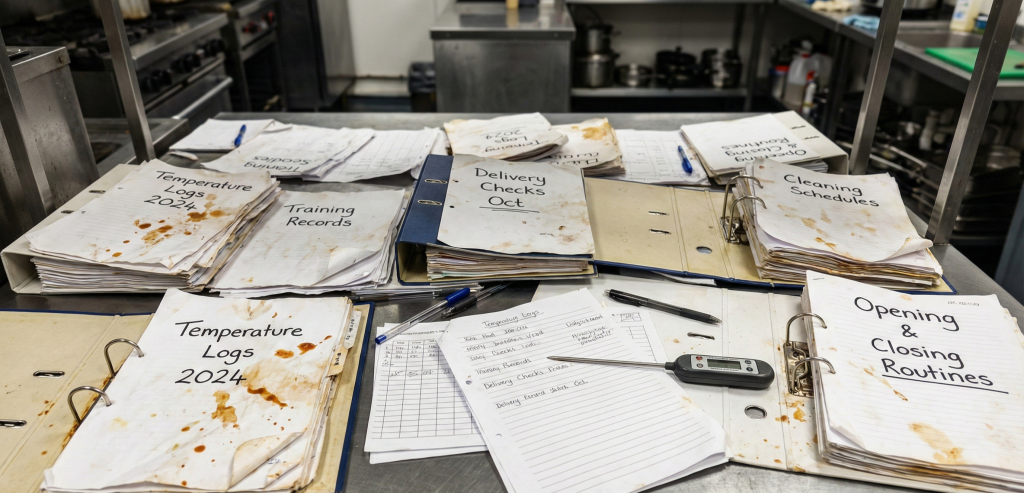
Paperwork sits outside these habits. It’s often kept away from the action. It needs a pen, a clipboard and a pause in work.
When something interrupts the flow, it gets delayed. When it gets delayed, it gets forgotten.
Apps fit into habits better. Staff already use phones and tablets every day. Tapping a screen feels natural. It doesn’t break the rhythm of the kitchen.
Memory is unreliable under pressure
Food safety paperwork relies heavily on memory.
Remember to check the fridge. Remember to fill in the form. Remember to tell someone if there’s a problem.
In a quiet space, that might work. In a hot, noisy kitchen during service, it doesn’t.
Human brains are great at prioritising urgent tasks. Food safety checks don’t always feel urgent, even when they matter.
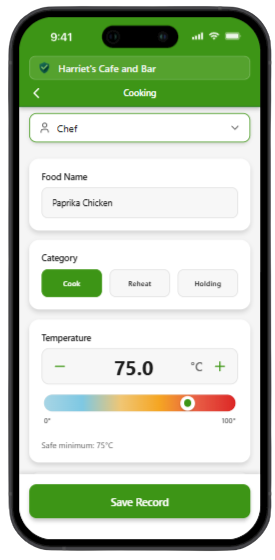
An app supports memory instead of relying on it. Prompts, reminders and alerts tell staff what needs doing and when. Nothing depends on someone remembering at the right moment.
People avoid tasks that feel awkward
Paper forms can feel awkward to use in kitchens.
Hands are wet or gloved. Surfaces are tight. Pens don’t work. Forms get messy.
When a task feels awkward, people avoid it. They say they’ll do it later. Later turns into never.
Using an app is quicker and cleaner. A quick tap. A simple answer. Done in seconds.
When tasks are easy, people are more likely to do them properly.
Paper creates fear of getting it wrong
Some staff worry about paperwork.
They’re not sure what to write. They don’t want to make mistakes. They fear being blamed if something looks wrong.
So they copy old entries or avoid reporting issues.
Apps reduce this fear. Clear questions guide staff. Yes or no answers remove doubt. If there’s a problem, the app can show what to do next.
This builds confidence instead of anxiety.
Real time feedback changes behaviour
Paper records are passive. You write something down and move on.
If a fridge temperature is high, nothing happens unless someone spots it later.
Apps react in real time. If something’s wrong, it’s flagged straight away. Managers can see issues as they happen, not days later.
This helps people act, not just record.
When staff see that checks lead to action, they take them more seriously.
People learn better in small moments
Long training sessions don’t stick. People forget most of what they hear.
Learning works better in small, practical moments. A quick reminder. A short explanation. A clear example.
Apps support this kind of learning. Short prompts explain why a task matters. Simple guidance appears when it’s needed.
This fits how people really learn at work.
Consistency matters more than perfection
Perfect paperwork doesn’t mean safe food.
Consistent checks, honest reporting and quick action matter far more.
Paper systems often look perfect but hide gaps. Apps encourage consistency. They make it easier to do the right thing every day, not just when someone’s watching.
This matches human behaviour better.
Managers need visibility without chasing
Chasing paperwork is frustrating.
Managers ask if checks were done. Staff say yes. Forms appear later or not at all.
This creates tension and mistrust.
Apps give instant visibility. Managers can see what’s been done without interrupting staff. They can support instead of police.
This improves relationships and teamwork.
Stress reduces good decision making
High stress leads to poor decisions. That’s a human fact.
Complex paperwork adds stress. It feels like another thing to get wrong.
Apps reduce mental load. Clear tasks. Clear answers. Clear records.
When stress drops, people perform better. Food safety improves as a result.
Food safety should support people, not fight them
The biggest mistake in food safety is blaming people for system failures.
If a system doesn’t work under pressure, it’s the system that needs changing.
Food-Safety.app is built around how real kitchens and real people work. It supports memory, reduces stress and fits into daily routines.
Food safety becomes part of the job, not a separate chore.
If paperwork keeps failing in your kitchen, it’s not because your team doesn’t care. It’s because the tools don’t match human behaviour.
If you want food safety to feel easier, more intuitive and less stressful, it may be time to explore a system designed for people, not paperwork.