
If you run a café, takeaway, restaurant, food truck or small food production business, hand washing is one rule you can’t afford to get wrong. It’s simple. It’s basic. Yet it’s one of the biggest causes of food safety failures across the UK.
Most food poisoning outbreaks link back to poor personal hygiene. In many cases, the problem is unwashed hands. Even hands that look clean can carry harmful bacteria and viruses. When those hands touch food, germs move fast and customers get sick.
This guide explains why hand washing matters so much, when it must happen, how to do it right and what can go wrong if standards slip. It’s written for busy UK food businesses that want clear answers without jargon.
Why Hand Washing Really Matters
Hands are the main way germs get into food. Staff touch raw meat, bins, phones, money and their face all day long. Each contact adds more risk.
It helps prevent food poisoning
Unwashed hands can carry bacteria and viruses such as E. coli, Salmonella, Campylobacter and norovirus. These germs don’t need much help to spread. One poor hand wash can contaminate food, worktops, equipment and other staff.
A common example is ready to eat food. A worker uses the toilet, doesn’t wash properly and then makes a sandwich. There’s no cooking step to kill germs. The customer eats them directly.
It protects your customers
Some people are far more at risk from food poisoning. This includes elderly people, pregnant women, young children and anyone with a weak immune system. What feels like a mild stomach bug to one person can mean hospital for another.
Good hand hygiene isn’t just about rules. It’s about care.
It protects your business
Poor hand washing can lead to low food hygiene ratings, enforcement action, fines or closure. It can also destroy trust. Once customers lose confidence, they rarely come back.
Under UK food law, saying you forgot or were too busy won’t help. Business owners are responsible for staff behaviour at all times.
How Germs Spread from Hands to Food
Hands pick up germs from everyday tasks without anyone noticing. It happens constantly during a shift.
Common sources include using the toilet, handling raw meat or poultry, touching your face or hair, emptying bins, cleaning and handling money or phones. Without proper washing, those germs move straight onto food and surfaces.
This process is called cross contamination. It’s one of the main things Environmental Health Officers look for during inspections. It’s also one of the easiest risks to control if hand washing rules are clear and followed.
The Legal Rules You Must Follow in the UK
Hand washing isn’t optional. It’s a legal duty.
UK food businesses must follow the Food Safety Act 1990 and Regulation EC 852/2004 on the hygiene of foodstuffs. These laws require high standards of personal hygiene, suitable hand washing facilities and staff washing hands as often as needed to stay safe.
Guidance from the Food Standards Agency makes it clear that effective hand washing is one of the most important controls in any food business. Inspectors expect to see it happening properly, not just written in a policy.
When Hands Must Be Washed
Hands need washing throughout the day, not just at the start of a shift. This is where many businesses fall down.
Hands must be washed before starting food prep and before handling ready to eat food. They must also be washed after using the toilet, handling raw meat, touching your face or hair, cleaning, dealing with waste, eating, drinking, smoking or vaping and after handling money or phones.
A good rule is simple. If you’re not sure, wash your hands. Extra washing never causes a problem. Skipping it often does.
How to Wash Hands the Right Way
A quick rinse under the tap doesn’t count. Proper hand washing takes a bit longer but makes a huge difference.
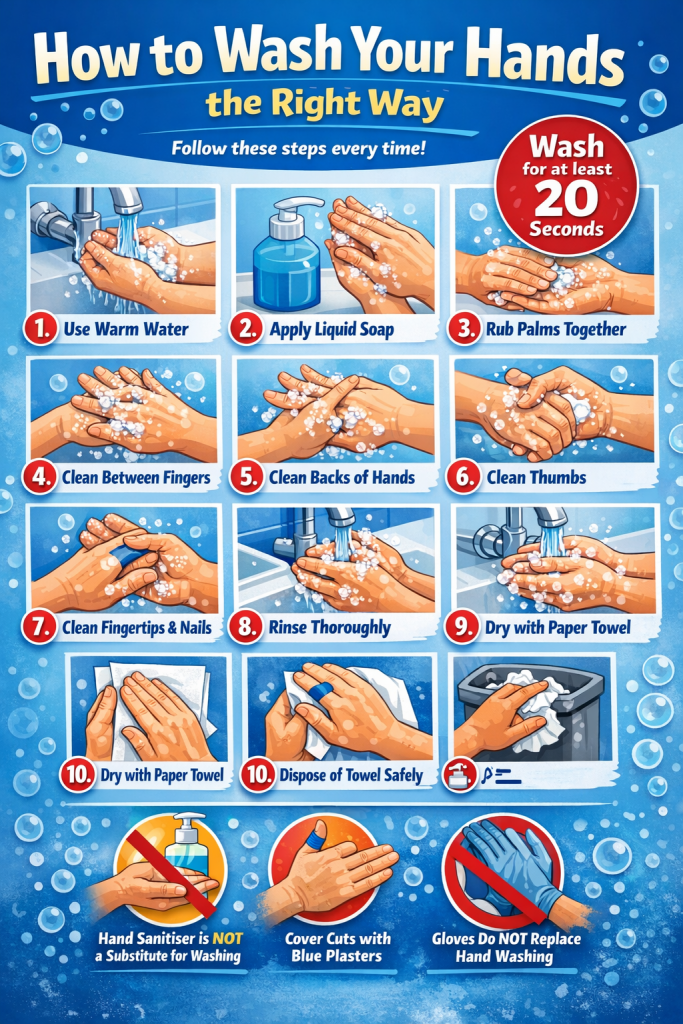
Hands should be washed using warm running water and liquid soap. Rub palms together, clean between fingers, backs of hands, thumbs and fingertips. Nails matter too. The full process should take at least 20 seconds.
After rinsing, hands must be dried properly using disposable paper towels. Damp hands spread germs more easily than dry ones.
Hand sanitiser doesn’t replace hand washing. It may reduce some germs but it doesn’t remove dirt or grease. Gloves don’t replace hand washing either. Dirty hands inside gloves still cause contamination.
Any cuts or sores must be covered with blue waterproof plasters to reduce risk.
Common Hand Washing Mistakes Inspectors See
Many food businesses fail inspections due to small but serious hand hygiene errors.
These include rinsing without soap, washing too quickly, not drying hands properly, wearing gloves over dirty hands, using cloth towels or having blocked or hard to reach sinks.
Each of these tells an inspector that hand hygiene isn’t taken seriously. Damp hands allow germs to survive. Gloves give a false sense of safety. Poor facilities suggest poor management.
Fixing these issues is often quick and low cost but the impact on safety is huge.
Real World Examples from Food Businesses
Good practice is simple and repeatable. A staff member uses the toilet, washes hands correctly, dries them fully and returns to food prep. Risk is controlled. The law is met. Customers stay safe.
Poor practice is just as clear. A worker handles raw chicken, wipes hands on an apron and then prepares salad. That’s high risk. It’s a common cause of food poisoning. It can lead to enforcement action and damage to the business.
Staff behaviour in these moments matters more than paperwork.
Checking Understanding with Your Team
Training only works if people understand why it matters. Short discussions help.
Ask why hand washing is more important than wearing gloves. Talk about what could happen if one staff member ignores the rules. Ask when they last washed their hands during the shift.
Simple checks help reinforce habits. Everyone should know hands need washing for at least 20 seconds, name several times it’s required and explain why sanitiser alone isn’t enough.
The Key Message to Remember
Clean hands save lives. They protect customers and protect your business. Hand washing is one of the simplest food safety controls but it’s also one of the most critical.
If you want an easier way to manage training, reminders and records, it’s worth exploring how the Food Safety App can help you stay compliant while saving time and stress.