
Running a food business means doing lots of small things right every day. One of the most important is hand washing. It sounds basic, but it’s one of the biggest ways to stop germs spreading. When hand washing slips, food safety slips with it.
Whether you run a café, takeaway, restaurant, food truck or production kitchen, clean hands protect your customers, your staff and your reputation. Let’s break it down in a clear and practical way so it’s easy to follow and easy to teach.
Why hand washing really matters
Hands touch everything. Raw food, bins, phones, doors, money and faces. Germs move fast and you can’t see them. If hands aren’t washed properly, those germs end up in food. That’s how people get sick.
Good hand washing helps you meet food hygiene rules. It also supports higher food hygiene ratings and smoother inspections. Most of all, it keeps food safe.
The 20 second rule
A quick rinse doesn’t count. Effective hand washing takes time.
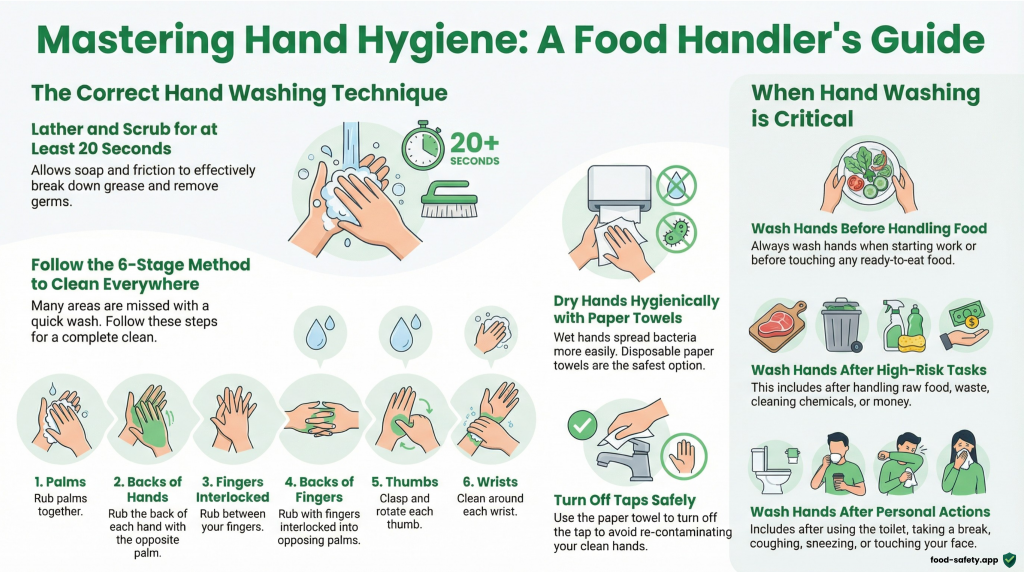
The standard rule is 20 seconds of lathering and scrubbing. That’s after the soap goes on, not including the rinse. If you rush it, germs stay behind.
A simple way to time it is to hum a short tune twice in your head. Many teams use this as a habit. It keeps things consistent and easy to remember.
Warm water is best. Hot water isn’t needed and can dry skin. Cold water makes it harder to wash properly. Soap should be antibacterial or food safe.
The right technique matters
Washing hands isn’t just about time. It’s about where you scrub. Germs hide in places people often miss.
A simple six stage method works well in busy kitchens.
1. Palms
Rub palms together with soap. This spreads the soap and starts the clean.
2. Backs of hands
Rub the back of each hand with the opposite palm. This area is often forgotten.
3. Fingers interlocked
Interlock fingers and scrub between them. Germs love these gaps.
4. Backs of fingers
Press the backs of fingers into the opposite palm and rub.
5. Thumbs
Wrap your hand around each thumb and rotate. Thumbs touch lots of surfaces.
6. Wrists
Finish by washing wrists. Sleeves and gloves don’t protect this area.
Once you’ve scrubbed all areas for 20 seconds, rinse thoroughly. Soap left on the skin can trap dirt later.
Critical times to wash hands
Knowing when to wash is just as important as knowing how. In food businesses, there are key moments where hand washing is non negotiable.
Before starting work
Hands must be clean before touching any food. This includes setting up stations and handling equipment.
After handling raw food
Raw meat, poultry, fish and eggs carry high risk germs. Hands must be washed before touching anything else, especially ready to eat food.
After waste disposal
Bins, food waste and cleaning cloths carry bacteria. Always wash hands after dealing with rubbish.
After breaks
Smoking, eating, drinking and using phones all contaminate hands. Wash before returning to work.
Other times include after using the toilet, after coughing or sneezing, after touching your face and after handling money.
Drying hands properly
Wet hands spread germs more easily than dry ones. Drying is part of the hand washing process, not an extra.
Disposable paper towels are the most hygienic option in food settings. They dry hands quickly and are used once. This reduces cross contamination.
Communal cloth towels are not allowed. They hold moisture and bacteria and are shared by many people. Even personal cloth towels aren’t suitable in kitchens.
Air dryers can be acceptable in some settings, but they take longer and aren’t always practical during busy service. Paper towels remain the safest and simplest choice.
Don’t re contaminate clean hands
You’ve washed your hands properly. The last thing you want is to undo that good work.
Manual taps are a common problem. If you turn them off with clean hands, you pick up germs left behind from before washing.
The simple fix is to use a paper towel. Turn the tap off with the towel, then throw it away. The same applies to door handles in some setups.
This small step makes a big difference and shows good attention to detail during inspections.
Making hand washing a habit
The best systems are simple ones. Clear hand wash sinks, stocked soap and towels and clear signs all help.
Training matters too. New starters should be shown how and when to wash hands, not just told once. Gentle reminders keep standards high.
Good managers lead by example. When staff see you washing hands properly, they follow suit.
Common mistakes to avoid
Many issues come from bad habits rather than bad intent.
Rinsing without soap is a common one. Wearing gloves instead of washing hands is another. Gloves are not a replacement. Dirty gloves spread germs just like dirty hands.
Skipping hand washing during busy times is risky. Pressure is not an excuse. Food safety must come first.
Final thoughts
Hand washing is one of the simplest food safety controls you have. It costs little, takes seconds and protects everyone. When done properly, it prevents illness and supports a strong food safety culture.
If you want an easier way to manage training, reminders and daily checks, it might be time to look at how a Food Safety App can help. The right tools can save time, reduce stress and keep hand hygiene standards consistent across your business.