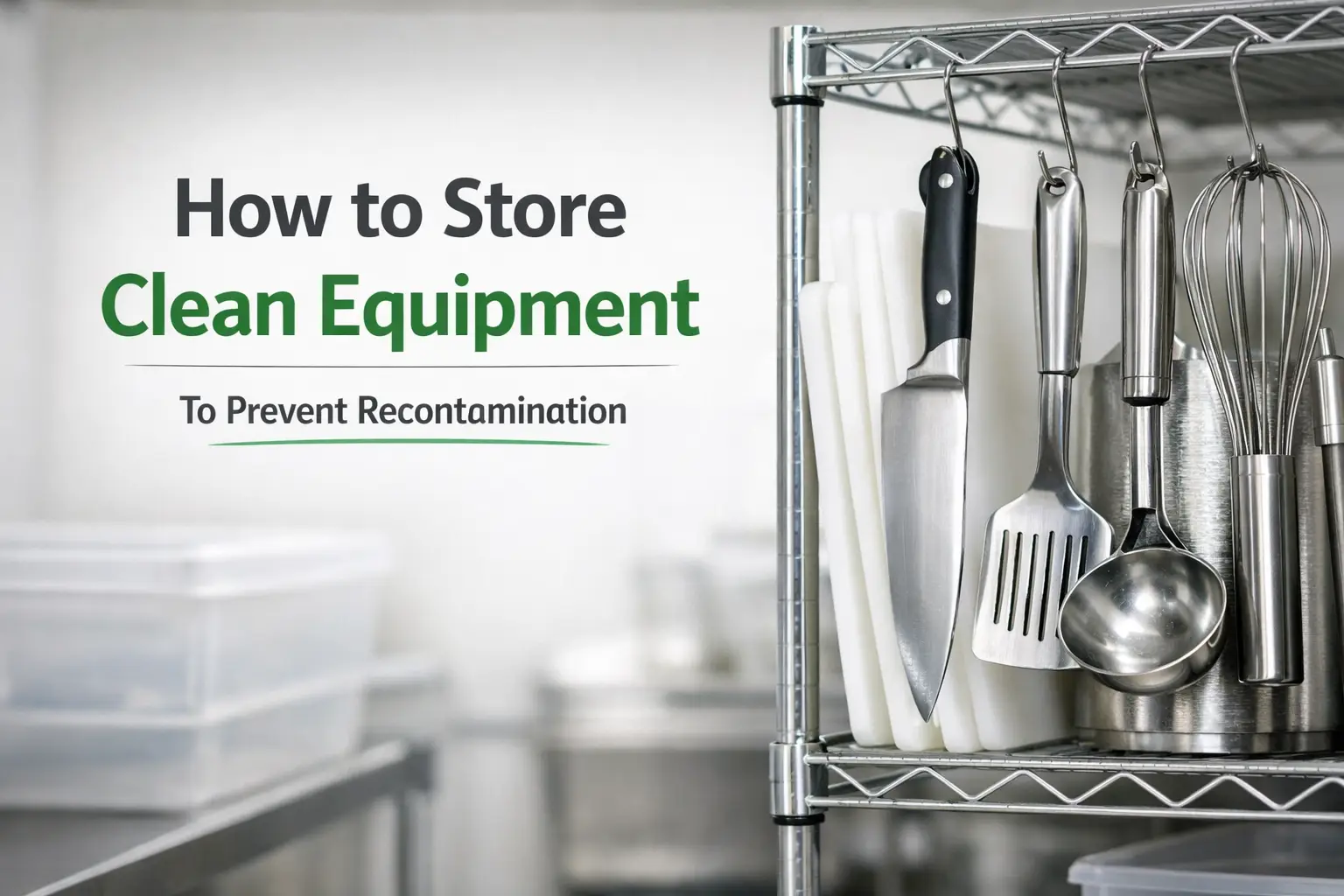
Clean equipment can become recontaminated during storage if the work area isn’t properly separated, items aren’t fully dry, or routines mix clean and dirty workflows. This article gives practical, kitchen-focused guidance for storing utensils, containers and small equipment safely, with simple manager checks to stay compliant during busy service.
Why clean items can become contaminated again
Important: Clean items must never share space with dirty surfaces or waste; contamination transfers quickly with even brief contact.
Even after washing, items exposed to the wrong environment can pick up microbes again. Common culprits include dirty hands handling clean equipment, dusty or damp shelves, splash zones near sinks or dishwashers, poor airflow around storage, and mixing clean items with potential contaminants due to poor segregation.
- Dirty hands or gloves brushing across handles or rims can deposit microbes on clean surfaces.
- Dust, fibres or cleaning residues in shelves can settle on drying surfaces.
- Splash zones around handwash basins or dishwashing areas can wet and transfer contaminants onto stored items.
- Inadequate airflow slows drying and creates damp pockets where bacteria thrive.
- Mixing clean and used items in the same container or area invites cross-contamination.
Example: a clean chopping board stacked damp on a shelf may become recontaminated as condensation from warmer air drips onto it later. Another scenario is spoons stored uncovered near a handwash sink, splashed during service and then touching other utensils.
Keep the washing and storage environment separate, and ensure surfaces dry completely before stacking.
Bad storage habits to avoid
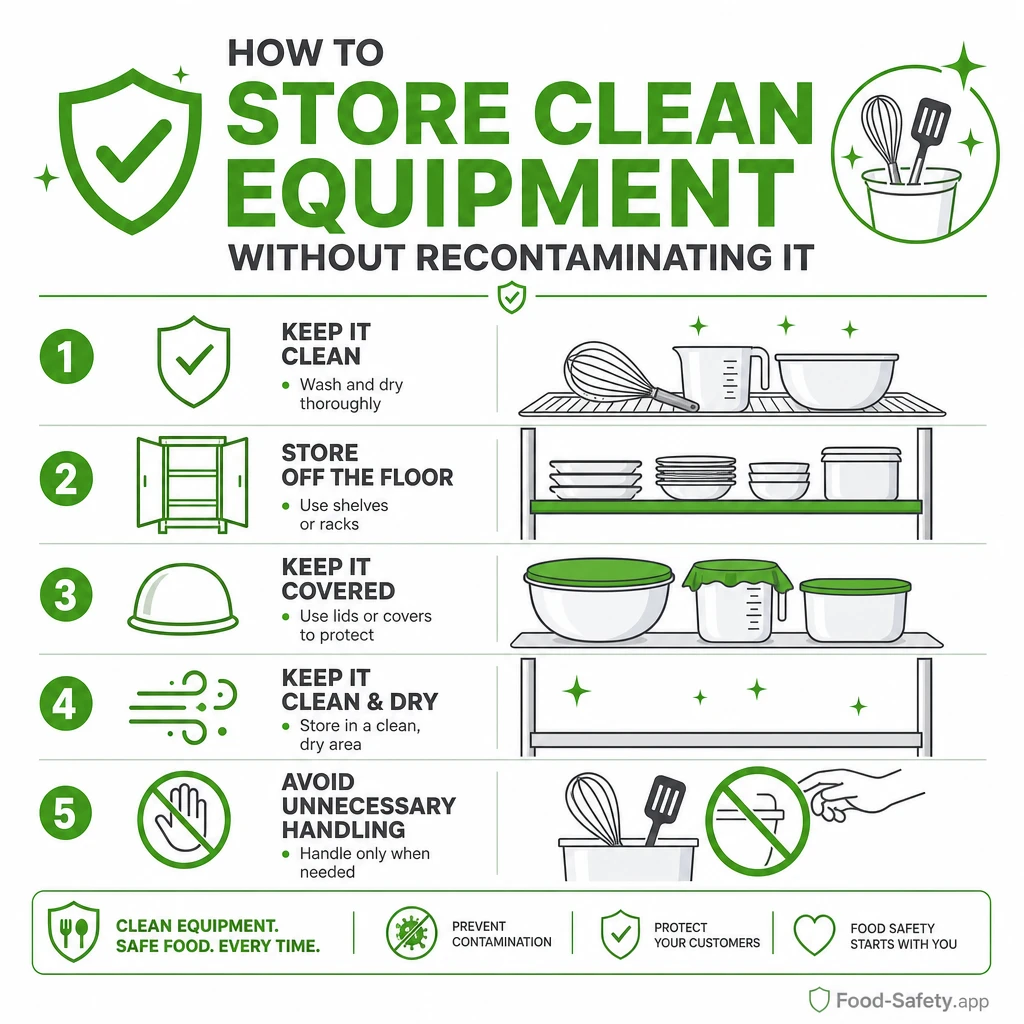
Avoid practices that encourage recontamination. Simple changes can dramatically reduce risk.
- Stacking items while still damp
- Leaving utensils uncovered or exposed to dust
- Storing clean kit near raw food preparation, waste or cleaning chemicals
- Overfilling shelves, which prevents air flow and thorough drying
Tip: A brief, visual checklist for each shift helps staff recognise and correct bad habits before service begins.
- Store all items with some form of cover or lid where practical.
- Place high-risk or small items into labeled containers to protect them from splash and dust.
- Keep a dedicated route for clean items, separate from dirty or used equipment.
Scenario note: during a busy service, clean trays placed on a greasy prep table before use can pick up fats and residues, compromising cleanliness prior to use.
Air drying and stacking rules
Key principle: Dry, protected storage reduces microbial growth and makes routine checks easier.
Air drying is a critical part of ensuring stored items stay clean. Follow these rules to keep equipment dry, uncontaminated and ready for use.
- Allow items to dry fully after washing; do not stack dampware.
- Keep washing and storage areas separate to prevent splash contamination and moisture transfer.
- Store items upside down where suitable to protect surfaces from dust and splash.
- Avoid nesting wet equipment inside other items, which traps moisture.
Practical guidance:
- Use dedicated drying racks with space between items.
- For small tools, consider perforated bins that promote airflow.
- Label shelves clearly to reinforce where clean, dry items belong.
Handling clean utensils safely
Operational reminder: A quick reminder on entering and exiting the clean zone can halve accidental cross-contamination events.
Safe handling prevents recontamination from the moment items are touched. Use clean hands or appropriate tools, and separate routes for clean and dirty items.
- Use clean hands only or tongs when handling clean utensils; never touch food-contact surfaces with dirty hands.
- Maintain separate routes for clean and dirty utensils during transport to storage.
- Avoid touching food-contact surfaces of equipment after it’s been washed; if you must handle, use clean gloves or tongs.
During service, a busy breakfast can see clean tongs mixed with used ones in the same container. Ensure containers are clearly designated for clean items only and are emptied and cleaned regularly.
Setting up storage zones
Rule of thumb: When in doubt, separate by zone and protect items with lid or cover.
A clear layout makes compliance easier. Define, label and maintain separate zones for clean, dirty and in-use items.
- Define clean, dirty and in-use areas with clear room segregation.
- Label shelves and containers so staff can quickly identify where items belong.
- Use covered containers or baskets for clean items to protect from splash, dust and pests.
- Keep high-risk items off the floor and away from waste or grease-prone zones.
Simple shelf maps or zone plans help new staff and temporary workers follow the rules consistently.
S imple checks for managers
Management takeaway: Document any storage failures as defects and record corrective actions to build a track record for inspections.
Managers can maintain compliance with a few routine checks. Use quick visual and physical checks at shift handover or opening/closing to keep storage consistent.
- Visual checks of shelving condition: no visible moisture, dust, or residue; shelves dry and clean.
- Signs of moisture or condensation on stored items or shelves.
- Evidence of pest activity or droppings near storage areas.
- Staff compliance with storage rules: items returned to their correct zones, containers closed, and no overfilled shelves.
- Consistency with the opening/closing checklist and cleaning schedule links to storage controls.
Quick practical examples to illustrate safe practice
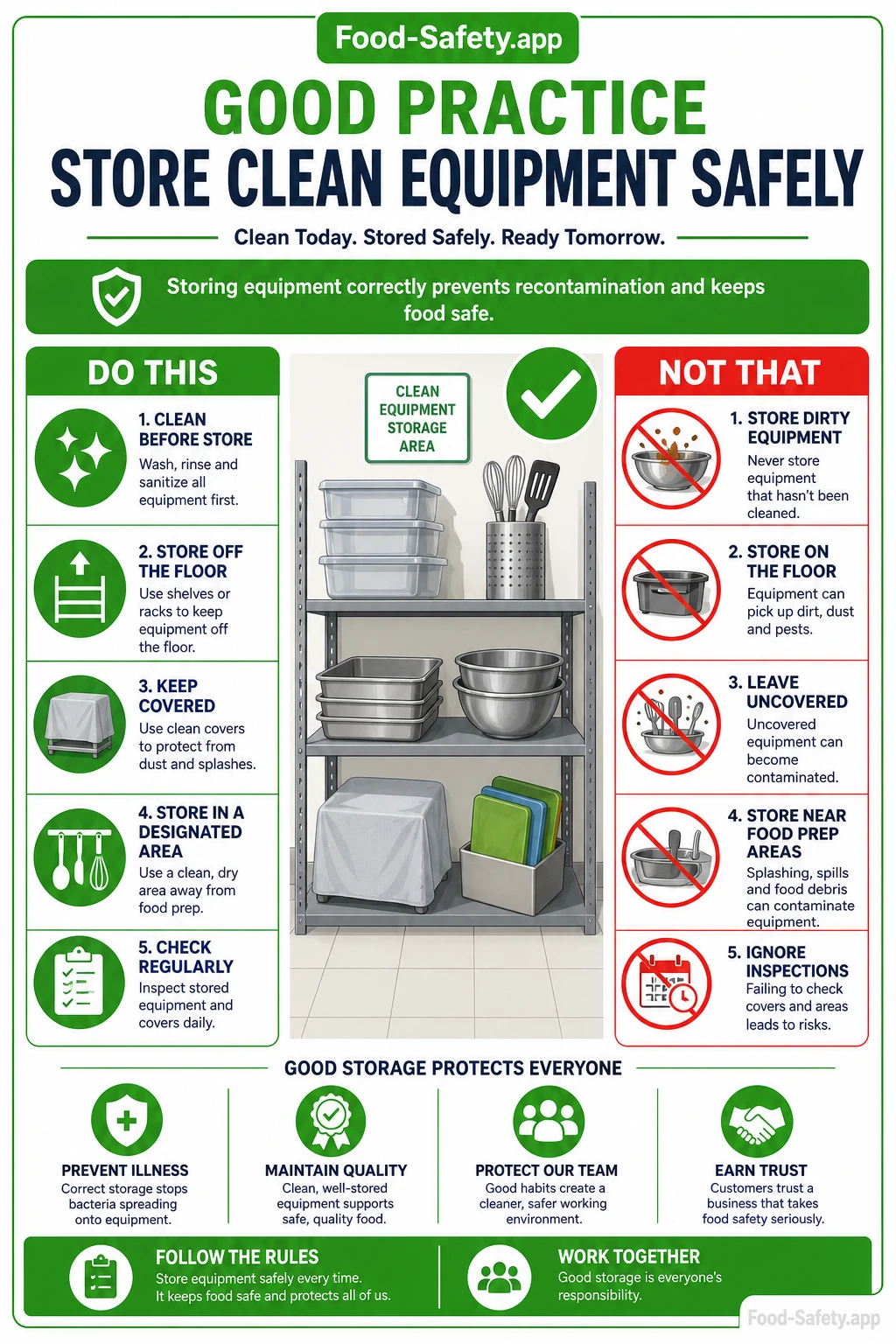
- A clean chopping board stacked damp on a shelf collects condensation and recontaminates the surface.
- Spoons stored uncovered near a handwash sink get splashed during service and soil nearby utensils.
- Clean trays placed on a greasy prep table before use risk transferring fats to the clean surface.
- Tea towels or cloths used to “dry” equipment transfer bacteria back onto surfaces if not properly laundered.
- A busy breakfast service where clean tongs are mixed with used ones in the same container creates immediate cross-contamination risk.
Conclusion
Effective storage of clean equipment hinges on separating zones, ensuring complete drying, and maintaining simple, repeatable routines. With clear zones, proper handling, and routine checks, kitchens can minimise recontamination and extend the safe life of their utensils, containers and small gear. Include storage rules in induction, tie them to cleaning schedules, and record any storage faults as defects— consistent practice is the best protection against cross-contamination.
Blockquotes in this article highlight essential reminders to keep teams on track:
Keeping clean items away from dirty zones is essential for microbiological safety.
Drying completely before stacking dramatically reduces microbial growth.
Separate routes for clean and dirty items prevent accidental cross-contamination.
Use clearly labeled, covered containers for all clean utensils.
A simple zone map keeps everyone aligned and inspections straightforward.