
Understanding HACCP principles in everyday catering is vital for consistent safety and smoother inspections. This UK-friendly guide breaks down the seven principles into plain terms, with real kitchen examples and simple daily checks. Learn how to identify risks, decide where to control them, set practical limits, monitor actions, and keep records that prove your compliance.
Hazard analysis and CCP determination
A simple hazard analysis highlights the most common risks (undercooking, cross‑contamination, faulty cooling, dirty equipment, and allergen mistakes) so you can focus controls where they matter.
Hazard analysis is about spotting what could cause harm in your operation, before it happens. In catering, focus on biological, chemical, physical, and allergen risks. The goal is to understand which hazards are most likely and would have the biggest impact on safety.
Common catering hazards include undercooking, cross‑contamination between raw and ready‑to‑eat foods, poor cooling of hot dishes, dirty equipment, and allergen mistakes on menus or at service.
Critical control points are about timing and temperature, not paperwork. If you can’t reliably manage the limit, you need a different control or a safer procedure.
A practical takeaway: keep your hazard list lean and linked to real kitchen actions. If a hazard isn’t controllable at a specific step, you either reduce the risk elsewhere or remove that step from the process.
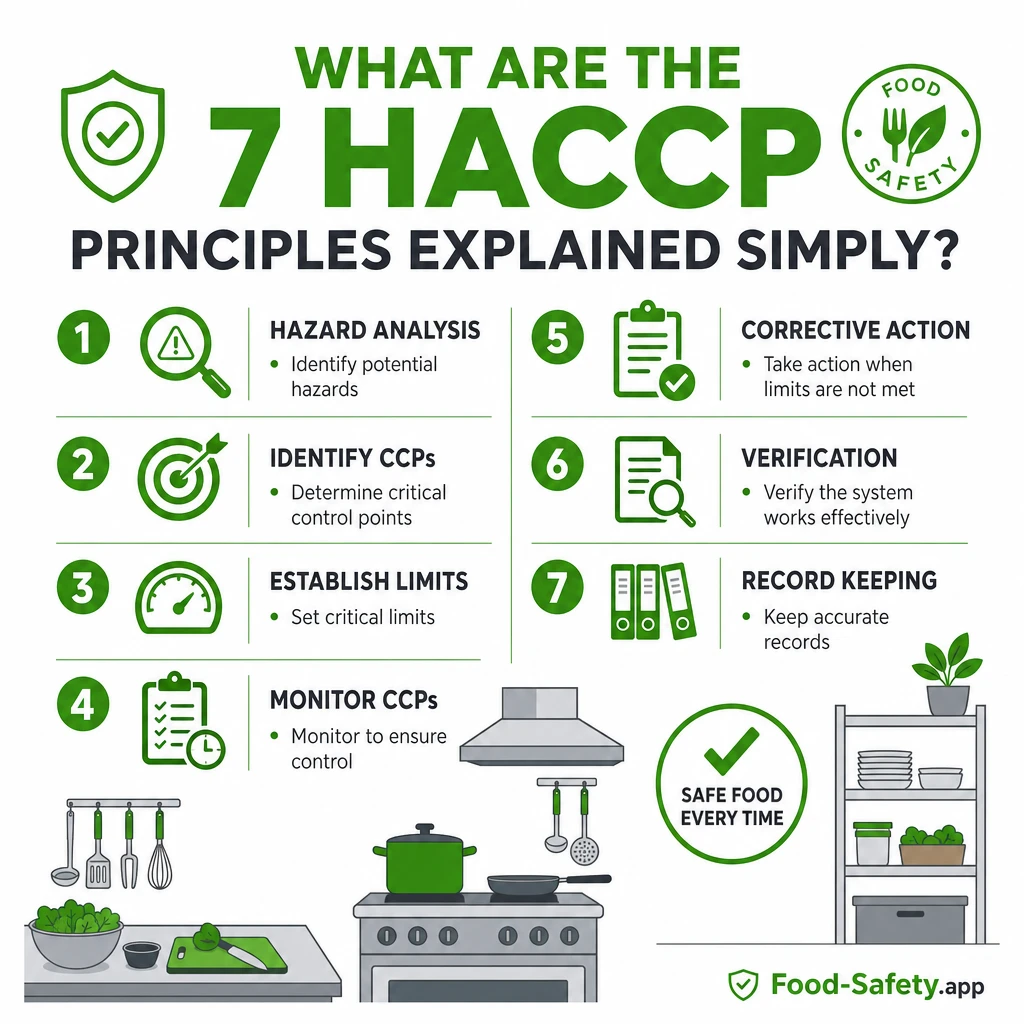
Set critical limits
Keep limits practical and visual: thermometer checks, fridge temperatures, and holding temperatures that staff can verify quickly during service.
Critical limits are the measurable values that determine whether a CCP is under control. They should be clear, achievable in a busy kitchen, and easy to verify.
- Cold storage kept at or below 5°C.
- Food cooked to a safe core temperature for the product.
- Hot held foods kept above about 60°C during service.
- Rapid cooling methods to reduce time in the danger zone.
- Clear checks on deliveries for temperature and integrity.
The limits aren’t arbitrary; they reflect what keeps food safe in typical catering practice. Use calibrated thermometers and simple, repeatable checks, recorded with a timestamp and the staff member’s initials.
If a limit is missed, you must act immediately to prevent unsafe food from reaching customers. The objective is to recover control as soon as possible and document what happened.
Monitoring is the backbone of HACCP; without it, a plan is just paperwork.
Common pitfalls to avoid:
- Skipping temperature checks during peak service.
- Using the same thermometer without calibration.
- Relying on appearance or smell to judge safety.
Monitor critical control points
Monitoring is cheap and effective when built into routine service: simple checks by staff, with clear responsibilities and timestamps.
Monitoring translates the planned limits into daily practice. It’s about routine, not drama — the checks you perform, the records you keep, and who is responsible.
Key monitoring activities in a busy kitchen:
- Temperature checks for refrigeration and hot holding.
- Core temperature testing of cooked products with a probe thermometer.
- Cleaning and sanitising completion after daily tasks.
- Receiving checks on deliveries for temperature and integrity.
- Equipment condition and calibration status checks.
Structured but simple routines work best. For example, staff can log fridge temperatures twice per shift, check a probe calibration weekly, and confirm hot held foods stay above the set limit during service.
Common pitfalls to avoid:
- Skipping temperature checks during peak service.
- Using the same thermometer without calibration.
- Relying on appearance or smell to judge safety.
Take corrective action
When a limit is missed, your plan should tell you exactly what to do, who acts, and how to record the outcome.
Corrective action is what you do when a critical limit isn’t met. There should be a predefined, practical response so decisions are fast and consistent.
Practical corrective actions include:
- If a batch isn’t at a safe core temperature, isolate it, re‑cook or discard as appropriate, and document the decision.
- If a fridge is above target, move stock to a functioning unit, log the fault, and prevent use of affected items.
- If a delivery arrives warm, reject the delivery or request immediate cold storage, with a record of the decision.
- If a probe isn’t calibrated, remove that device from use and replace it or have it serviced.
Record the action taken and the result, so you can spot patterns and demonstrate to inspectors that you’ve responded correctly.
Verify the system works
Verification and records aren’t just about compliance; they show trends, spot problems early, and protect customers.
Verification checks that the HACCP plan actually works over time, not just on a good day. It involves reviewing records, spotting trends, and confirming controls are being followed.
Key verification activities:
- Periodic audits of records and history exports.
- Spot checks of cleaning completion and effectiveness.
- Manager review of cooking, cooling, and holding practices.
- Trend analysis to see if incidents are rising or falling.
- Ensuring all controls reflect current menus and equipment.
If you find recurring issues, it’s a sign you may need to adjust your CCPs, limits, or monitoring frequency. Regular review keeps the system useful rather than bureaucratic.
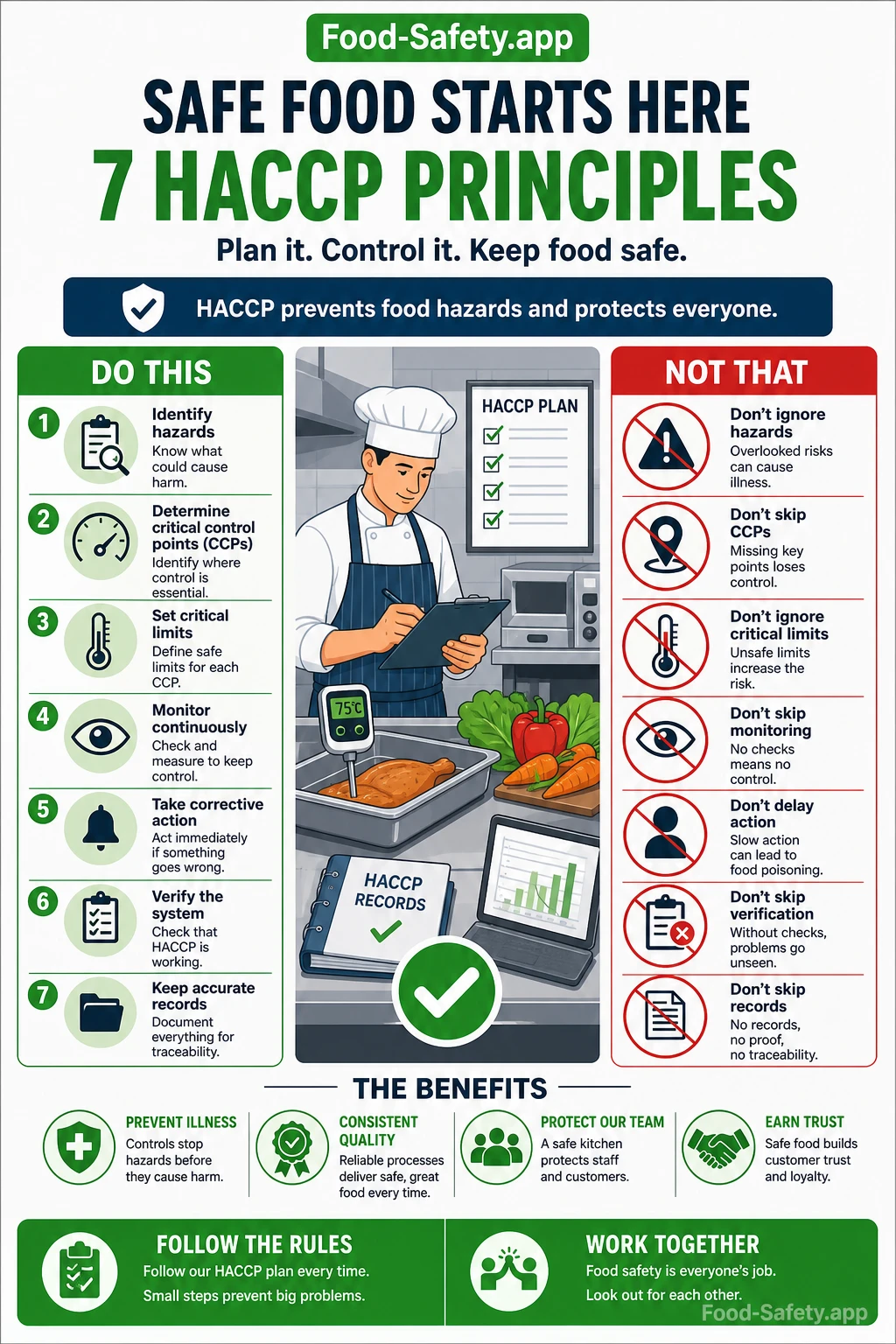
Keep records and documentation
Verification and records aren’t just about compliance; they show trends, spot problems early, and protect customers.
Keeping well‑ordered records supports inspections and daily accountability. Well‑designed records help you track control, identify problems, and prove that you’re actively managing food safety.
Useful records to maintain:
- Temperature logs for fridges and freezers.
- Cleaning schedules and sanitiser verification.
- Allergen records and menu item cross‑checks.
- Defect and incident reports, with actions taken.
- Pest sightings and corrective responses.
- Training certificates and staff competency checks.
- Corrective action logs and outcomes.
Keep records simple, ensure employees can add entries quickly, and make sure the system stores data with clear timestamps and responsible persons. If procedures change, update the records promptly to reflect new controls.
If you’re aiming for practical HACCP in a small catering team, remember:
- Focus daily checks on the places where risk is highest.
- Use clear, achievable limits and simple verification methods.
- Keep records concise but complete enough for audits.
- Use digital tools where appropriate to keep evidence ready for inspections.
The safest procedure is the one that can be followed consistently during a busy service.