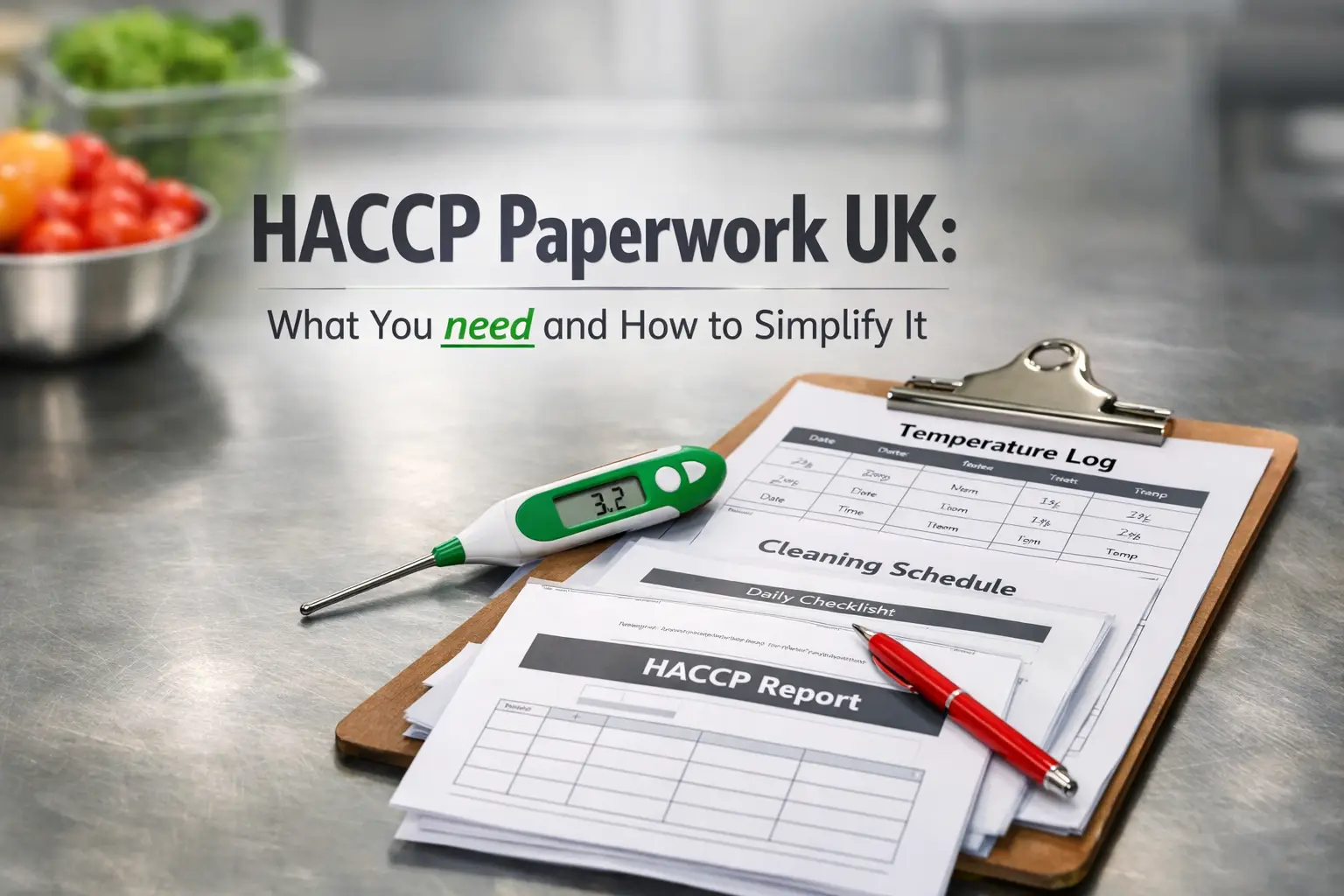
Too much paperwork can make HACCP feel like a barrier rather than a safety tool. In small catering teams, lengthy templates, repeated data and misaligned forms waste time and dull attention to critical controls. This guide shows how to trim, tailor and consolidate HACCP records so staff record the right checks, stay compliant and keep safety as the default, not the exception.
Why HACCP paperwork becomes unworkable in small catering operations
Important: When the form asks for every possible detail, staff default to “fill and file,” not “verify and act.”
In small cafés, pubs and care settings, HACCP packs can feel like they’ve grown beyond what the team can manage. Long templates, repeated entries and packs that don’t reflect real daily practice tempt staff to rush, skip steps or copy data without thinking about the risk. The result is a paperwork appearance of compliance but a drift in actual controls.
A lean approach starts with keeping only the checks that matter for your operation. If a control point isn’t likely to fail or isn’t relevant to what you serve, it shouldn’t need a separate, multi‑page form. This helps front‑line teams focus on the key moments that keep customers safe.
Practical example
A small café uses one daily opening/check log to cover fridge temperatures and surface cleaning, instead of separate sheets for each task. This keeps the team focused on the first‑hour priorities of the day.
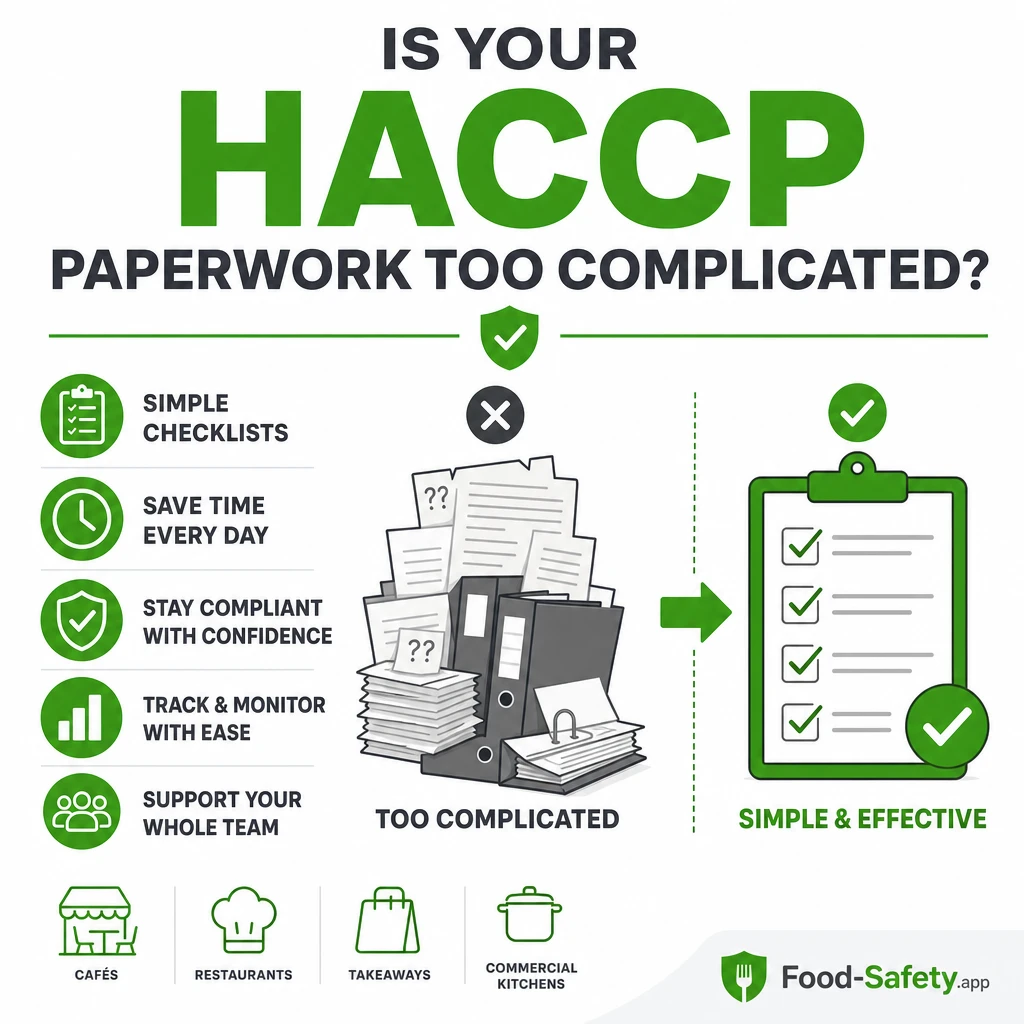
Designing simpler controls that match real risk
Key distinction: separate what must be done (the action) from why it matters (the risk). That makes compliance intuitive.
Controls should mirror the actual hazards you face, not a generic industry checklist. Identify your Critical Control Points (CCPs) and write prompts that guide staff to verify, not to guess. Limit the number of checks to what genuinely reduces risk, and phrase them in clear, actionable language.
Keep language consistent across forms and avoid duplicating questions across different documents. This reduces confusion and strengthens staff confidence that they’re doing the right thing, not just filling in boxes.
Practical example
In a busy kitchen, the team uses a single temperature‑log with prompts that tie each reading to a corrective action if the limit is exceeded, rather than separate notes for “cooling records” and “refrigerator checks.”
Removing duplicate forms and consolidating records
Caution: duplication can hide problems. A single, well‑structured log is easier to review and more trustworthy in an investigation.
Duplication wastes time and creates gaps in traceability. If the same information is being recorded twice, link it to a single primary log. Consolidation also makes audits easier because every essential data point sits in one place.
Consolidation doesn’t mean cramming everything into one sheet. It means designing a small number of practical forms that cover all necessary data without repeating the same fields in multiple places.
Practical example
A busy pub kitchen links all temperature notes to one temperature log, removing separate cooling records and reducing admin time during service.
Making safe methods easy to follow by using short clear tasks and prompts
Important: the safest procedure is the one staff can follow consistently.
People perform better when tasks are straightforward. Use short, concrete prompts and checklists that staff can complete quickly during service. Avoid jargon, and provide prompts that remind staff what to do next rather than leaving them to figure it out.
Keep opening and service checks as brief, paper‑based prompts. Where possible, use yes/no questions or simple pass/fail indicators, with space for brief notes only when a deviation occurs.
Practical example
A supervisor uses a compact, action‑oriented opening checklist with prompts like “Fridge door closed? Yes. Temperature within limit? Yes.” If an action is required, the log prompts the next step and the responsible person.
Use one structured record for temperature checks cleaning opening checks and corrective actions where possible
Suggested structure:
- Date and time
- Area or equipment
- Temperature reading and limit
- Cleaning status (Yes/No)
- Opening check (Yes/No)
- Corrective action taken (brief description)
This approach improves traceability and makes it easier to review trends over time. It also reduces the likelihood of missing an important entry because information is scattered across several forms.
Practical example
A care home uses one simple log to capture fridge temperature, cleaning notes, and any corrective actions, all in one place, with automatic timestamps when available and a short narrative field for the action taken.
Customise forms to suit the kitchen menu and service style rather than copying a generic pack
Important: staff are more likely to record properly when the form feels relevant and practical for their day.
Generic packs rarely match a particular kitchen’s rhythm. Tailor forms to reflect your menu, service style and equipment. Use familiar language, align with service steps, and drop any fields that don’t apply. Customisation increases usability, encourages consistency, and reduces resistance to recording.
Include options to capture service deviations and allergen handling in a way that staff can access quickly during service. Review forms regularly with front‑line teams to identify which fields are genuinely useful and which can be removed.
Practical example
A small café designs a daily checklist that integrates opening checks, fridge temperatures and cleaning tasks in one sheet, with a quick cue to record any notable incidents during service.
If you’re aiming to keep HACCP paperwork efficient without weakening compliance, start by trimming to real risk, eliminating duplicates, and building a single, easy‑to‑use log that supports your daily routine. Regular staff training and periodic form reviews will help ensure the system stays practical as menus and service evolve.