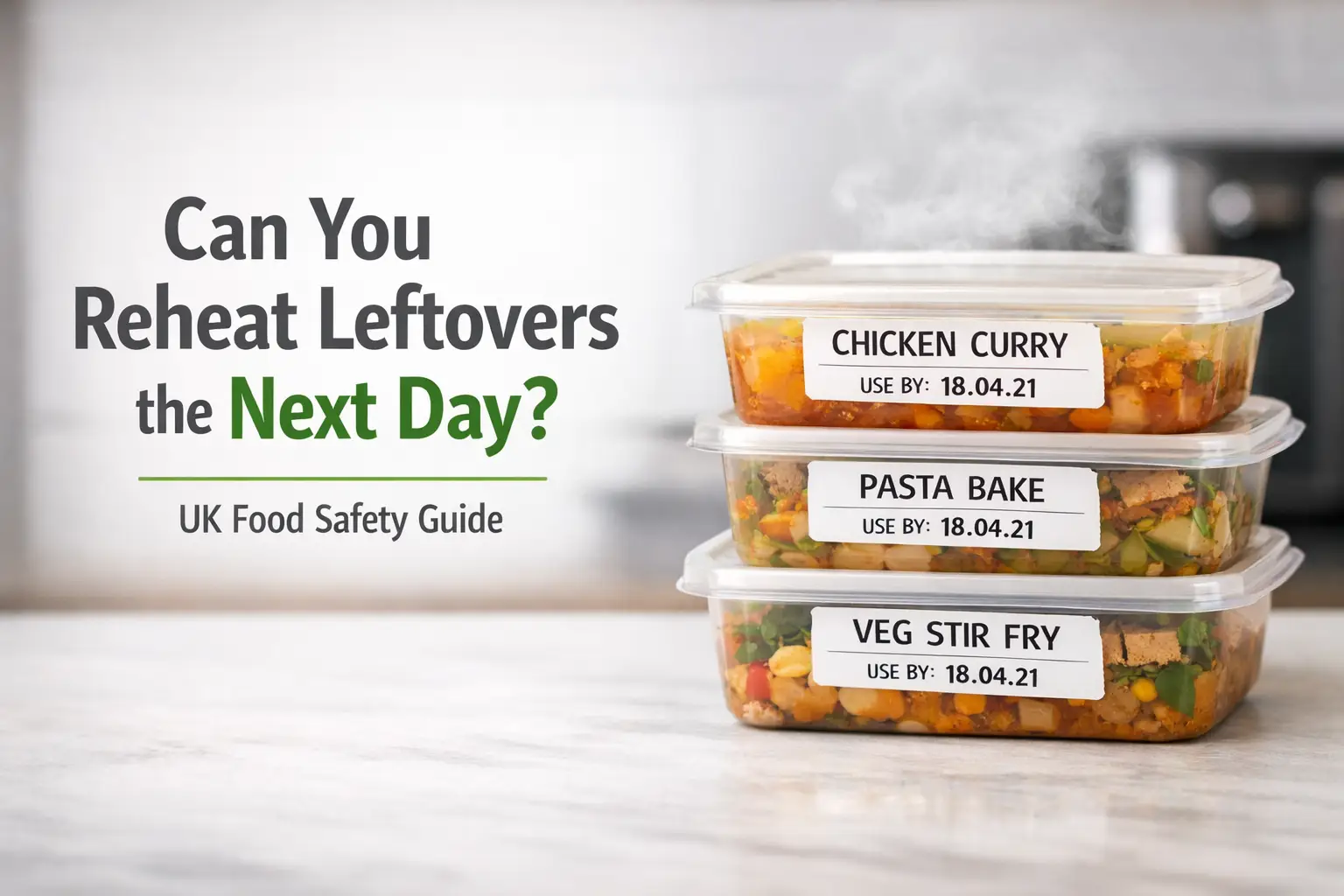
If your kitchen reuses leftovers, you need clear rules on what can be saved, how to cool and store it, and when to discard. This guide clarifies leftovers, flags high‑risk foods, outlines safe cooling and reheating practices, and highlights the records that back up good hygiene in busy catering environments.
What counts as leftovers
Leftovers should be clearly identified, labelled, and stored promptly. If it isn’t easily identifiable as a saved portion, treat it as waste.
Practical examples help staff decide quickly:
- Roast dinner cooked for a lunch service and cooled for next‑day staff meals.
- Extra cooked vegetables kept for use in a future dish.
- Opened cooked chicken from a prep station kept under date control for a sandwich line.
Items that are not leftovers or must be treated with extra caution include anything spoiled, contaminated, or left out at room temperature beyond your kitchen’s policy. If there’s any doubt, dispose of it.
A simple rule: only items clearly prepared for reuse and kept within agreed storage guidelines qualify as leftovers.
High-risk foods and handling considerations
Foods with higher risk after service require tighter controls: avoid leaving rice, gravies, dairy‑based dishes, or cooked meat at room temperature for long, and watch for cross‑contact.
Open containers or buffet-style dishes add another layer of risk. If you’re unsure how long a dish sat at room temperature or whether it was kept on a hot pass, treat it as not reusable.
Some foods carry higher risk once cooled and stored. The main categories to flag in busy kitchens include:
- Rice and pasta
- Cooked meats and poultry
- Gravies and sauces
- Dairy-based dishes
- Cooked vegetables
- Foods handled at room temperature during service or preparation
Cooling and storage rules
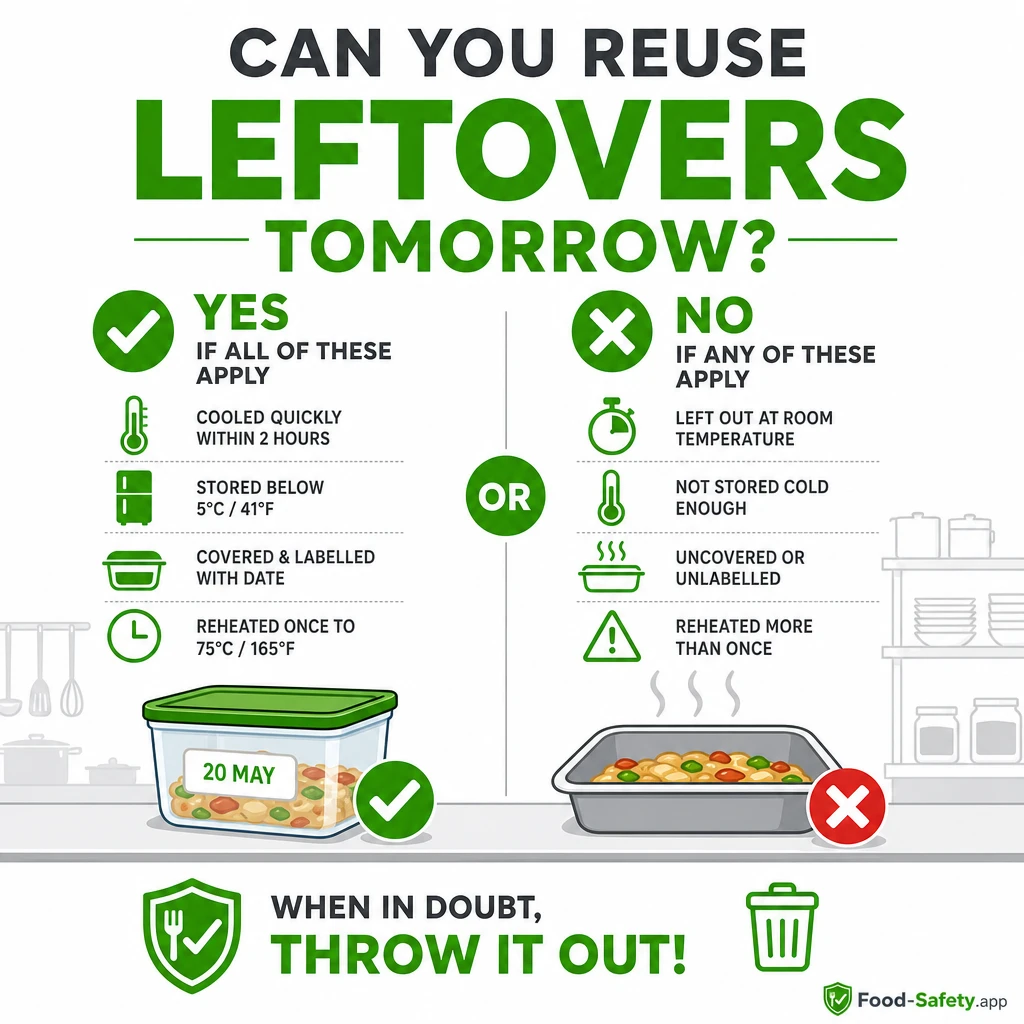
Rapid cooling matters: spread foods in shallow containers, label with date and time, and move to chilled storage promptly.
Cooling and storage are critical controls for safety. The core practice is to cool quickly, keep items covered, label them with date, and move them to chilled storage within safe time limits.
Key steps to implement:
- Cool hot food quickly by spreading it into shallow containers or using rapid cooling methods.
- Cover containers and clearly label with the dish name and date.
- Move items to the fridge promptly and ensure the fridge is functioning within safe operating conditions.
- Keep stored leftovers separate from ready‑to‑eat foods to minimise cross‑contamination.
- Use a simple daily check to confirm cooling progress and fridge temperatures.
Practical scenarios:
- Soup made in bulk, cooled in shallow pans, then stored in the fridge for service the next day.
- Opened cooked chicken kept in a prep area for later sandwich production, under visible date control.
- A batch of gravy or sauce cooled and logged before being used again.
Reheating safely for reuse
Reheat only once, thoroughly, and avoid multiple cycles of cooling and reheating.
Reheating is a high‑risk step if not done correctly. Rules to follow in busy kitchens:
- Reheat once only. Do not repeatedly cool and reheat leftovers.
- Reheat until steaming hot throughout and held at serving temperature before plating.
- Use the appropriate equipment to ensure even heat distribution (stoves, ovens, or steamers as supplied).
- If leftovers have already been reheated or cooled again, discard rather than risk safety.
Examples:
- Bulk‑made soup reheated for service the next day and served immediately after reheating.
- Opened chicken used in a sandwich area reheated once, then used within the same shift.
If you’re unsure whether a dish remains safe after reheating, err on the side of disposal. It’s better to waste a portion than risk illness.
The safest procedure is the one that can be followed consistently during a busy service.
When to throw away and disposal decisions
When in doubt about time, temperature, or handling, discard to protect customers and staff. Better to waste than risk illness.
Reasons to discard:
- Time, temperature, or handling of the food cannot be verified.
- Food has been left out too long or shows signs of potential contamination.
- There is any doubt about whether safe cooling or reheating steps were followed.
Practical triggers:
- A dish from a hot pass sat unmonitored for an extended period.
- A buffet item that wasn’t cooled effectively and logged.
- An opened cooked product with uncertain date control.
Scenario notes:
- Roast dinner leftovers set aside for next‑day staff meals require strict labeling and date control; if not, they should be discarded.
- Rice from a buffet must be cooled, logged, and stored under date control, or discarded if the cooling process wasn’t verifiable.
Record keeping and accountability
Maintain auditable records: batch prep dates, cooling checks, fridge temperatures, reheating checks, and waste decisions to support audits and training.
Clear records turn leftovers into a manageable, auditable practice. Keep a simple, shared policy that front‑of‑house and back‑of‑house staff can follow.
Recommended records to maintain:
- Batch prep dates and times
- Cooling checks and outcomes
- Fridge/freezer temperatures and any excursions
- Reheating checks and serving outcomes
- Waste decisions and disposal logs
- Training notes and staff sign‑offs on the policy
Assign responsibility for cooling, labelling, fridge checks, and waste decisions. Tie leftover decisions to temperature logs and cleaning routines, and keep logs easily accessible for inspections or audits.
Closing practical tips:
- Use a simple, universal leftover policy that applies to both front‑of‑house and back‑of‑house activities.
- Link all leftover decisions to temperature records and routine cleaning tasks.
- Train all staff on safe reuse, allergen cross‑contact, and when to dispose of food.
A practical rule is a living rule: it adapts with experience, but never compromises safety.
If you’d like a ready‑to‑use template for your kitchen, consider a lightweight log sheet that captures batch ID, cooling time, fridge readings, reheating status, and waste decisions. It’s a straightforward way to demonstrate compliance during audits and to guide new staff through daily routines.