If you run a café, restaurant, takeaway, food truck or small production kitchen, temperature control is one of the biggest food safety risks you deal with every day. It’s also one of the most common reasons Environmental Health Officers raise concerns.
The good news is this. Once you properly understand the Temperature Danger Zone and how it fits into your daily routine, it becomes much easier to control.
This blog breaks it down in plain English. No jargon. No scare stories. Just practical guidance you can actually use.
What Is the Temperature Danger Zone?
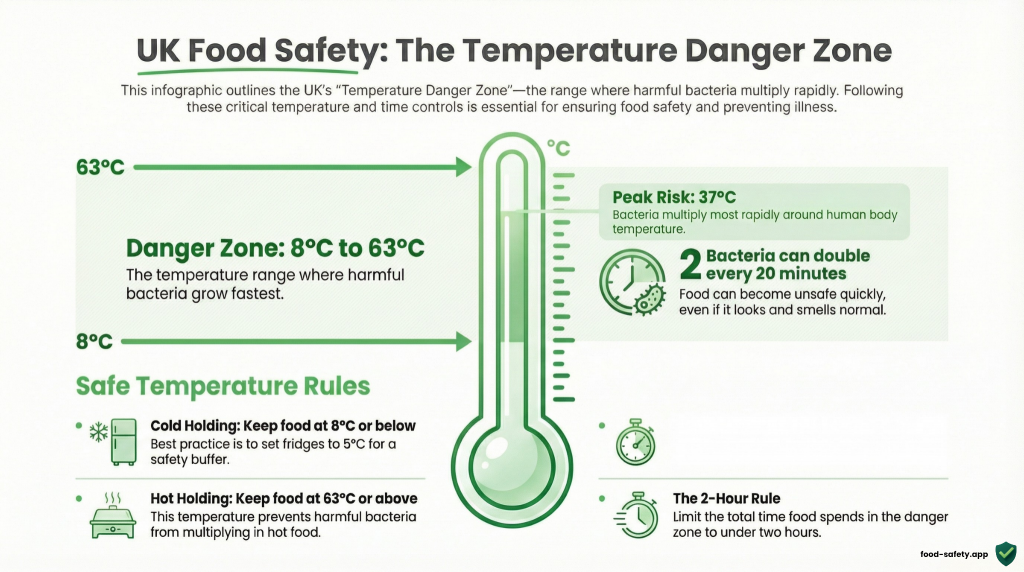
In the UK, the Temperature Danger Zone is clearly defined.
It’s between 8°C and 63°C.
This is the range where harmful bacteria grow fastest. If food sits in this range for too long, it can become unsafe even if it looks, smells and tastes fine.
Here’s how it works.
Below 8°C, bacterial growth slows right down.
Between 8°C and 63°C, bacteria multiply quickly.
Above 63°C, most bacteria stop multiplying or are killed.
That middle range is where problems happen.
Why Temperature Control Really Matters
Food poisoning bacteria don’t give warnings. You can’t see them. You can’t smell them. You can’t taste them.
In the Temperature Danger Zone, some bacteria can double in number every 20 minutes. That means a small problem can turn into a big one very quickly.
This is why EHOs focus so heavily on fridge temperatures, hot holding and cooling methods. It’s also why temperature checks are a legal requirement, not just best practice.
Why 37°C Is the Riskiest Point
Most harmful bacteria grow fastest at around 37°C, which is roughly human body temperature.
That makes sense when you think about it.
Warm kitchens are perfect breeding grounds.
Lukewarm food is more dangerous than cold food.
Slow cooling creates long periods of high risk.
If food sits around this temperature for too long, bacteria can multiply rapidly and some can produce toxins. These toxins aren’t always destroyed by reheating.
So reheating unsafe food doesn’t always make it safe again.
A Common Kitchen Mistake You’ll Recognise
Picture this.
You’ve cooked a large pot of curry or soup. Service is busy, so you leave it on the side to cool naturally before putting it in the fridge.
It slowly drops from hot to warm to lukewarm.
It passes straight through the danger zone.
It spends the longest time right around 37°C.
By the time it finally goes into the fridge, bacteria may already be at unsafe levels. Even if you reheat it properly the next day, the damage could already be done.
This is why cooling quickly and correctly matters so much.
Cold Holding Rules You Must Follow
For chilled food, UK food law is clear.
High-risk food must be kept at 8°C or below.
That’s the legal maximum. But best practice is to run fridges at 5°C or below. Most food businesses aim for 5°C to give themselves a safety buffer.
Fridge temperatures can rise when doors open, stock is moved or units are overfilled. Running at 5°C helps make sure food never creeps above the legal limit.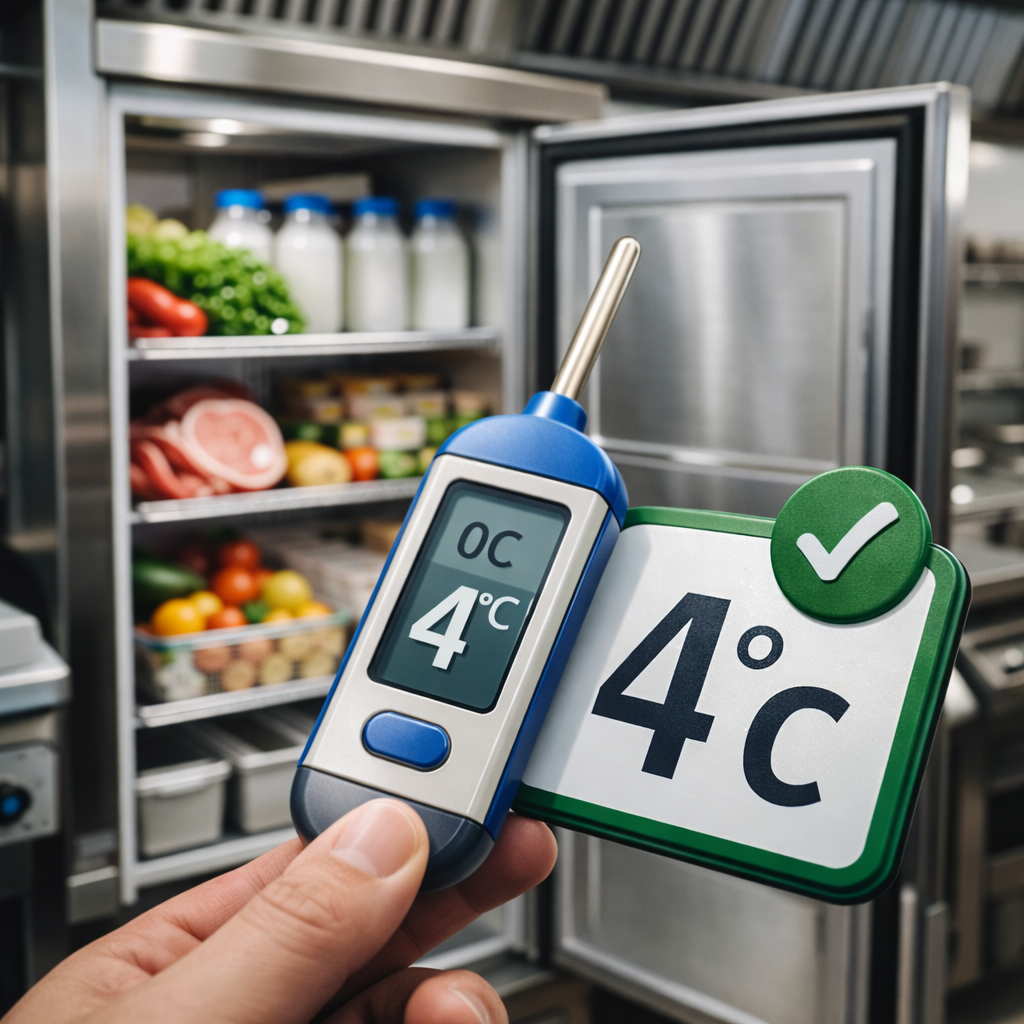
Foods That Need Strict Cold Control
Some foods are more risky than others and need careful temperature control.
These include:
Cooked meat and poultry
Dairy products
Cooked rice and pasta
Prepared salads
Cream or custard desserts
These foods support fast bacterial growth if temperatures slip.
Common Fridge Problems EHOs See
Most fridge issues aren’t caused by broken equipment. They’re caused by habits.
Overfilling fridges so air can’t circulate
Blocking vents with trays or boxes
Leaving doors open during busy service
Putting hot food straight into the fridge
Each one pushes temperatures up without staff realising.
Hot Holding Rules Explained Simply
Hot holding has one clear legal rule.
Food must be kept at 63°C or above.
This applies to hot counters, bain-maries, soup kettles and carvery units.
Hot holding isn’t cooking. It’s just keeping food hot. That means food must already be fully cooked before it goes into hot holding.
If the temperature drops, bacteria can survive and start multiplying again.
What To Do If Hot Food Drops Below 63°C
If you catch it quickly, you have two options.
You can reheat the food to 75°C or above, once only.
Or you must dispose of it if safe reheating isn’t possible.
Leaving it to “warm back up” on the unit isn’t allowed and will almost always be picked up during an inspection.
How Long Can Food Be Out of Temperature Control?
Food doesn’t need to be in a fridge or hot unit every second of the day. Preparation takes time. Service takes time.
Most UK food businesses use the 2-hour rule as a practical guide.
Food can be out of temperature control for short periods, but the total time must not normally exceed 2 hours.
This includes all time added together, not per stage.
Preparation time
Portioning
Display during service
It all counts.
A Simple Time Example
You prep sandwiches for 30 minutes.
They’re on display for 45 minutes.
They’re restocked for another 30 minutes.
That’s 1 hour and 45 minutes in total. This is usually acceptable.
Once you pass 2 hours, the food should be thrown away.
Temperature Control Through Your Daily Process
Temperature control isn’t one single task. It runs through your entire process.
Delivery checks make sure food arrives safely.
Storage keeps food cold or frozen.
Preparation limits time out of control.
Cooking reaches safe core temperatures.
Cooling brings food down quickly.
Reheating hits 75°C.
Hot holding stays above 63°C.
If one stage fails, the risk increases.
What EHOs Commonly Raise as Issues
Environmental Health Officers see the same problems again and again.
Fridges running at 9°C or higher
No written temperature records
Hot food held below 63°C
Staff unsure what the danger zone is
No action taken when limits are breached
The frustrating part is that all of these are preventable with training and simple checks.
The Key Takeaway for Your Business
Temperature control is one of the strongest food safety controls you have.
If you manage time and temperature properly, you massively reduce the risk of food poisoning. You also protect your reputation, your food hygiene rating and your peace of mind.
It doesn’t have to be complicated. It just needs to be consistent.
If you want an easier way to track temperatures, manage checks and keep your food safety system organised, have a look at how the Food Safety App can help save time and reduce stress in your day-to-day running.