
Running a kitchen is fast paced, noisy and often stressful. It’s also one of the highest risk workplaces in the UK. Burns, cuts, slips and fires can happen in seconds if controls aren’t in place. That’s why kitchen health and safety isn’t just paperwork. It’s about keeping your people safe and your business open.
Whether you run a café, takeaway, restaurant, food truck or production kitchen, getting the basics right makes a huge difference. Let’s break down what good kitchen health and safety really looks like in everyday work.
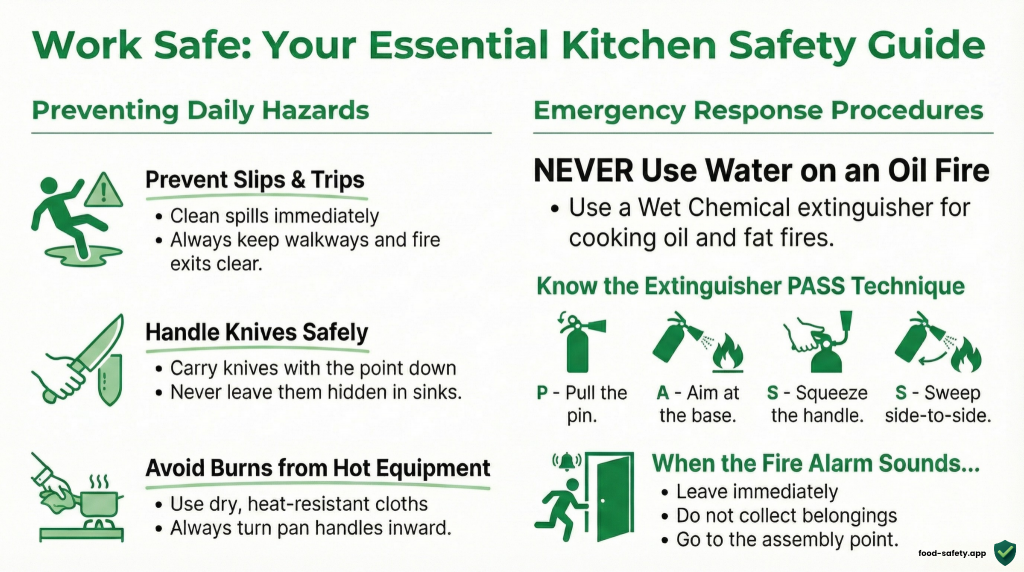
Why kitchen health and safety matters
Commercial kitchens are full of hazards. Hot oil. Sharp knives. Wet floors. Gas and electric equipment. Tight spaces and constant movement.
UK law requires you to protect staff and anyone else on site. If someone gets hurt and you haven’t managed the risks, the consequences can be serious. Injuries. Lost staff. Enforcement visits. Fines. Even closure.
The good news is most kitchen accidents are preventable. Simple habits, clear rules and regular checks go a long way.
Slips, trips and falls are the biggest risk
Slips and trips are the most common cause of injury in kitchens. They happen more than cuts or burns.
Common causes in real kitchens
- Wet or greasy floors
- Food or oil spillages
- Damaged flooring or loose mats
- Boxes left in walkways
- Trailing cables or hoses
- Poor lighting in prep or storage areas
It often starts with someone thinking, “I’ll clean that in a minute”. Then someone else rushes through service and ends up on the floor.
Simple ways to reduce the risk
- Clean spills straight away, even during busy service
- Use wet floor signs while cleaning
- Keep walkways and fire exits clear at all times
- Store deliveries properly, not in corridors
- Make sure staff wear non-slip footwear
- Report worn flooring or mats as soon as you spot them
Cardboard on wet floors might seem like a quick fix, but it makes things worse. It slides and soaks up grease.
Safe use of knives and sharp equipment
Cuts are common in kitchens, especially when people rush or take shortcuts.
Knife safety basics everyone should follow
- Use the right knife for the job
- Keep knives sharp so they don’t slip
- Never leave knives in sinks or wash water
- Carry knives with the blade pointing down and behind you
- Store knives safely when not in use
Most knife injuries happen during cleaning or when someone can’t see the blade.
Machinery and specialist equipment
Slicers, mixers and processors can cause serious injuries if misused.
- Never remove guards or safety features
- Switch off and unplug before cleaning
- Only trained staff should use specialist equipment
Overconfidence is a big risk here. Familiarity leads to shortcuts.
Working safely with hot equipment
Burns and scalds are another major cause of injury.
Common burn risks
- Fryers and hot oil
- Grills and ovens
- Hot pans and trays
- Steam when opening ovens or dishwashers
Everyday controls that matter
- Use dry, heat-resistant cloths or gloves
- Turn pan handles inward
- Open oven doors slowly to avoid steam burns
- Don’t overfill fryers
- Let equipment cool before cleaning
Using a wet cloth on hot equipment is a classic mistake. It turns into steam instantly and causes serious burns.
Fire safety in commercial kitchens
Kitchens are high fire risk areas. Heat, oil, grease, gas and electrics all combine in one place.
Common causes of kitchen fires
- Unattended cooking
- Grease build-up in extraction systems
- Faulty electrical equipment
- Overheated oil
- Blocked ventilation
Most fires don’t start suddenly. They build up through poor cleaning and ignored faults.
Preventing fires day to day
- Clean extraction and filters regularly
- Never leave cooking unattended
- Keep flammable items away from heat
- Switch off equipment when not in use
- Report damaged or faulty equipment immediately
Fire safety isn’t just about equipment. It’s about habits.
Understanding fire extinguishers
Staff should know what extinguishers are for, but also when not to use them.
You should only attempt to use an extinguisher if the fire is small, you’re trained and you have a clear escape route.
Common kitchen extinguishers
- Wet chemical for cooking oil and fat fires
- CO₂ for electrical fires
- Foam for some solid and liquid fires
Never use water on a fat or oil fire. It will explode and spread the flames.
The PASS method
- Pull the pin
- Aim at the base of the fire
- Squeeze the handle
- Sweep side to side
If in doubt, get out. People come first.
Emergency evacuation in food premises
Every kitchen needs a clear evacuation plan. Staff should know it without thinking.
What must be in place
- Clearly marked fire exits
- Exits unlocked and unobstructed
- A working fire alarm
- Emergency lighting where needed
- A known assembly point
What staff should do
- Stop work immediately if safe
- Leave by the nearest safe exit
- Don’t collect personal items
- Help customers if needed
- Go straight to the assembly point
- Don’t re-enter until authorised
One of the most dangerous mistakes is continuing to cook after the alarm sounds. No order is worth a life.
Training, records and compliance
Health and safety isn’t a one-off task. It needs ongoing attention.
You should be able to show that:
- Risks have been identified
- Controls are in place
- Staff are trained and refreshed
- Equipment is checked and maintained
- Problems are reported and fixed
Paper systems make this harder than it needs to be. Missed checks and lost records are common causes of enforcement action.
Making kitchen safety easier to manage
Kitchen health and safety works best when it fits into daily routines. Clear checklists. Simple reporting. Consistent training.
Digital systems like the Food Safety App help food businesses keep on top of safety without adding stress. Checks, records and actions are all in one place, ready when you need them.
If you want fewer headaches, safer staff and more confidence during inspections, it’s worth exploring how the Food Safety App can support your kitchen and save you time.