
FIFO, FEFO and Safe Storage Explained
If stock rotation slips, food safety slips with it. It’s one of the most common things Environmental Health Officers pick up during inspections. Out-of-date food, poor labelling and messy fridges are all signs that stock control isn’t working.
The good news is this. Stock rotation doesn’t need to be complicated. With a few simple habits, you can protect your customers, cut waste and make inspections far less stressful.
This guide breaks down FIFO, FEFO and safe storage in a way that works for real UK food businesses. Cafés, takeaways, restaurants, food trucks and small producers will all recognise the examples.
Why Stock Rotation Really Matters
Poor stock rotation can lead to food poisoning, wasted money and damaged hygiene ratings. It also makes your business look disorganised, even if everything else is good.
Inspectors expect to see:
- Food within date
- Clear labelling
- Logical fridge layout
- Evidence that staff know what to use first
If they don’t see this, they’ll dig deeper.
Good stock rotation shows you’re in control and taking food safety seriously.
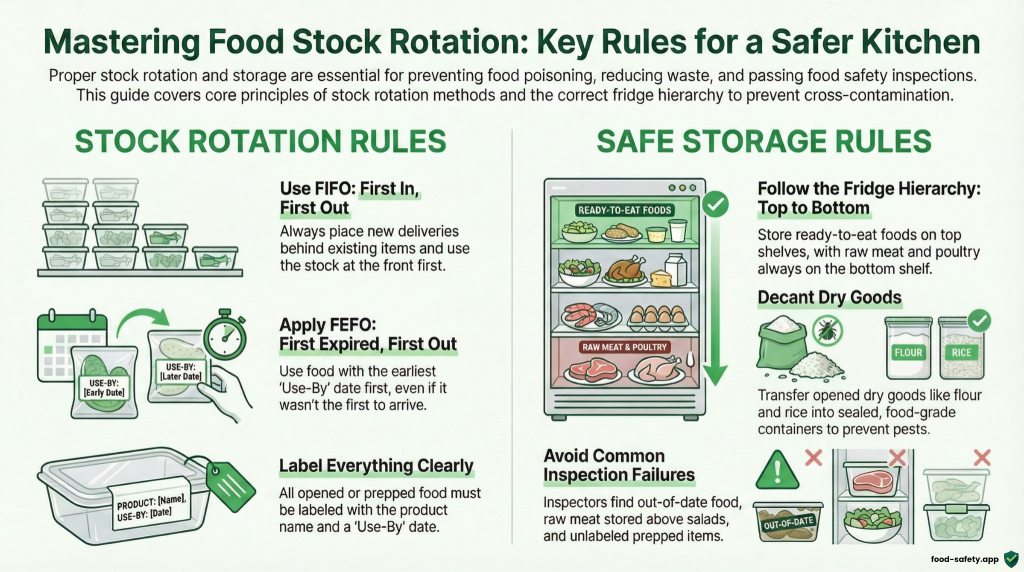
FIFO Explained: First In, First Out
FIFO is the foundation of good stock control.
It simply means the oldest food gets used first.
This applies to chilled food, frozen food and dry goods.
How FIFO Works Day to Day
When a delivery arrives:
- Check dates and condition
- Move older stock to the front
- Put new stock behind or underneath
- Always take food from the front
It sounds basic, but this is where many businesses fall down.
A Real Example
A café gets milk delivered on Monday and again on Wednesday.
Monday’s milk stays at the front of the fridge.
Wednesday’s milk goes behind it.
Staff always grab the milk at the front first. No guessing needed.
Common FIFO Mistakes
These are the things inspectors see all the time:
- New deliveries shoved in front
- Overfilled fridges with no space to rotate
- Staff grabbing the closest item without checking
If your fridge is so full that FIFO can’t work, that’s a sign you’re holding too much stock.
FEFO: When Dates Matter More Than Delivery Order
FEFO stands for First Expired, First Out.
This rule always overrides FIFO when Use-By dates are different.
Why FEFO Is Critical
Use-By dates are a legal safety limit. Food past its Use-By date must not be used or sold. There are no exceptions.
Inspectors will always check date control first.
A Simple FEFO Example
You have two packs of cooked chicken:
- Delivered Tuesday, Use-By Friday
- Delivered Wednesday, Use-By Thursday
Even though Tuesday’s arrived first, Wednesday’s must be used first because it expires sooner.
Common FEFO Errors
- Relying on delivery dates instead of Use-By dates
- Not checking dates during busy service
- Assuming frozen food doesn’t need rotating
Freezing pauses bacterial growth, but dates and labelling still matter.
Fridge Storage: Getting the Order Right
Even if dates are perfect, poor fridge layout can undo everything.
Raw food stored above ready-to-eat food is one of the biggest food safety risks and one of the fastest ways to fail an inspection.
Correct Fridge Order Top to Bottom
Your fridge should follow this structure:
- Ready-to-eat food like desserts, cooked meats and salads
- Dairy and cooked ingredients
- Raw fish
- Raw whole cuts of meat
- Raw poultry and mince on the bottom shelf
Raw food must always be covered, labelled and kept below ready-to-eat food.
Where Businesses Go Wrong
Common problems include:
- Raw meat stored above salads
- Open containers with no lids
- Leaking packaging dripping onto cooked food
If something spills, everything underneath is at risk.
Decanting Dry Goods the Right Way
Decanting means moving opened dry goods into proper containers.
This includes flour, rice, sugar, pasta and spices.
Why Decanting Is Important
It helps to:
- Keep pests out
- Prevent contamination
- Make labelling clear
- Improve stock rotation
Original packaging often splits or tears. Once that happens, food is exposed.
Best Practice for Decanting
- Use food-grade containers only
- Fit tight lids
- Clean containers before refilling
- Never top up old stock with new
Mixing old and new food breaks FIFO and makes dates meaningless.
Labelling: No Guessing Allowed
Once food is opened, prepared, cooked or defrosted, it must be labelled.
Relying on memory is not acceptable and inspectors know it.
What a Good Label Includes
At minimum, labels should show:
- Product name
- Date opened or prepared
- Use-By or discard date
For example:
Opened Mon – Use by Wed
Using Day Dots
Day dots make life easier during busy shifts.
They allow staff to see at a glance what needs using first. They’re especially useful for prep-heavy kitchens.
Labelling Mistakes Inspectors Spot
- No labels at all
- Staff guessing dates
- Labels falling off
- Writing that can’t be read
If the label isn’t clear, it’s treated as if there isn’t one.
Common Stock Rotation Failures
These issues regularly lead to improvement notices or lower hygiene scores:
- Out-of-date food kept in storage
- No visible stock rotation system
- Raw food stored above ready-to-eat food
- Unlabelled containers
- Dry goods accessible to pests
Most of these are preventable with simple daily checks.
Easy Checks for Your Team
These quick questions help confirm understanding:
- What does FIFO mean?
- When does FEFO override FIFO?
- Where should raw poultry be stored?
- What must be on a prep label?
- Why shouldn’t dry goods be left in open sacks?
If staff can’t answer confidently, retraining is needed.
The Key Takeaway
Good stock rotation protects your customers, reduces waste and makes inspections far easier.
It also proves you’re managing food safety properly, not just reacting when something goes wrong.
Clear routines, good habits and regular checks make stock rotation second nature. When everyone knows what to use first and where food belongs, food safety becomes part of the day, not a last-minute panic.