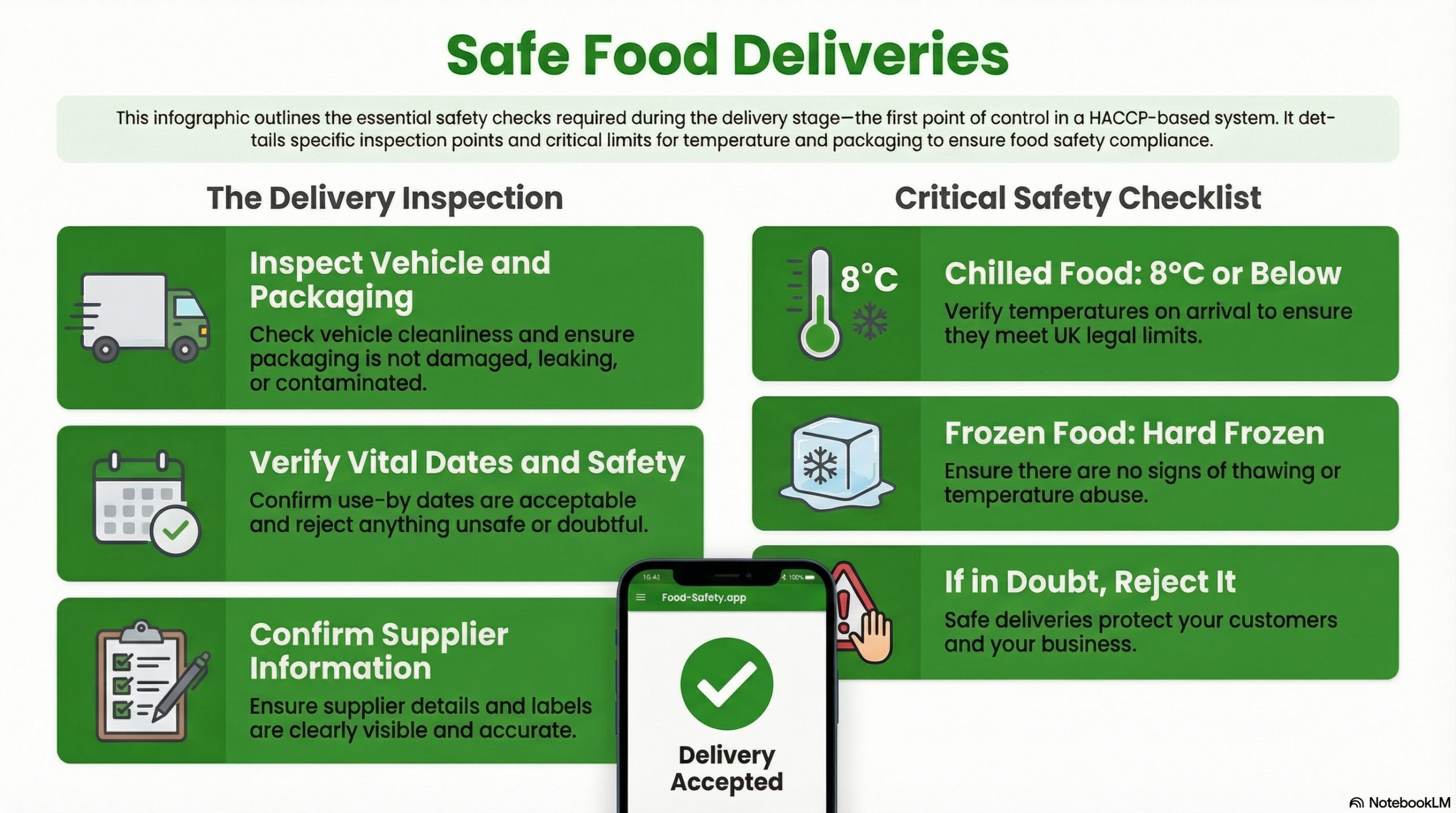
Getting food safety right at the door
When a delivery arrives, it’s easy to feel rushed. The driver’s waiting. The kitchen’s busy. You just want to get on with the day.
But this moment matters more than most.
Deliveries are the first real food safety check in your business. If unsafe food comes through the door, nothing you do later can make it safe again. Not cooking. Not cleaning. Not chilling.
This guide breaks down deliveries and receipt of food in a simple, practical way. It’s written for cafés, restaurants, takeaways, food trucks and producers who want to stay safe, legal and in control.
Why delivery checks matter
Food safety law says food must be safe at every stage. That includes delivery.
Many food poisoning cases start with poor goods in checks. Warm food. Damaged packs. Out of date stock. Once it’s accepted, the risk is yours.
Environmental Health Officers expect to see clear delivery controls. They’ll want proof that checks happen every time, not just when it’s quiet.
Good delivery checks help you:
- Stop unsafe food entering your kitchen
- Protect the cold chain
- Reduce waste and complaints
- Show due diligence if something goes wrong
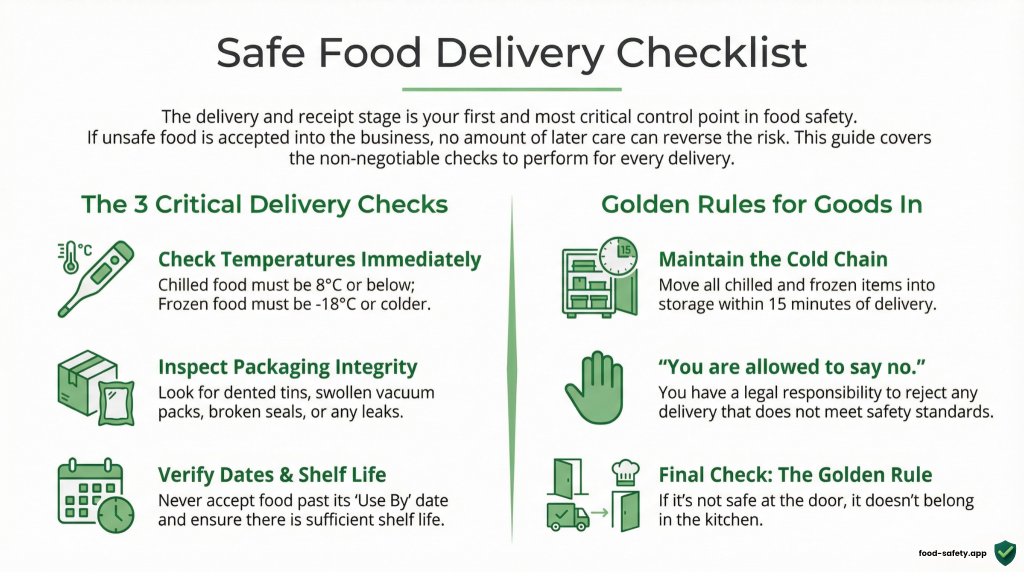
If it’s not safe at the door, it doesn’t belong in the kitchen.
What “immediate” really means
Delivery checks must happen as soon as the food arrives.
That means before you sign anything. Before food is put away. Before the driver leaves.
If you delay checks, you lose your right to reject the food. You also increase the risk of bacteria growing while food sits out.
Immediate means now, not later.
Temperature checks made simple
Temperature is one of the biggest food safety risks at delivery.
Chilled food
Chilled food must be at 8°C or below.
Best practice is 5°C or below.
Frozen food
Frozen food must be at -18°C or colder.
It must be fully frozen solid. No softness. No ice melt.
How to check temperatures properly
- Use a clean, calibrated probe thermometer
- Check the warmest part of the delivery
- Avoid piercing packaging unless allowed
- Use surface or between pack checks
- Record the temperature straight away
Here’s a real example.
A delivery of raw chicken arrives at 11°C.
It looks fine. It smells fine.
It’s still unsafe and must be rejected.
Temperature abuse isn’t always visible, but the risk is real.
Packaging checks you should never skip
Packaging protects food. If it fails, the food isn’t safe.
Dented or damaged tins
Look closely at seams and lids.
Bulging or dented tins can carry a risk of botulism, which is rare but deadly.
Blown or swollen packs
Vacuum packs or sealed trays should be tight.
Swollen packs suggest bacterial activity inside.
Broken or missing seals
If a seal is broken, the food could be contaminated or tampered with.
Leaking or dirty packaging
Leaks can spread bacteria to other food.
Dirty boxes suggest poor hygiene during transport.
A simple rule helps here.
If the packaging isn’t intact, don’t accept the food.
Date codes and shelf life
Dates matter just as much as temperature.
Use by dates
These are legal safety limits.
If the date has passed, the food must not be accepted. No exceptions.
Best before dates
These are about quality, not safety.
You still need to check condition and suitability.
What sufficient shelf life means
Delivered food should give you enough time to:
- Store it safely
- Prepare it properly
- Use it before the date expires
If it doesn’t, it’s poor stock control.
For example, receiving fresh cream with one day left when you won’t use it until tomorrow puts you at risk. Rejecting it is reasonable and responsible.
Your right and responsibility to reject food
This part is important.
Food businesses have the legal right and duty to reject unsafe or non compliant food.
That includes food that’s:
- Too warm or not frozen
- Damaged or blown
- Out of date or poorly dated
- Contaminated or dirty
- Delivered in an unhygienic vehicle
All staff who receive deliveries must be told one clear message.
You’re allowed to say no.
Drivers may be in a hurry. Stock may be short. You might feel awkward.
None of that matters.
If unsafe food is accepted, the responsibility sits with the business, not the supplier.
Protecting the cold chain
The cold chain is about keeping food at safe temperatures without breaks.
From delivery to storage, food should move quickly and smoothly.
The 15 minute rule
Chilled and frozen food should be in fridges or freezers within 15 minutes of delivery.
That time includes checking and recording.
Leaving food out longer allows bacteria to multiply fast.
Simple ways to stay in control
- Make space before deliveries arrive
- Check chilled and frozen items first
- Put food away as you go
- Never leave food in corridors or yards
- Don’t park food in the kitchen while unloading
Small delays add up. Planning ahead makes a big difference.
Common delivery mistakes to avoid
These issues show up again and again during inspections.
- Signing delivery notes before checks
- Trusting suppliers without verifying
- Skipping checks when it’s busy
- Accepting nearly ok temperatures
- Leaving food out while unloading
- Letting untrained staff accept deliveries
Most of these happen due to pressure, not bad intent. Clear systems help staff do the right thing, even on hectic days.
A quick delivery checklist
Before accepting any delivery, check:
- Temperature is within legal limits
- Packaging is clean and intact
- Date codes are clear and suitable
- No signs of spoilage or contamination
- Food is moved straight into storage
If any answer is no, reject the item.
It’s that simple.
Why records really matter
Doing checks is vital. Recording them is just as important.
Delivery records show:
- Due diligence
- Active food safety control
- Compliance during inspections
If there’s ever a complaint or investigation, records protect you.
Digital systems like the Food Safety App make this easier. You can log temperatures, packaging checks and actions in seconds. Everything’s stored safely and ready when inspectors ask.
No chasing paperwork. No missing sheets. No guesswork.
The key takeaway
Most food safety problems don’t start in the kitchen. They start at the door.
Strong delivery checks protect your customers, your reputation and your business.
If you’d like to make deliveries quicker, clearer and easier to manage, take a look at how the Food Safety App supports goods in checks and records without adding pressure to your day.
Food safety should fit around your business, not slow it down.