
Overview
Sanitisers play a big part in keeping food safe. They reduce harmful bacteria on food contact surfaces. When they’re used the right way, they protect customers, staff and your business reputation. When they’re used the wrong way, they can quietly increase risk without anyone noticing.
In busy kitchens, it’s easy to rush. That’s why good habits matter. This guide focuses on simple, practical routines so sanitising is done properly every time, even during a busy service.
If you run a café, restaurant, takeaway, food truck or small food business, getting this right saves time, avoids problems and supports safer food.
Why Food Safe Sanitisers Matter
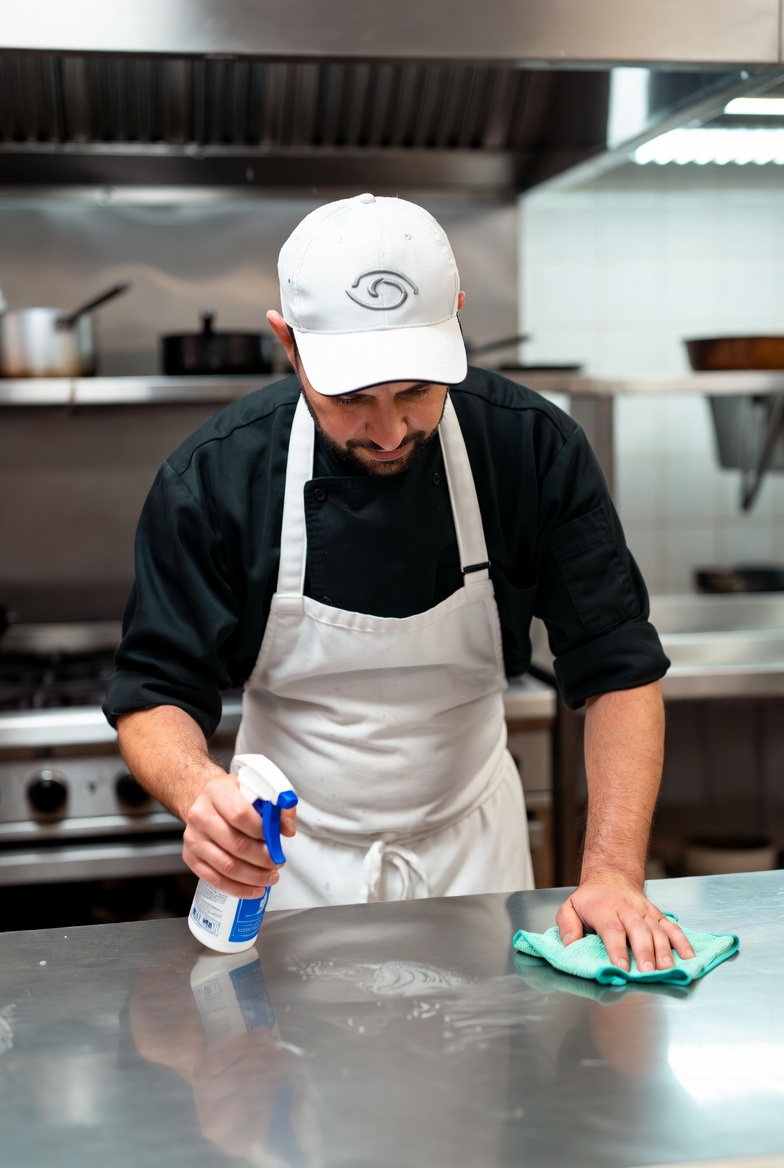
Not all cleaning chemicals are safe for food areas. Food safe sanitisers are tested to make sure they reduce harmful bacteria found in kitchens and food prep spaces.
You’ll often see two standards on the label:
- BS EN 1276 for killing food related bacteria
- BS EN 13697 for working on hard surfaces like worktops and equipment
These standards matter because they show the product does what it claims, as long as it’s used correctly.
Simple good practice
- Only use sanitisers designed for food contact surfaces
- Check the label or product sheet for the standards
- Keep products in their original containers
Using the right product removes guesswork. It helps make sure your cleaning routine actually lowers food safety risk, not just makes things look clean.
Contact Time: Don’t Rush It
Contact time is the minimum time a sanitiser must stay wet on a surface to work properly. Many food safe sanitisers need between 30 and 60 seconds.
That might not sound long, but during a rush it’s easy to spray and wipe straight away.
Why wiping too soon is a problem
- Bacteria may survive
- Surfaces can still contaminate food
- Staff may think the area is safe when it isn’t
Better habits that work
- Spray or apply the sanitiser evenly
- Leave the surface visibly wet
- Allow the full contact time before wiping or letting it air dry
Those extra seconds really do matter. They can be the difference between safe food and a hidden risk.
Getting Dilution Right Every Time
Most sanitisers are concentrates. They’re designed to work at a specific strength.
- Too weak and bacteria can survive
- Too strong and you risk chemical residue, skin irritation or food taint
Correct dilution protects food safety and staff wellbeing.
Practical tips for busy teams
- Follow the manufacturer’s instructions every time
- Use dosing pumps, caps or measured bottles
- Never guess amounts
- Mix fresh solutions when required
A good food safety culture encourages staff to ask if they’re unsure. Guessing leads to mistakes. Confidence and clear training reduce risk.
Clean First, Then Sanitise
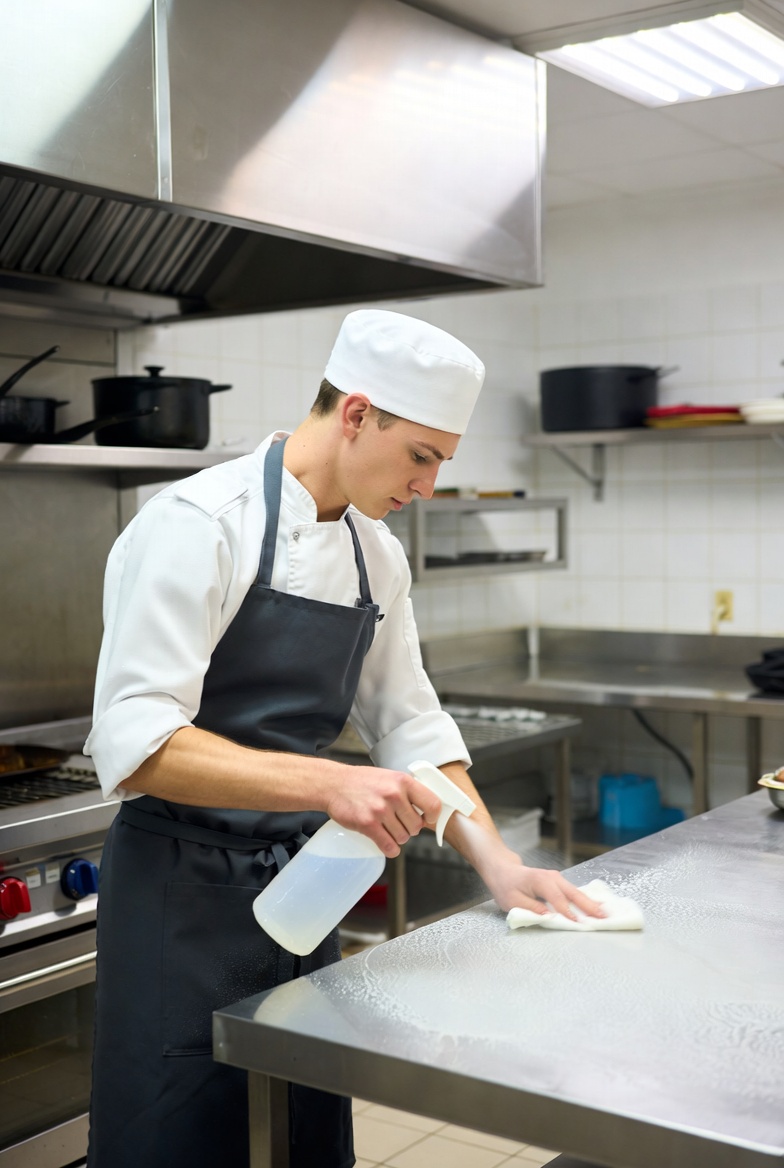
Sanitiser isn’t a cleaner. This is one of the most common misunderstandings in food businesses.
Grease, food debris and dirt can protect bacteria and stop the sanitiser working properly.
The two stage method
- Clean
- Use detergent and hot water
- Remove visible dirt, grease and food
- Sanitise
- Apply food safe sanitiser
- Leave it for the full contact time
This process makes surfaces look clean and helps make them microbiologically safer too.
Everyday examples
- Change cloths often
- Use separate cloths for raw and ready to eat areas
- Follow the same steps even when it’s busy
Skipping steps saves seconds but increases risk.
Storing Sanitisers and Chemicals Safely
Chemical storage is often overlooked. Poor storage can cause contamination or accidents.
Why it matters
- Chemicals can spill onto food or packaging
- Bottles can be mistaken for something else
- Untrained staff might use the wrong product
Good storage habits
- Store chemicals away from food and prep areas
- Keep them in original labelled containers
- Use a dedicated cupboard, ideally locked
- Put chemicals away straight after use
A simple rule works well. Use it, close it, put it away.
High Risk Moments That Need Extra Care
Some times in the day matter more than others. These are moments when good sanitising makes the biggest difference.
- After handling raw meat or poultry
- Between different prep tasks
- After spills
- Before preparing ready to eat food
- At the end of a busy service
Helping staff spot these moments builds awareness and safer habits.
Common Slip Ups to Watch For
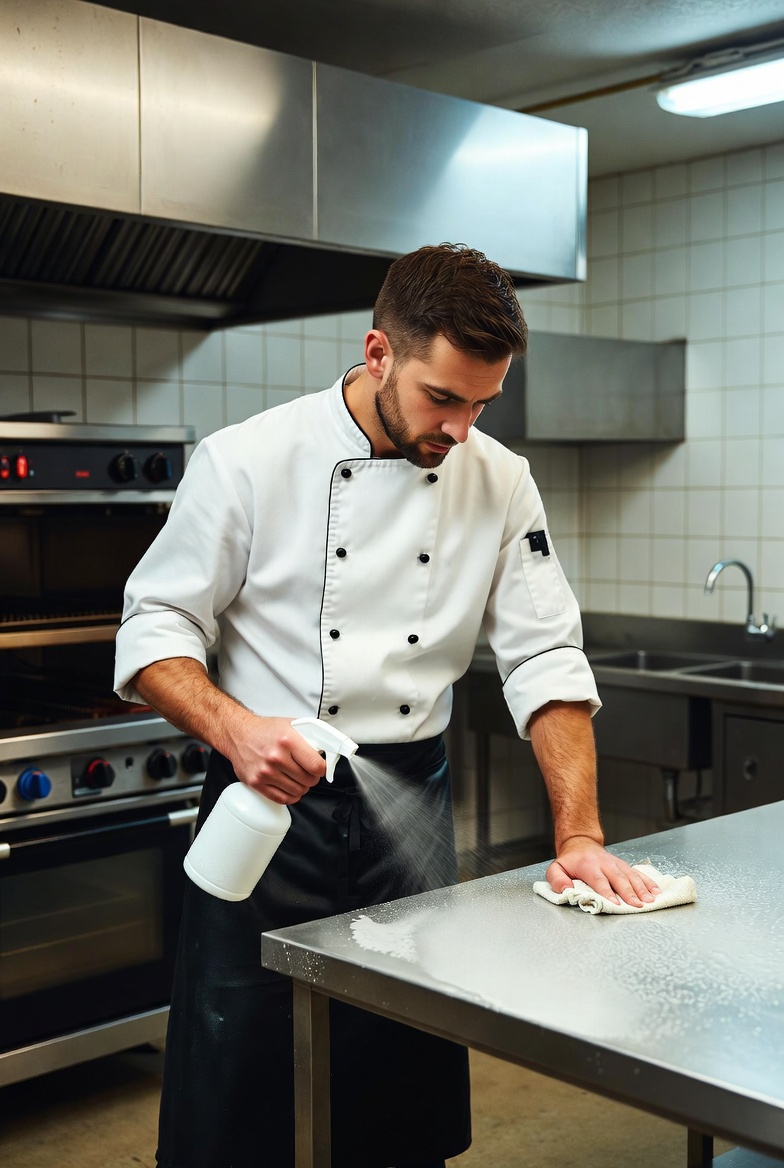
These aren’t bad staff. They’re normal habits that creep in.
- Rushing contact time
- Using sanitiser instead of detergent
- Reusing dirty cloths
- Guessing dilution
- Leaving bottles unlabelled
Talking about these openly helps teams improve without blame.
Quick Team Check
Use these as short reminders or chat points:
- Why do we clean before sanitising?
- What happens if we wipe too quickly?
- How do we know the dilution is right?
- Where do chemicals go after use?
- What one habit could we improve today?
Short conversations like this keep food safety alive in day to day work.
Key Takeaways
- Use sanitisers made for food contact surfaces
- Let them stay wet for the full contact time
- Mix them correctly every time
- Always clean first, then sanitise
- Store chemicals safely and clearly
Good sanitising isn’t about ticking boxes. It’s about small, consistent habits that protect people and your business.
If you want an easier way to manage cleaning routines, training records and food safety checks, have a look at how the Food Safety App can save time and reduce stress while keeping standards high.