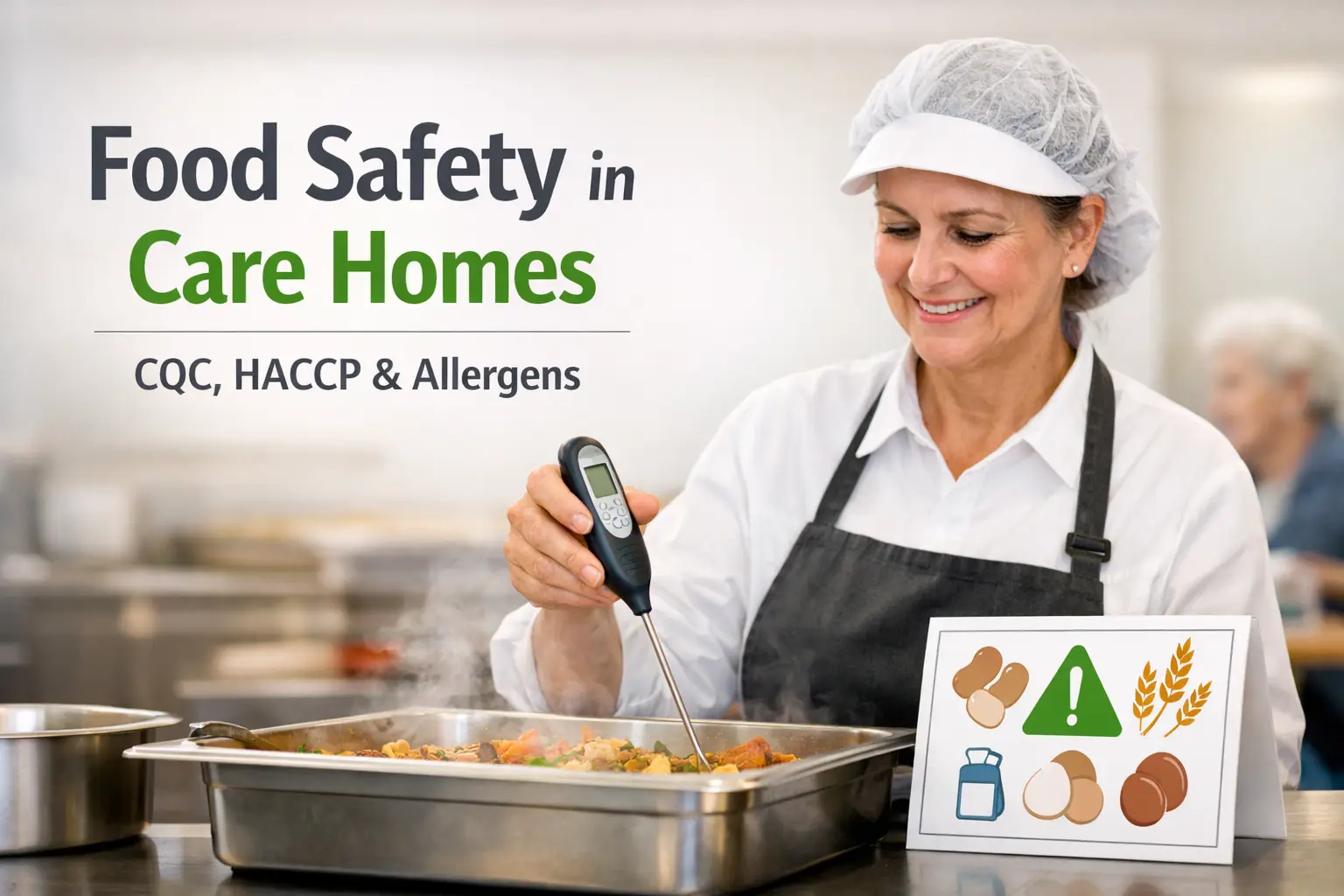
Care home catering carries extra food safety responsibilities because residents may be more vulnerable to illness and slower recovery. This guide explains the main duties under the CQC framework, practical controls for allergens and texture modified diets, temperature and storage practices, HACCP basics for care teams, cleaning and records. It’s written to help managers, chefs and service staff stay audit‑ready and protect residents.
Why care home food safety is higher risk
Important: Vulnerable groups require robust controls that are easy to follow during busy shifts.
Key risk factors to watch:
- Ready‑to‑eat foods and high‑risk ingredients stored for extended periods
- Cross‑contamination between raw and prepared foods
- Inadequate cooling, re‑heating and holding practices
- Incomplete communication about resident dietary needs
Practical takeaway
A simple, documented daily routine that covers opening checks, temperature logging and clear handovers between kitchen, care and servery staff helps prevent the common slipups that lead to incidents.
Keeping the kitchen clean is essential, but the real work happens when people follow the plan every day.
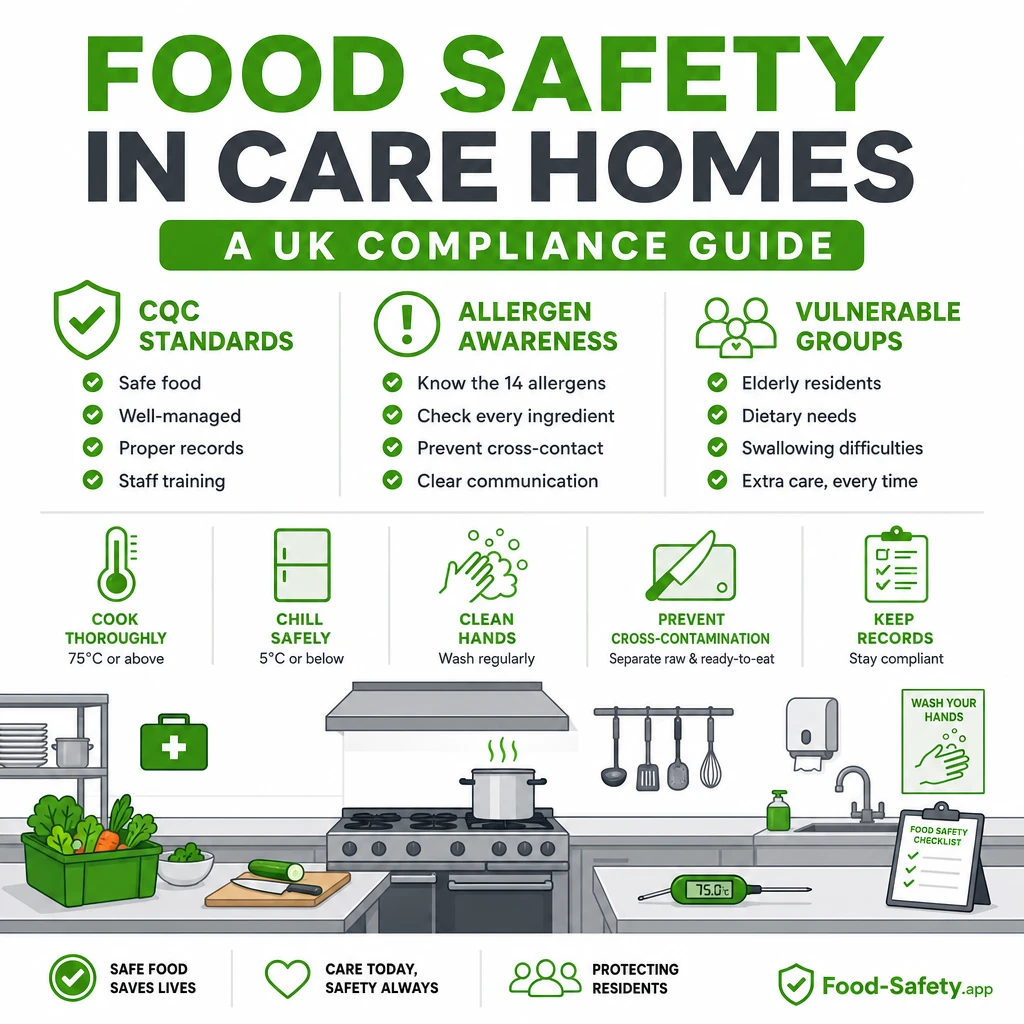
CQC duties and clear food safety management
The safest procedure is the one that can be followed consistently during a busy service.
Elements to establish and maintain:
- A named person responsible for food safety oversight
- A simple, documented HACCP or HACCP‑like plan with critical controls
- Daily opening and closing checks, plus periodic review
- Supplier approvals, delivery checks and allergen communication
- Training records and an accessible corrective action log
Practical scenario: if a delivery arrives with multiple chilled items, you should verify the temperature on arrival, log it, and note any deviations with a corrective action plan.
Documentation that shows what was done, when and by whom, is the backbone of inspection readiness.
Allergen management for residents with dietary needs
Allergen management and texture modification must be coordinated to prevent both cross‑contact and miscommunication about a resident’s needs.
Key practices:
- Maintain an allergen matrix linked to resident meals and service notes
- Communicate clearly at handover: what allergens are present, any cross‑contact risks, and how meals will be prepared
- Label textured or resident‑specific meals distinctly to avoid confusion
- Review and refresh dietary needs when residents transfer in or have changes in their plans
IDDSI basics for texture modified diets
For residents requiring texture modified diets, IDDSI standards help ensure consistency and safety. cooks should reference the resident’s texture level, document any modifications and verify that the serving staff understands the appropriate texture before plating.
Allergen management and texture modification must be coordinated to prevent both cross‑contact and miscommunication about a resident’s needs.
4 practical steps for allergen safety:
- Update the resident’s dietary needs in the system and on the plate card
- Use separate utensils and prep areas for allergen‑free components
- Clearly label all meals with the resident name and texture level
- Confirm service staff understand any special handling instructions
Practical example: before serving a resident with a newly updated dietary need, review the allergen matrix, confirm what foods are excluded, and communicate any cross‑contact precautions to the servery team.
Clear labels and a reliable communication chain reduce the risk of accidental exposure.
Storage temperature controls and stock rotation
“If a fridge door seal is broken or a temperature logs out of range, record the fault and take corrective action immediately.”
Effective storage and stock management protect vulnerable residents from spoilage and contamination. The routine should include daily fridge temperature checks, sensible stock rotation and timely removal of out‑of‑date items.
Best practice:
- Target fridge temperatures kept at or below 5°C where possible, and monitor daily
- Use FIFO to minimise time items spend in the fridge
- Separate raw and ready‑to‑eat foods, and label open dates on all items
- Document any temperature excursions, and act promptly to isolate affected items
Illustrative scenario: you discover a delivery of dairy and ready‑to‑eat sandwiches arriving at slightly above the usual range. Log the event, check remaining stock, and arrange a rapid recheck or discard if necessary.
Regular temperature logging and prompt corrective actions protect residents from Listeria and other risks linked to chilled foods.
HACCP based controls for care home catering teams
HACCP is not a one‑time exercise. It’s a living part of daily work, with records that support audits and show continual improvement.
HACCP provides a practical framework for preventing food safety problems. For care homes, a lean, well‑documented HACCP plan helps teams anticipate hazards and define clear CCPs (critical control points) tailored to the service.
Key components:
- Hazard analysis covering biological, chemical and physical risks
- Identification of CCPs such as cooking, cooling, hot holding, and cold storage
- Monitoring procedures (what to measure, how often, and who records it)
- Corrective actions (what happens when a parameter is out of range)
- Verification steps (sampling, audits, management review)
- Documentation and records for ongoing improvement
A practical example: batch cooking soups requires monitoring of cooking or reheating temperatures, ensuring safe cooling within recommended times, and hot holding until service. If a batch fails to reach the target, the plan must specify how it is treated and logged.
HACCP is not a one‑time exercise. It’s a living part of daily work, with records that support audits and show continual improvement.
Cleaning, probe checks, delivery checks and corrective actions
- Cleaning schedules should map to each area, with validated cleaning methods and probe calibration checks
- Temperature probes must be calibrated and used correctly during checks
- Deliveries should be logged against temperature ranges, with notes on any non‑compliant items
- When faults are found, record the issue, the corrective action taken and the date of completion
Documentation, audits and records for inspections
Audit trails that show who did what, when, and why, provide inspectors with confidence in your kitchen’s daily discipline.
Good record keeping underpins both safety and regulatory readiness. Documents should be easily accessible, up to date and concise enough for staff to follow.
Essential records:
- Opening and closing checks, including temperature logs
- Allergen communications and resident dietary records
- HACCP plan, critical control points, monitoring records and corrective actions
- Cleaning schedules, probe calibration logs and equipment maintenance
- Training records and competency checks
- Delivery notes and temperature checks for every delivered chilled item
Practical examples:
- A missed cleaning task on a servery trolley and the corrective action taken
- A reheated soup batch logged with the final serving temperature
- A broken fridge door seal recorded and a replacement arranged
Continuous improvement and inspection readiness
Regular internal reviews of records help identify trends, gaps and training needs. Use the outputs of audits to adjust menus, update the allergen matrix and reinforce cleaning or temperature control routines.
Well‑maintained records aren’t just for audits—they help protect residents every day.
Final practical notes for running care home catering safely
- Daily opening and closing checks, plus random spot checks, keep standards steady
- Temperature records for deliveries, fridges and freezers should be kept in a simple log
- Allergen communication must be explicit and timely, spanning kitchen, care staff and servery
- Label textured and resident‑specific meals clearly to prevent mix‑ups
- Cleaning schedules and probe calibration logs should be kept current
- Defect and corrective action logs should be signed off with dates and responsible staff
- Ensure HACCP reviews are conducted regularly and training records are exportable for inspections
If you manage care home catering, these points form a practical backbone. They help reduce risk for residents, support CQC expectations and keep your kitchen operations auditable, day in and day out.