
Every food business and catering service uses chemicals. Cleaning products, sanitisers and maintenance chemicals are part of daily work in kitchens, vans, units and production spaces. When they’re used correctly, they help keep food safe. When they’re not, they can harm people and contaminate food.
COSHH exists to manage those risks. It’s about protecting staff from injury and illness, but also protecting food from chemical contamination. Both matter equally. A single mistake can lead to illness, wasted stock, complaints or enforcement action.
This guide explains COSHH in plain English, with a focus on the extra risks chemicals create in food businesses.
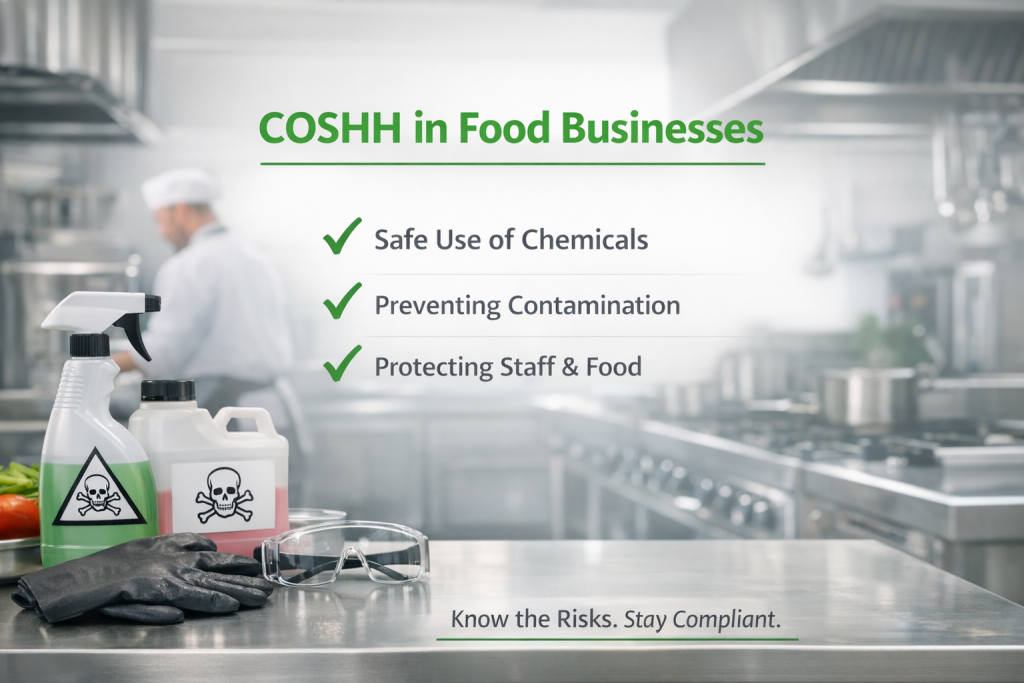
What COSHH really means in food and catering
COSHH stands for Control of Substances Hazardous to Health. In food businesses, it mainly covers cleaning and maintenance chemicals rather than ingredients.
Common examples include oven cleaners, degreasers, descalers, drain chemicals and dishwash detergents or rinse aids.
These substances can cause burns, breathing problems or skin damage. In food settings, they also carry another serious risk. If they’re misused, they can contaminate food, surfaces, equipment and packaging.
That’s why COSHH is closely linked to food hygiene. Poor chemical control can lead to unsafe food, not just staff injuries.
Recognising hazard symbols and food contamination risks
Hazard symbols warn you about health risks, but they also hint at contamination danger.
Skull and crossbones
This shows the substance is toxic. If it contaminates food, even tiny amounts can be dangerous to customers.
Exclamation mark
This warns of irritation or harmful effects. These chemicals can still taint food or leave residues on equipment.
Corrosive symbol
This means the chemical can burn skin and damage surfaces. Corrosive chemicals can also damage food contact surfaces, creating places where bacteria can grow.
Staff should always read labels before use and understand that chemicals must never come into contact with food or food preparation areas unless designed for that purpose.
Safety Data Sheets and why food businesses rely on them
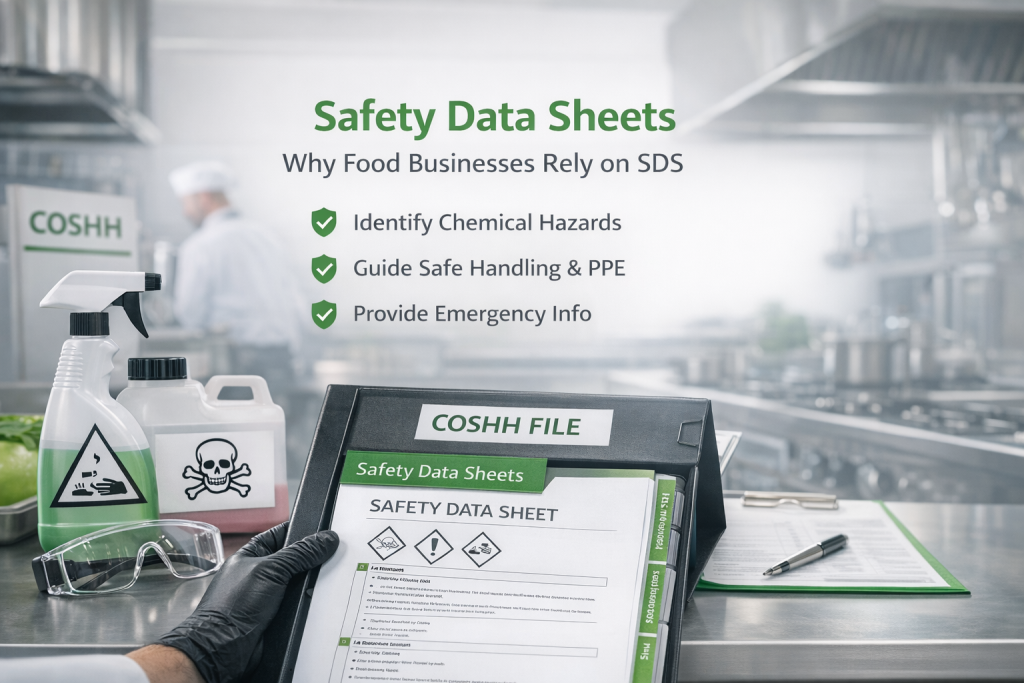
Safety Data Sheets, known as SDS, explain how to use chemicals safely. In food businesses, they’re essential for both staff safety and food protection.
An SDS tells you:
✔️ What the chemical contains
✔️ Health hazards
✔️ Safe handling instructions
✔️ PPE requirements
✔️ First aid measures
✔️ Storage and disposal rules
It also explains what happens if the product contaminates surfaces or materials.
Where SDS should be kept
SDS must be easy to access in an emergency.
Good options include:
✔️ A COSHH folder on site
✔️ A digital food safety system
✔️ A shared tablet or office file
If a chemical spills near food or prep areas, staff need fast access to the right instructions to prevent contamination spreading.
PPE protects people and food
PPE means personal protective equipment. It’s often seen as just staff protection, but it also helps prevent chemical transfer.
Typical PPE includes gloves, eye protection and aprons.
Without PPE, chemicals can be carried on hands, clothing or skin. This increases the risk of chemicals being transferred onto food, packaging or clean equipment.
If the label or SDS says PPE is required, it must be worn. Even for short tasks. Especially before returning to food handling.
Staff should always wash hands and change gloves after using chemicals and before touching food.
The danger of mixing chemicals in food areas
Mixing chemicals is dangerous in any workplace, but in food premises the risk is higher.
Mixing bleach with acids like descalers creates chlorine gas. This gas can cause breathing problems, chest pain, eye irritation and long term lung damage.
In kitchens, it can also settle on food, surfaces and equipment.
Clear rules are essential:
✔️ Never mix chemicals
✔️ Use one product at a time
✔️ Rinse surfaces thoroughly between products
✔️ Keep chemicals away from food during cleaning
Cleaning should be planned so food is covered or removed and surfaces are safe before food prep restarts.
Original containers prevent serious mistakes
Chemicals must always stay in their original containers.
Original packaging includes the product name, hazard symbols, instructions and emergency advice.
Decanting chemicals into unmarked bottles removes this information and increases the risk of misuse.
Never use food containers for chemicals. This is one of the most serious COSHH failures in food businesses. It creates a high risk of chemical poisoning through accidental use.
If smaller containers are unavoidable, they must be clearly labelled and suitable for chemicals.
Chemical storage and food safety
Where chemicals are stored matters.
Chemicals should be:
✔️ Stored away from food and ingredients
✔️ Kept below food storage, never above
✔️ Secured when not in use
Storing chemicals above food or packaging risks leaks, spills and contamination. Even sealed containers can fail.
Good storage protects your food as much as it protects your staff.
Training staff with food safety in mind
COSHH training should always link back to food safety.
Focus on:
✔️ Reading labels before use
✔️ Understanding contamination risks
✔️ Using PPE correctly
✔️ Knowing where SDS are kept
✔️ Cleaning and rinsing surfaces properly
Use real examples from your kitchen or unit. Show staff what could happen if chemicals contact food.
The organisation responsible for COSHH in the UK is the Health and Safety Executive. Their guidance supports both health and food safety in workplaces.
Making COSHH part of daily food safety routines
The safest food businesses treat COSHH as part of food hygiene, not a separate task.
Simple habits help:
✔️ Schedule cleaning away from food prep
✔️ Cover or remove food during cleaning
✔️ Rinse and dry surfaces before use
✔️ Wash hands and change gloves after chemicals
✔️ Check containers regularly for leaks
When COSHH is built into daily routines, contamination risks drop and compliance improves.
Keeping COSHH simple and under control
Paper COSHH folders can work, but they’re easy to forget or misplace. Digital systems can make a big difference.
A food safety system can:
✔️ Store SDS in one place
✔️ Link chemicals to risk assessments
✔️ Record staff training
✔️ Support inspections and audits
If you want to reduce risks, save time and make COSHH easier to manage, it’s worth exploring how the Food Safety App can support your food safety systems and help you stay compliant without adding stress.