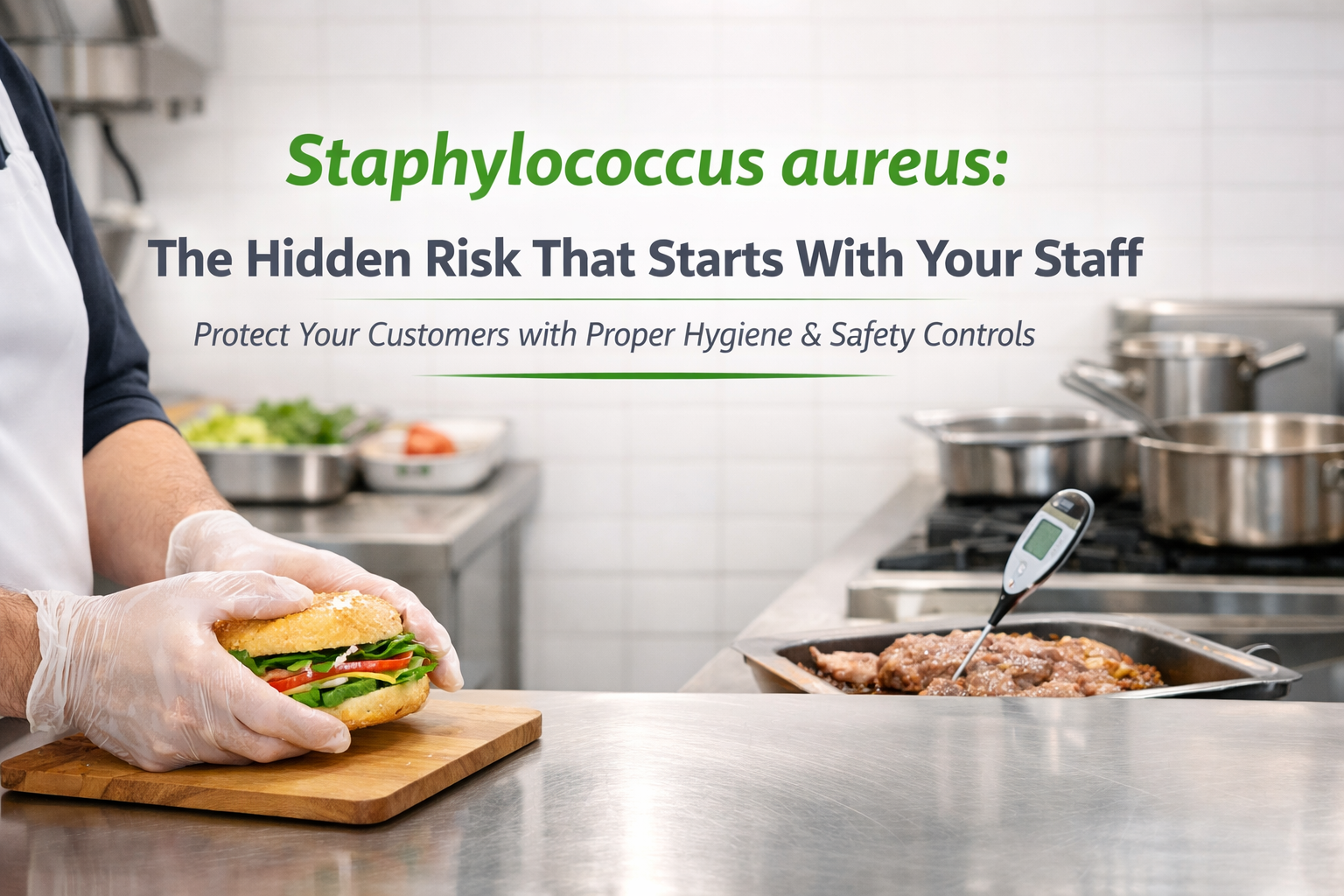
Running a food business means you’re always juggling time, people and pressure. Most owners focus on cooking, cleaning and keeping customers happy. What often gets missed is the risk that comes from something very ordinary. People.
One of the most common causes of food poisoning in UK catering starts with staff hygiene. It’s called Staphylococcus aureus. Many people just call it Staph.
It sounds technical, but the risk is very real for cafés, restaurants, takeaways, food trucks and small producers. The good news is it’s also very preventable when you know what to look for.
Let’s break it down in plain English and keep it practical.
What is Staphylococcus aureus and why should you care?
Staphylococcus aureus is a bacterium that lives on people, not food. Many healthy people carry it every day and don’t know it.
It’s commonly found on skin, in the nose and throat and on cuts, spots and sores. That means it’s already in your kitchen before food prep even starts.
The real danger isn’t the bacteria itself. It’s the toxin it can produce when it grows in food.
Once that toxin is there, cooking won’t fix it. Reheating won’t fix it. The food is unsafe and must be thrown away.
That’s why this bug causes so many problems for food businesses.
How does it get into food?
Most cases come down to hand contact.
A member of staff touches their face or nose. They adjust a plaster. They rub an itchy spot. Then they go straight back to making sandwiches or plating cooked food.
If hands aren’t washed properly, the bacteria transfers to the food.
Cuts that aren’t fully covered are another big risk. Even small cuts can carry large amounts of bacteria, especially if they’re infected or weeping.
Once Staph is on the food, time and temperature decide what happens next.
Foods most at risk in your business
Staphylococcus aureus loves certain foods. These are the ones that keep cropping up in food poisoning cases.
High risk foods are usually ready-to-eat, high in protein and handled a lot.
Common examples include cooked meats and poultry, sliced ham and joints, sandwiches and wraps, cream cakes and desserts, cheese and dairy products and cooked rice or pasta dishes.
These foods share one thing. There’s no final cooking step before the customer eats them.
If contamination happens during prep, it stays there.
Why ready-to-eat food is such a problem
Ready-to-eat food relies completely on staff hygiene.
There’s no heat step to kill bacteria before service. If hands, gloves or utensils are contaminated, the food is contaminated too.
Problems get worse when food is prepared too early and left out of temperature control. This gives the bacteria time to grow and produce toxin.
A tray of sandwiches made in the morning and left out for service is a classic example.
What illness looks like for customers
Staph food poisoning comes on fast. Very fast.
Symptoms usually start between one and six hours after eating the food. That speed is a big red flag for environmental health officers.
Common symptoms include sudden vomiting, nausea and stomach cramps. Some people may have diarrhoea, but fever is uncommon.
The illness is often intense but short. Most people recover within a day or two.
From a business point of view, fast illness is bad news. Customers often link it straight back to where they ate. Multiple complaints can come in at once. Investigations can follow quickly.
Why short illness still matters
Some businesses make the mistake of thinking it’s not serious because people recover quickly.
That’s a dangerous mindset.
Even short illness can lead to complaints, inspections, enforcement action and reputational damage. Online reviews don’t mention how long someone was ill. They mention that they were ill at all.
Your legal duties as a food business
UK food law is clear. Food must be safe to eat.
You’re legally required to prevent contamination, control hazards and manage staff hygiene properly.
This includes making sure food handlers are fit to work, cuts and sores are managed correctly and time and temperature controls are in place.
Staff hygiene isn’t just best practice. It’s a legal requirement.
Failing to control risks linked to people is a common reason for low hygiene ratings and enforcement action.
Everyday mistakes that cause big problems
Most Staph incidents don’t come from bad intentions. They come from rushed days and poor habits.
Common mistakes include assuming gloves replace handwashing, letting staff work with uncovered or poorly covered cuts, preparing food too far in advance, leaving food out because it’s busy and thinking reheating makes food safe again.
These small shortcuts add up fast.
Simple steps that prevent contamination
The controls for Staphylococcus aureus are straightforward. They just need to be followed every day.
Get handwashing right
Hands must be washed before starting work, before handling ready-to-eat food and after touching the face, hair, nose or wounds.
Quick rinses don’t count. Proper handwashing does.
Manage cuts and skin problems properly
Cuts and sores must be fully covered with brightly coloured waterproof dressings. They need to stay secure during work.
If a wound is weeping, infected or can’t be covered properly, that person shouldn’t handle open food.
This protects customers and your business.
Control time and temperature
Cold food should be kept at eight degrees Celsius or below. In real terms, fridges should be set to five degrees or lower.
Hot food must be kept at sixty-three degrees Celsius or above.
Food that drops below that can only be kept for up to two hours once. After that, it must be used, chilled safely or thrown away.
Time out of control is when toxin can form.
Cool food safely
Hot food should be cooled quickly. Large pots left on the side cool too slowly.
Portion food into smaller containers and get it into the fridge within one to two hours.
Reduce hand contact
Prepare food as close to service as possible. Use utensils where you can. The less hands touch food, the lower the risk.
Staff fitness to work matters every shift
Because Staph mainly comes from people, reporting rules are critical.
Staff must report vomiting, diarrhoea and infected cuts or skin conditions.
Anyone with vomiting or diarrhoea must stay away from food and only return forty-eight hours after symptoms stop.
Managers should check fitness to work at the start of every shift. It shouldn’t be left to chance or trust.
Monitoring keeps you in control
Good intentions aren’t enough. You need checks.
That means looking at hands and dressings, checking fridge and hot holding temperatures and keeping simple records.
Records show you’re in control and help spot problems early. They also protect you if something goes wrong.
Making food safety easier
Staphylococcus aureus is a people problem, but it’s one you can manage with clear rules and good habits.
When hygiene checks, temperature records and staff reporting are simple, they actually get done. That’s where digital systems can really help.
If you want to save time, reduce paperwork and stay on top of daily food safety tasks, it’s worth exploring how the Food Safety App can support your business and make compliance feel less stressful.