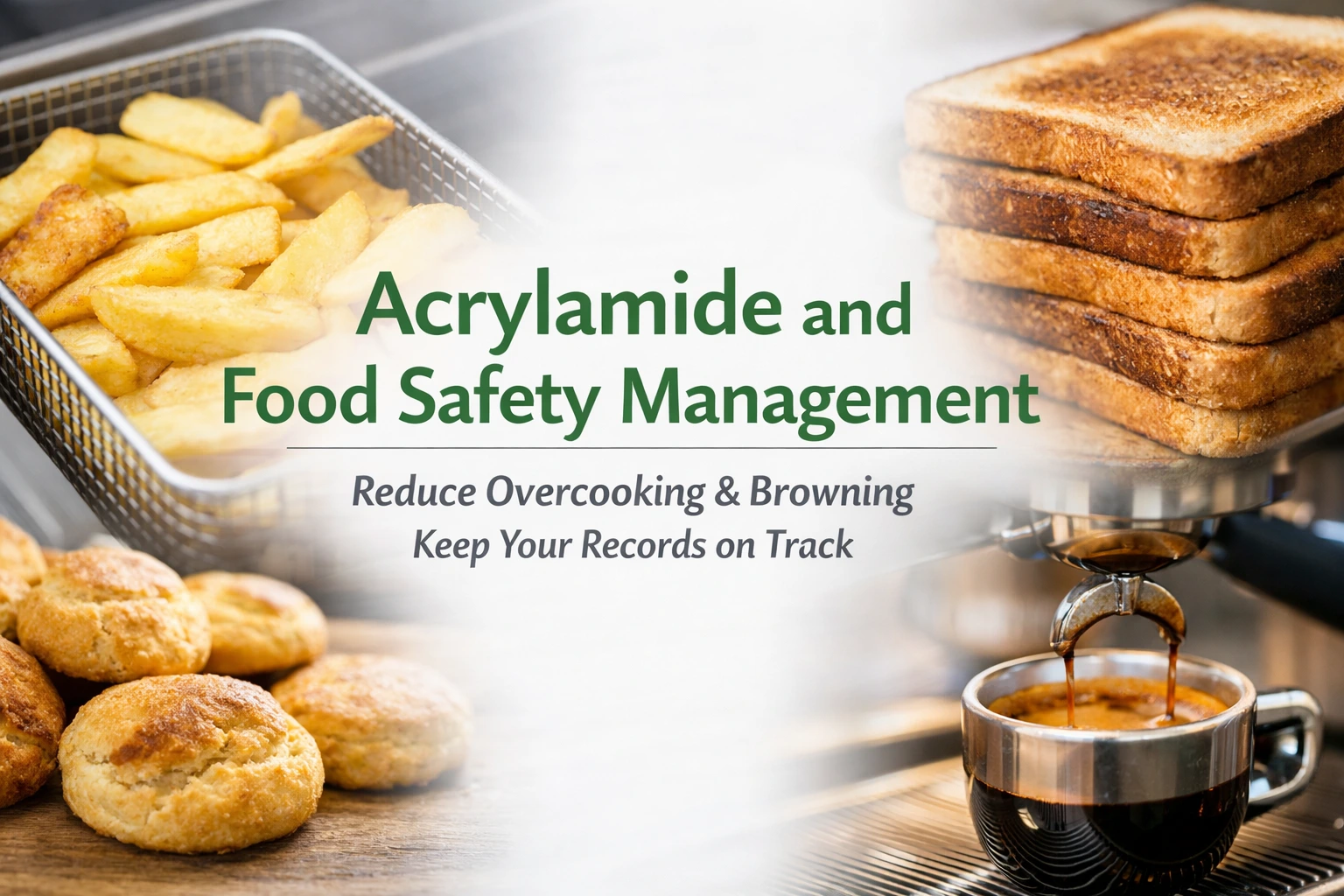
If you run a café, restaurant or takeaway, acrylamide can sound technical or intimidating. This guide explains what it means in day-to-day food safety management, what controls you actually need, and how digital food safety records can help you stay compliant and confident.
Table of contents
- What acrylamide is and why it matters
- Is acrylamide a legal requirement for my business?
- Where acrylamide appears in catering kitchens
- Practical controls you should have in place
- Recording acrylamide controls in your food safety management
- Common mistakes inspectors see
- Making acrylamide easier to manage
What is acrylamide and why should you care?
Acrylamide is a chemical that forms naturally when starchy foods are cooked at high temperatures, such as frying, baking, roasting or toasting. It isn’t added to food, but develops during browning, especially when foods turn dark brown.
From a food safety management perspective, acrylamide matters because it’s classed as a chemical hazard. UK regulators expect food businesses to understand where it can form and to take sensible steps to reduce it as far as reasonably possible.
The good news is that most controls are simple, practical and already part of good cooking practice.
Is acrylamide a legal requirement for my business?
Yes — but not in the way many operators fear.
UK food law requires catering businesses to:
- Recognise acrylamide as a hazard where relevant
- Apply practical mitigation measures
- Include it in food safety management and HACCP records
There are no legal maximum limits for caterers. Instead, regulators look at whether you’ve thought about the risk and taken reasonable steps to control it.
If you already manage food safety properly, acrylamide usually fits naturally into your existing systems.
Where acrylamide appears in catering kitchens
Acrylamide is most relevant if you prepare or sell:
- Chips or fries (fresh or frozen)
- Fried or roasted potatoes
- Toast, toasted sandwiches or paninis
- Baked goods like biscuits, scones or cookies
- Coffee (mainly managed by suppliers)
For example, a fish and chip shop, pub kitchen or café serving breakfasts will almost always need some acrylamide controls in place.
Practical controls you should have in place
Chips and fried potato products
This is where inspectors most often focus.
Good controls include:
- Aim for golden yellow, not dark brown
- Keep fryer temperatures consistent and avoid overheating
- Don’t overfill fryer baskets
- Follow manufacturer instructions for frozen chips
- Change or filter oil regularly
- Use a simple colour guide so staff know when chips are “done”
Soaking or blanching fresh-cut chips before frying can also help, if it fits your operation.
Toast, grills and paninis
For toasted items:
- Avoid very dark browning
- Set clear toaster or grill settings
- Don’t repeatedly re-toast items to “freshen them up”
A simple rule like “light to medium brown only” is often enough when written into your procedures.
Baked goods
If you bake in-house:
- Avoid overbaking for colour
- Use consistent oven settings
- Adjust times rather than turning temperatures up
Coffee
For cafés, acrylamide is mostly controlled by suppliers. Your responsibility is to:
- Buy from reputable suppliers
- Keep supplier details and product specifications
Recording acrylamide controls in your food safety management
Inspectors don’t expect paperwork for the sake of it. They want to see that your controls are thought through and followed.
This usually means:
- Acrylamide mentioned in your hazard analysis
- Simple written controls for frying, toasting or baking
- Staff trained on colour standards
- Records showing checks or corrective actions when food is too dark
Using digital food safety records makes this much easier. Instead of scattered paperwork, controls can be built into daily checks, cooking logs and HACCP records.
Many businesses link acrylamide controls directly into their wider food safety management routines, alongside temperature checks and allergen management.
For example, guidance on managing legal responsibilities and inspections can be found in articles like
UK food safety law explained for everyday practice.
Common mistakes inspectors see
Some of the most common issues include:
- Acrylamide not mentioned at all in HACCP records
- No clear “golden colour” standard for chips or toast
- Overcooking because staff rush during busy periods
- Relying on memory instead of written procedures
- Doing the right thing but having no evidence to show it
These gaps can affect confidence during inspections and may impact your ability to improve food hygiene rating.
If paperwork feels like a burden, articles such as
Why food safety paperwork fails in busy kitchens
explain why simpler systems work better.
Making acrylamide easier to manage
Acrylamide doesn’t need to be complicated. For most catering businesses, it’s about:
- Avoiding unnecessary overcooking
- Training staff properly
- Keeping clear, simple records
Food-Safety.app is a food safety management system for UK catering businesses that helps bring these controls together in one place. By keeping HACCP records, allergen management, and daily checks aligned, acrylamide becomes just another manageable part of running a safe kitchen — not an extra headache.
If you’re preparing for inspections, resources like
Preparing for official food safety inspections
can help you understand what officers expect to see.