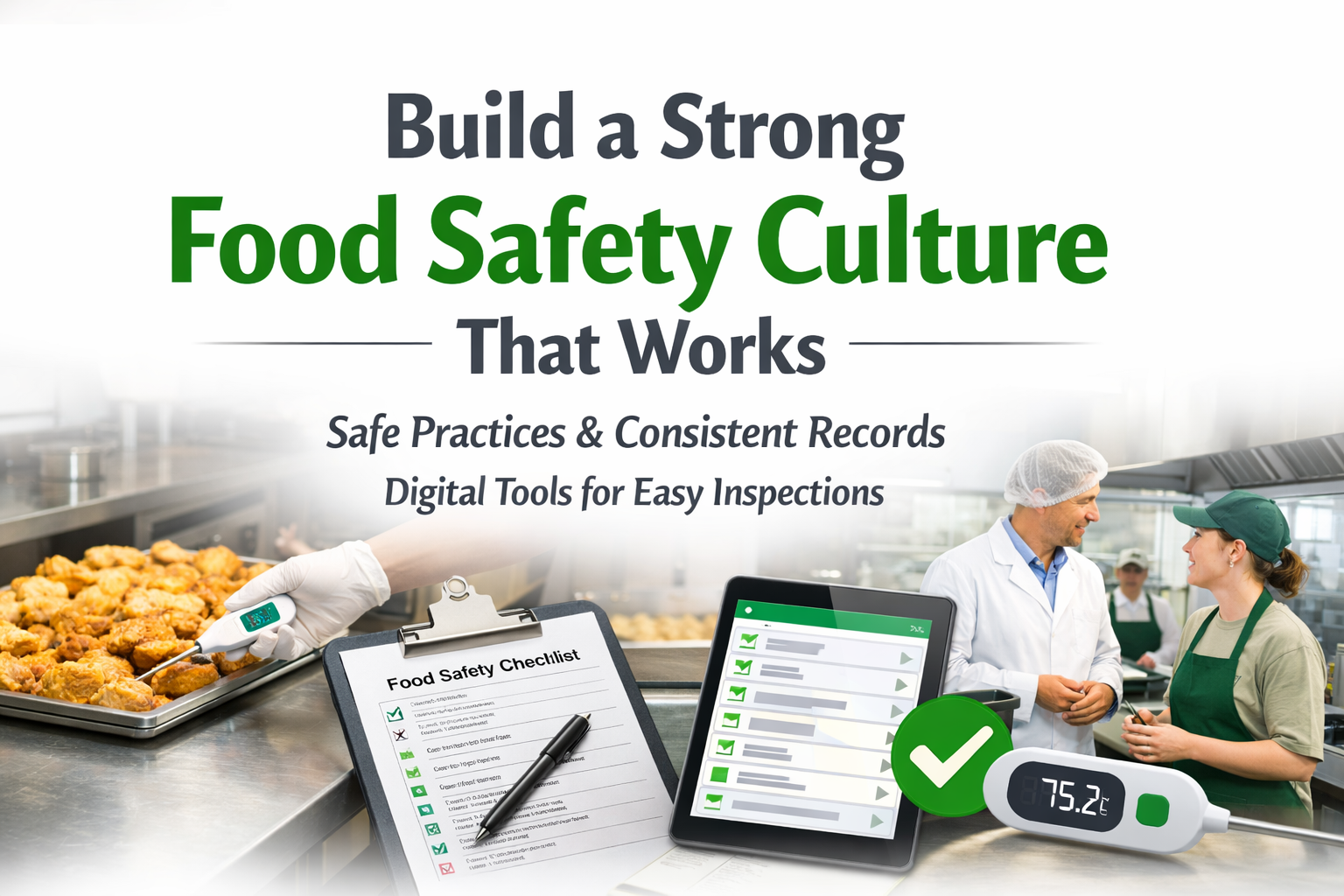
Building a strong food safety culture means embedding good habits every day so your team follows safe practices, keeps consistent food hygiene paperwork and feels confident using a food safety management system like the Food Safety App to support digital food safety and inspection readiness.
What food safety culture actually is
Food safety culture is how your team thinks and acts about food safety day to day. It’s not just rules in a book or a folder of paper. It’s what actually happens when staff handle, prepare and serve food.
A strong culture shows in simple things like proper handwashing, following cleaning schedules, doing checks on time, and speaking up when something isn’t right. It helps you meet legal duties and can improve your food hygiene rating because inspectors can see consistent safe habits, not just folders of records.
If culture is weak, staff might only do the right thing when someone is looking. Checks get left until later, records are backdated, and problems get hidden instead of fixed.
Why culture matters more than paperwork
You need a food safety management system. It’s a requirement. But culture is what makes it work.
Good culture means your team:
- Does checks properly and on time
- Uses digital tools rather than rushing paper forms
- Understands why controls matter
- Feels safe to raise concerns
Bad culture leads to mistakes, gaps in records, and issues that only get spotted at inspection. Paperless food safety helps because staff can complete tasks quickly, see what’s missing and correct things before they become problems.
Leadership sets the tone
Staff follow behaviour, not posters. If supervisors skip steps to save time, staff copy that. If leaders praise shortcuts, safety slips.
Strong leadership means:
- Following all procedures yourself
- Doing walk-round checks
- Speaking about why food safety matters
- Using food safety training resources regularly
When leaders use tools like the Food Safety App to make checks part of the workflow, staff are more likely to adopt good habits.
Simple leadership habits
Here are daily actions that shape culture:
- Greet staff with a quick check-in about tasks
- Ask about yesterday’s checks and any issues
- Stop work if a critical control point is missed
- Thank people for reporting problems
These build trust and set expectations.
Getting staff engaged with food safety
Training isn’t a box to tick. It’s about helping people understand what can go wrong and how to stop it.
Use real examples your team recognises. For instance:
- How cross-contamination can spread bugs from raw to cooked food
- Why high-risk foods need strict temperature control, like in High-Risk vs Low-Risk Foods
- What happens when cleaning is rushed
Training should be short, clear and repeated. Reinforce with the app’s checklists. Staff learn by doing and seeing results.
Making communication normal
People won’t report issues if they think they’ll get blamed. A strong culture means problems get spotted and fixed, not swept under the carpet.
Encourage your team to speak up by:
- Thanking them when they report something
- Fixing issues quickly
- Explaining what action was taken
- Avoiding blame for honest mistakes
When staff see their reports lead to improvements, they’ll keep sharing.
Using digital food safety to support culture
Digital food safety tools like the Food Safety App help embed good habits. They make checks quick and clear, and they show what needs doing without flipping through folders.
Benefits include:
- Instant time-stamped proof of checks
- Automatic reminders for daily tasks
- Easy access to training resources
- Clear logs for inspections
This takes the pressure off staff trying to juggle paperwork with service. It supports a culture where doing the right thing is simple and obvious.
Monitoring behaviour as well as records
Records tell you what was done. Behaviour shows you how it was done.
Watch for things like:
- Are checks done at the right time or all at once at the end of a shift?
- Do staff follow allergen controls without reminders?
- Are cleaning tasks completed properly?
Use observations and regular reviews to pick up patterns. Digital systems can highlight trends over time so you can act before issues grow.
Keeping standards during change
Busy periods, new starters and menu changes all put culture under pressure. That’s when shortcuts creep in.
To keep culture strong:
- Do extra training before busy times
- Pair new staff with experienced team members
- Keep checks simple and consistent
- Review routines after menu changes
Good habits stick when systems are easy to follow and expectations are clear.
Culture improves inspections and confidence
Inspectors look at what actually happens, not just what’s written down. If staff can explain why they do checks and show consistent records from a digital system, you build confidence in your controls.
Strong culture helps protect customers and your reputation. It reduces stress around inspections and supports better outcomes overall.
Keep building one step at a time
You won’t fix culture with one meeting or one folder. It grows from daily habits, clear expectations and supportive tools. Starting small and staying consistent builds strong food safety behaviour that lasts.
Use the Food Safety App to support your team with easy checks, clear records and training resources that fit into everyday work. It can make food safety easier to manage and save time every day.