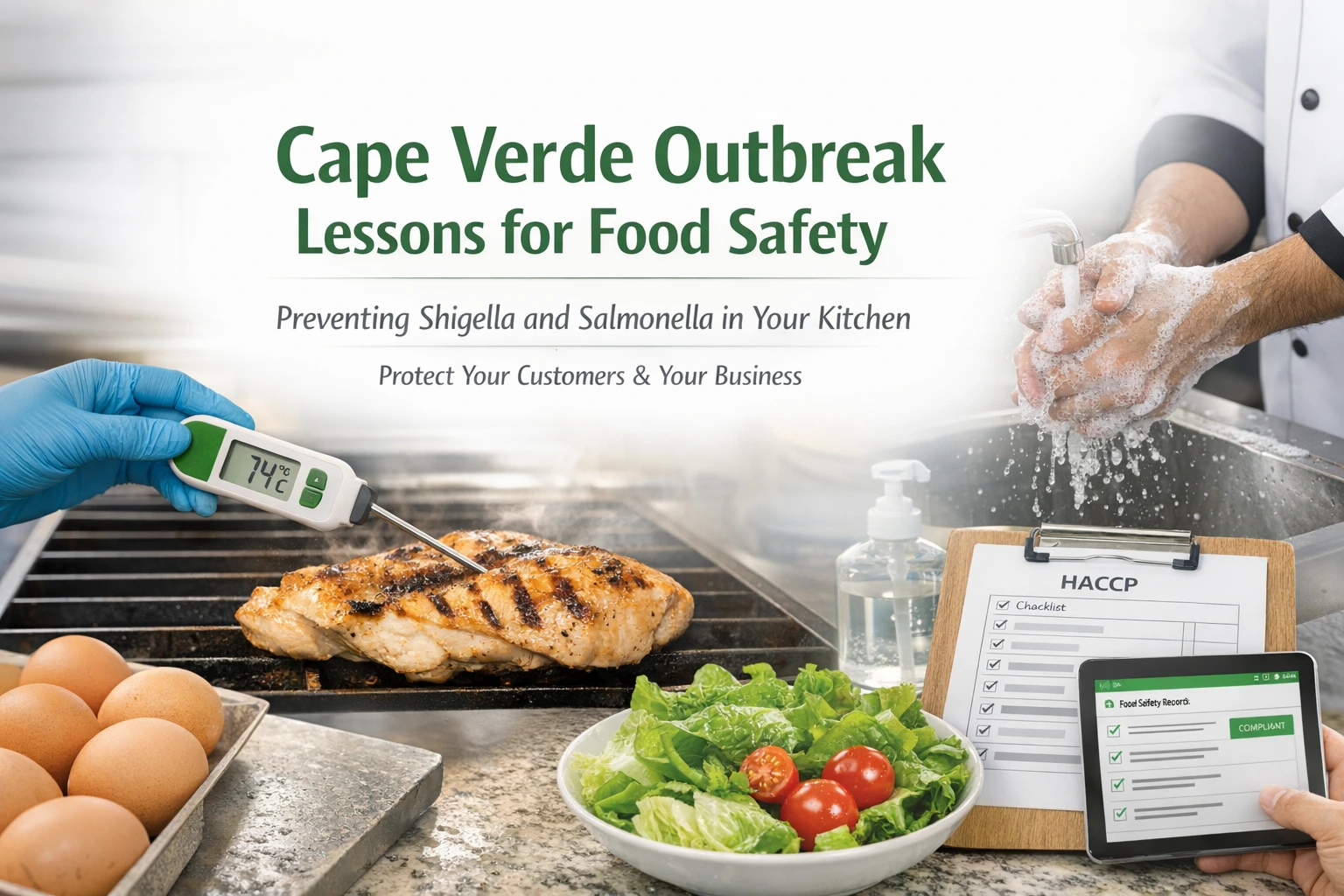
If you run a catering or hospitality business, this guide explains how recent illness cases linked to Cape Verde highlight why strong food safety management and reliable digital systems matter for UK food businesses.
- Recent Cape Verde cases and why they matter
- What are Shigella and Salmonella?
- Impact on food businesses
- How these infections spread in kitchens
- Practical food safety controls
- Using digital records to stay compliant
Recent Cape Verde cases and why they matter
Over recent months, several British holidaymakers have become seriously ill after travelling to Cape Verde, with a number of tragic deaths linked to severe stomach infections. Media reports have connected these cases to outbreaks of gastrointestinal illness, including bacteria such as Shigella and Salmonella.
While these cases occurred abroad, they highlight an important point for UK caterers: foodborne illness can escalate quickly when hygiene controls fail. The same routes of infection seen in holiday settings can exist in any kitchen if food safety isn’t managed consistently.
What are Shigella and Salmonella?
Shigella and Salmonella are bacteria that infect the gut. They commonly cause diarrhoea, stomach cramps, fever and general flu-like symptoms. Most people recover, but infections can be serious for vulnerable customers such as older adults, young children, or people with weakened immune systems.
Salmonella is often linked to contaminated food, particularly raw or undercooked poultry, eggs and foods affected by cross-contamination. Shigella is more commonly spread through poor personal hygiene, especially inadequate handwashing after using the toilet.
Impact on food businesses
For catering and hospitality businesses, the risk goes beyond individual illness. If customers or staff become unwell, you could face complaints, investigations, reputational damage or a lower food hygiene rating.
In practical terms, this might look like a chef returning to work too soon after illness, or a busy service where cleaning checks are missed. Without clear procedures and records, it’s harder to show that you’ve taken reasonable steps to control risk.
How these infections spread in kitchens
In food businesses, Shigella and Salmonella typically spread through everyday lapses rather than major failures. Common causes include:
- Food handlers working while ill
- Poor handwashing practices
- Cross-contamination between raw and ready-to-eat foods
- Incorrect cooking or storage temperatures
- Shared equipment that isn’t cleaned properly
These are exactly the types of hazards covered by HACCP records, which help businesses identify risks and apply controls before problems arise.
Practical food safety controls
Reducing the risk of foodborne illness doesn’t require complicated systems, but it does require consistency. Simple, practical controls make the biggest difference:
- Clear rules on handwashing and personal hygiene
- Strict illness reporting and exclusion procedures
- Separation of raw and ready-to-eat foods
- Routine temperature checks during cooking and storage
- Effective cleaning and sanitising routines
These controls also support other areas of compliance, such as allergen management, by reducing the chance of unintended contamination.
Using digital records to stay compliant
Paper records are easy to lose, forget or complete after the event. Using digital food safety records helps ensure checks are done on time and gives you a clear audit trail.
Food-Safety.app is a food safety management system for UK catering businesses. It helps you manage daily checks, staff training and key records in one place, making it easier to demonstrate compliance during inspections.
Clear records also support efforts to improve food hygiene rating, as inspectors can quickly see that risks are understood and controlled.
Conclusion
The recent cases linked to Cape Verde are a reminder that foodborne illness can have serious consequences. For UK catering businesses, prevention is always better than response.
By maintaining strong food safety management, training staff properly and keeping accurate records, you reduce risk for your customers and your business. Using a digital food safety system can make this process simpler and more consistent, helping you stay organised and confident every day.
If you’re looking for a practical way to support compliance and reduce pressure on busy teams, a food safety app can be a helpful next step.