
Food safety isn’t just about keeping things clean or following routines. Some of the most serious risks come from foods that look, smell and taste completely normal. You won’t always get a warning when something has gone wrong.
One of the most dangerous examples is Clostridium botulinum.
Botulism is rare in the UK, but when it does occur it’s extremely serious and can be fatal. What makes it especially risky is that it isn’t always linked to obvious hygiene failures. It’s usually caused by how food is processed, packed, stored and controlled over time.
What is Clostridium botulinum?
Clostridium botulinum is a naturally occurring bacterium found widely in the environment. It can produce one of the most powerful toxins known.
It’s the toxin that causes botulism, not the bacteria itself.
What makes this risk so dangerous is that:
- It forms spores that are very hard to destroy
- It grows without oxygen
- The toxin has no smell, taste or visible signs
- Food can look completely safe and still be deadly
This means you can’t rely on your senses to keep people safe.
Where does it come from?
This bacterium isn’t a sign of poor cleaning or bad personal hygiene. It’s naturally present in places like:
- Soil and dust
- Growing areas and farms
- Raw vegetables and herbs
- Fish and seafood environments
- Rivers and seabeds
Spores can enter food premises through normal deliveries. Soil on vegetables, herbs grown in the ground or raw fish can all bring spores into food areas.
Even very clean kitchens can have them present. That’s why food safety control here is about preventing growth, not trying to remove it completely.
Why cooking isn’t always enough
A common mistake is thinking that cooking solves the problem.
The spores can survive normal cooking, freezing, drying and refrigeration. Cooking may kill many bacteria, but Clostridium botulinum spores can remain.
The danger starts after cooking if food is:
- Stored without oxygen
- Kept too warm
- Held for too long
- Not acidic enough
Once toxin is produced, reheating the food may not make it safe again. Heating isn’t a safety fix for this risk.
The conditions that allow it to grow
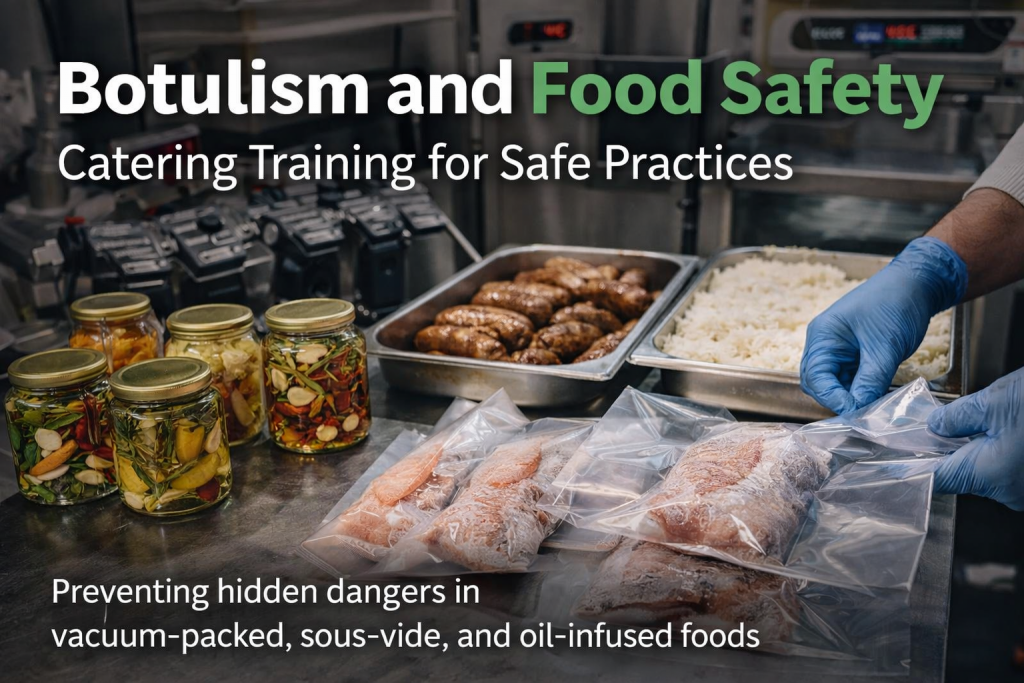
Clostridium botulinum needs a combination of conditions to become dangerous. Small failures can add up.
Low oxygen
This is the biggest risk factor.
Unlike many bacteria, this one grows best without oxygen. It’s strongly linked to:
- Vacuum packing
- Modified atmosphere packaging
- Oil-covered foods
- Sealed containers and jars
Removing oxygen removes an important safety barrier.
Temperature
Some strains can grow at temperatures as low as 3°C. If chilled food is stored above safe temperatures, the risk increases quickly.
A fridge running too warm overnight isn’t a minor issue. It’s a serious food safety problem.
Time
The longer food is stored, the more chance bacteria have to grow and produce toxin. Extended shelf lives increase risk, especially for chilled and low-oxygen foods.
Acidity and moisture
Low-acid, moist foods are far more dangerous than acidic ones. Many in-house products don’t have controlled acidity, which makes safe handling harder.
Foods and processes with higher risk
Certain foods and preparation methods are linked again and again to botulism risk.
Vacuum-packed and MAP foods
These include:
- Vacuum-packed cooked meats
- Vacuum-packed fish
- Cook-chill meals
They rely heavily on strict temperature control and short shelf lives. If those controls fail, risk rises fast.
Sous-vide cooking
Sous-vide combines vacuum sealing with low-temperature cooking. It can be safe, but only with tight controls.
Time, temperature, chilling and storage all have to be correct. Guessing isn’t enough.
Garlic, herb and chilli oils
This is one of the highest-risk in-house processes.
Garlic and herbs can carry spores. Oil removes oxygen. These products are often stored at room temperature and acidity is rarely controlled.
Many food handlers remove this risk completely by using commercially produced alternatives instead.
Home-style preserved foods
Examples include:
- Pickled vegetables
- Fermented foods
- Home-canned products
If acidity, heat treatment or storage isn’t properly controlled, the risk increases.
Cooked foods cooled and stored badly
Cooked rice, sauces, gravies, vegetables and meats can all be risky if cooling is slow or fridge temperatures aren’t controlled.
Spores survive cooking. The danger develops later during storage.
What botulism looks like
Botulism isn’t like typical food poisoning and doesn’t usually start with stomach upset.
Symptoms can include:
- Blurred or double vision
- Drooping eyelids
- Slurred speech
- Difficulty swallowing
- Muscle weakness
- Breathing problems
This is a medical emergency. Early symptoms can seem mild, but delays can be fatal.
Legal duties and food safety responsibility
UK food law requires food handlers and food businesses to prevent unsafe food from being produced or served.
This means:
- Following HACCP-based controls
- Managing time, temperature and storage properly
- Using safe shelf lives
- Being trained to understand higher-risk processes
- Stopping food being used if safety is uncertain
Processes like vacuum packing, sous-vide cooking and oil infusions must never be used without proper controls and training.
Simple ways to control the risk
Botulism is preventable with the right systems in place.
Control temperature
- Keep chilled food at 5°C or below
- Cool hot food quickly
- Act immediately if fridges fail
Manage shelf life
- Use short, safe shelf lives
- Label food clearly
- Never guess dates
Be careful with packaging
- Only vacuum pack foods you’re trained to handle
- Follow manufacturer and official guidance
- Don’t vacuum pack unsuitable foods
Avoid high-risk oil products
- Don’t make garlic or herb oils in-house
- Use commercial products where possible
- Keep chilled and short-life if used
Often the safest option is to remove the process altogether.
What to do if something goes wrong
If controls fail, act straight away.
- Stop using the food
- Isolate and label it clearly
- Inform a supervisor or manager
- Record what happened and what action was taken
- Throw food away if safety is uncertain
Never taste suspect food. Never try to use it up quickly. When in doubt, it goes in the bin.
Key things to remember
- Clostridium botulinum is common in the environment
- The toxin can’t be seen, smelled or tasted
- Risk comes from handling and storage, not appearance
- Low oxygen, time and poor temperature control create danger
- Reheating doesn’t make unsafe food safe
If you’re unsure whether food is safe, don’t use it.
Keeping control of temperatures, shelf lives and checks can feel time-consuming, especially in busy food environments. If you want an easier way to manage food safety records, training and daily checks, take a look at how the Food Safety App can help make compliance simpler and save time.