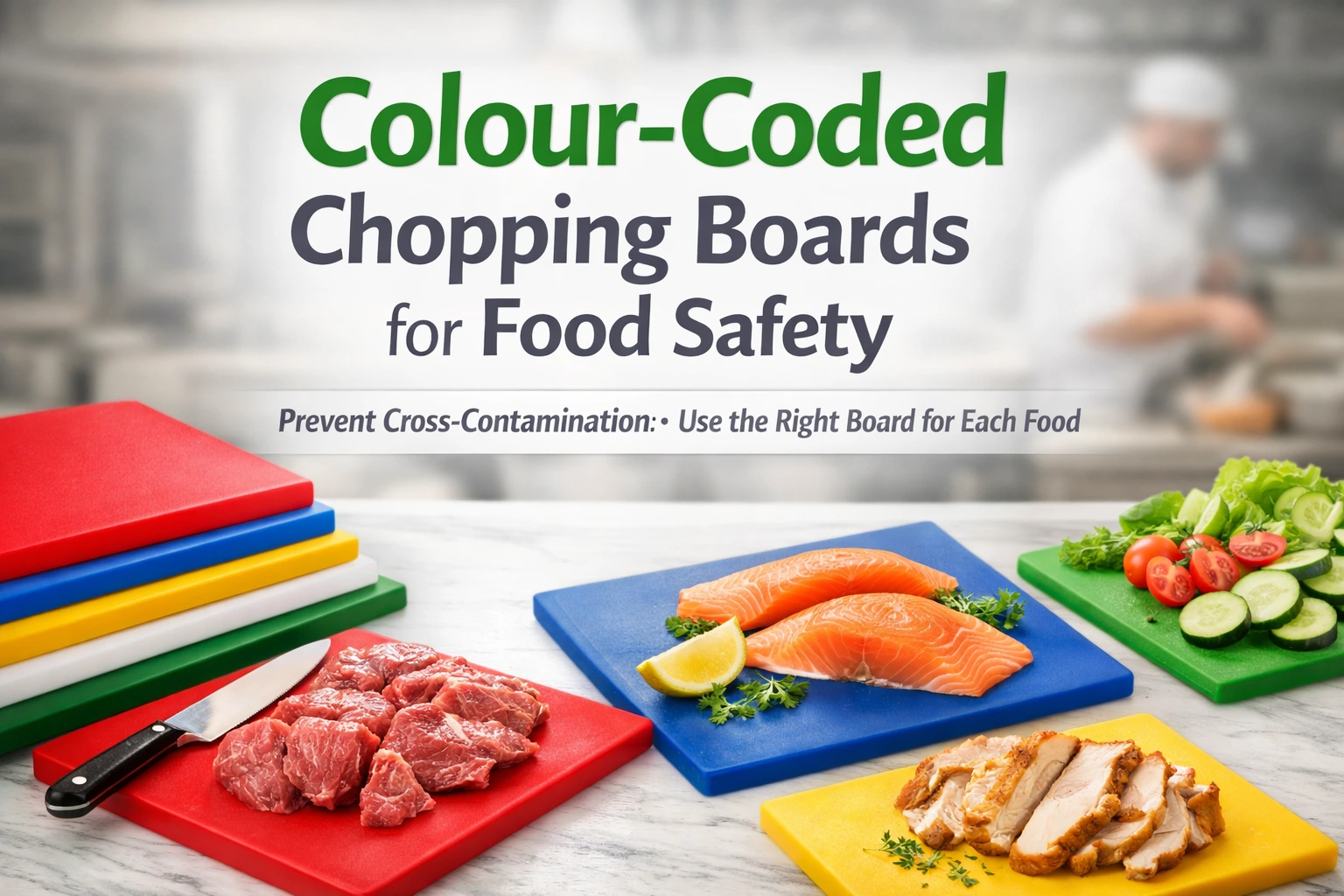
Colour-coded chopping boards are a basic but powerful way to prevent cross-contamination in busy catering and hospitality kitchens. Whether you’re prepping salads, raw meat or cooked food, using the right board colour helps your team follow safer prep routines, supports your food safety management system and makes food hygiene checks simpler to manage with digital food safety tools.
Why colour-coded chopping boards matter
When food handlers use the same board for raw and ready-to-eat foods, harmful bacteria can transfer without anyone noticing. This can lead to food poisoning and a lower food hygiene rating from inspectors. Colour-coded systems reduce that risk by making it obvious which board to use for which food type.
Following a consistent colour system not only protects customers but also shows you’ve built clear controls into your procedures, making tasks like cleaning checks and staff training far easier.
How chopping boards prevent cross-contamination
What cross-contamination is
Cross-contamination happens when bacteria move from one food to another. It’s one of the most common causes of foodborne illness in catering and hospitality settings. Common vectors include hands, tools, knives and work surfaces, including chopping boards. (food-safety.app)
Raw meat, poultry and fish can carry harmful bacteria. If these foods are prepped on a board and then the same board is used for ready-to-eat items like salad without proper controls, bacteria can spread. Colour-coded boards help block that route by separating tasks visually and practically.
Why boards matter even with cleaning
Good cleaning is essential. However, in the rush of service, cleaning steps can be skipped or hurried. Boards with deep cuts can also trap bacteria. Colour-coding adds an extra layer of control that helps prevent mistakes before they become a hazard.
Standard colour-coding systems in the UK
There isn’t a legal requirement to use specific colours. However, many UK kitchens stick to a widely recognised system because it’s simple and effective. Typical colours include:
- Red for raw meat
- Blue for raw fish
- Yellow for cooked meats
- Green for fruit and vegetables
- Brown for root vegetables
- White for dairy and bakery items
Stick with a system you train staff on and use consistently across shifts. It helps when temporary or new staff join.
Common problems with chopping board use
Using the wrong board in a rush
When it’s busy, the easiest choice can feel tempting. That’s exactly when mistakes happen. A clear colour system helps remind staff what to do, even under pressure.
Boards that are worn or stored poorly
Boards with deep scratches or cuts hold bacteria more easily and are harder to clean properly. If boards are stacked with raw and ready-to-eat boards touching, you’ve undermined the whole point of colour-coding.
Lack of training
Colour systems only work if teams understand them. Make sure new starters are shown what each colour means and why it matters. Linking to training pages like “why hand washing is so important” or your guide on “how cross-contamination happens and how to stop it” reinforces the habit.
For internal guidance on cross-contamination vectors and how to control them, see How Cross-Contamination Happens and How to Stop It. (food-safety.app)
Fitting colour-coding into your food safety management system
A food safety management system (FSMS) should be practical and clear. Colour-coded boards become part of that by showing how you control a common risk. When you document your procedures and checks, make sure they cover:
- How boards are assigned to food types
- Cleaning and sanitising schedules
- When boards are replaced
- Staff training records
This means you’re not just assuming boards are used correctly. You’re demonstrating control.
Use digital food safety to streamline checks
Keeping paper records for every prep and cleaning task adds more paperwork to an already busy day. Using a digital food safety app makes it easier to track and prove compliance.
With digital tools you can:
- Record cleaning and board replacement schedules
- Log staff training dates and refresher courses
- Run daily checks on contamination controls
- Keep all records in one place for inspection readiness
This reduces time spent on food hygiene paperwork and makes reviews stress-free.
If you want to streamline your compliance, explore a digital solution that brings colour-coding checks into your daily routines.
Choosing the right tools for inspection readiness
Regular official inspections can be stressful if your records are messy or incomplete. By aligning physical practices like colour-coded chopping boards with solid procedures in your food safety management system and digital food safety records, you’re more likely to feel confident and prepared.
For a broader look at how simple routines protect your business and improve inspection outcomes, check out Preparing for Official Inspections and Your Food Hygiene Rating on our blog.
Conclusion
Colour-coded chopping boards are a small investment in everyday safety that pays dividends in reduced cross-contamination risk and clearer controls. When combined with a strong food safety management system and digital food safety tools, they help teams stay consistent and make compliance easier to demonstrate.
Consider using a food safety app to bring your contamination controls, staff training and cleaning checks together in one place. It can help save time, reduce paper and make food safety a dependable part of your operations.