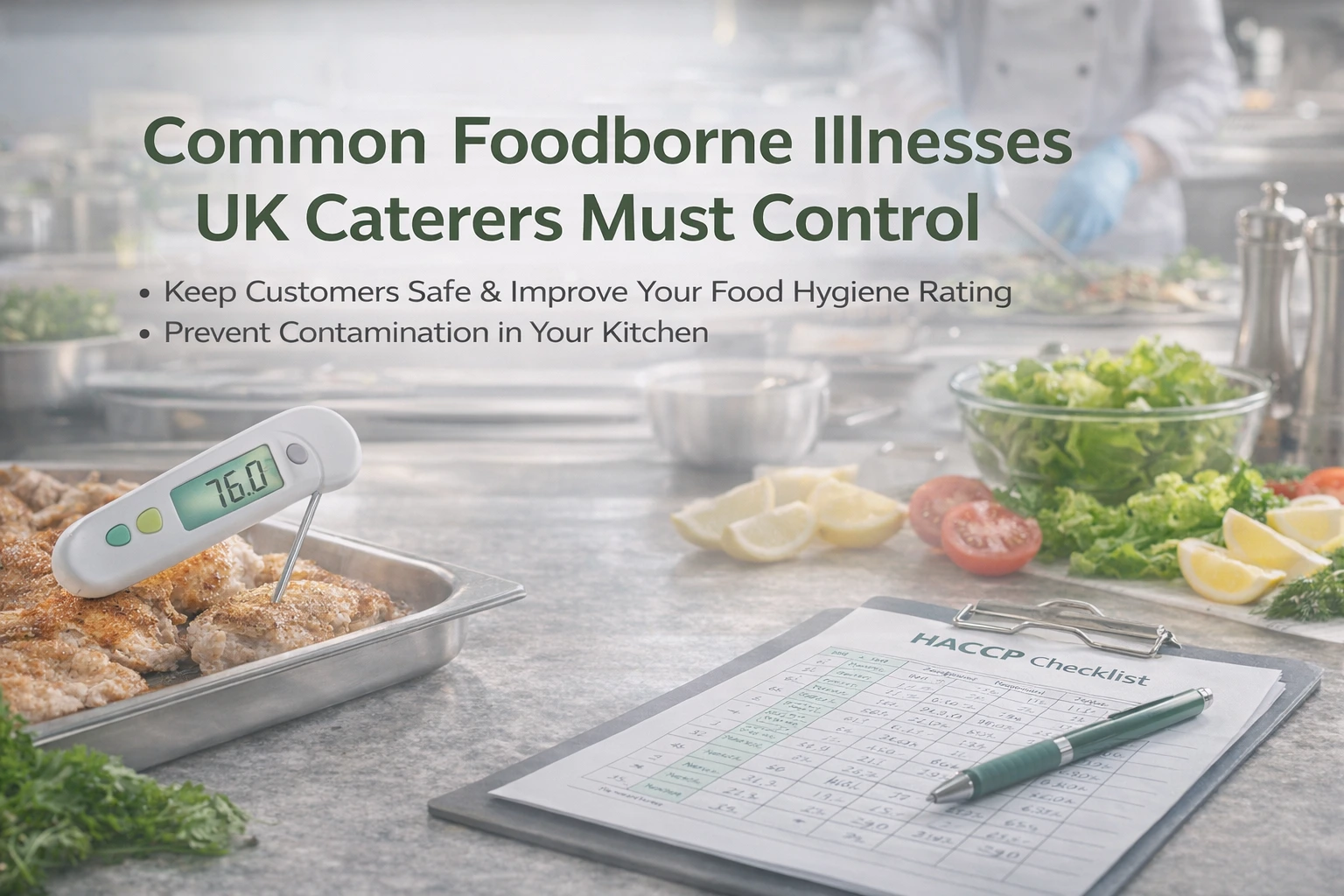
If you run a café, restaurant, takeaway or catering business, you already know food safety matters — but staying on top of it can feel overwhelming. This guide explains common foodborne illnesses in plain English and shows how a food safety management system like Food-Safety.app can help keep things simple, consistent and inspection-ready.
- Why foodborne illness matters to your business
- Salmonella
- E. coli
- Listeria
- Norovirus
- Practical controls that work day to day
Why foodborne illness matters to your business
Foodborne illness isn’t just about customers getting unwell. For UK catering businesses, it can mean failed inspections, poor reviews, enforcement action, or even closure. Environmental Health Officers expect you to understand your risks and show how you control them through clear procedures and records.
This is where structured HACCP records and reliable digital food safety records make a real difference. They help you prove what you do every day, not just what you say you do.
Salmonella: the classic catering risk
What is it?
Salmonella is a common bacteria that causes food poisoning. It’s frequently linked to raw poultry, eggs, meat and unpasteurised dairy products.
How it shows up in real kitchens
Typical issues include undercooked chicken, raw meat juices dripping in fridges, or using the same chopping board for raw chicken and salad. In a busy service, these mistakes can happen quickly if controls aren’t clear.
How to control it
Cook poultry thoroughly, keep raw and ready-to-eat foods separate, and clean as you go. Recording cooking temperatures and fridge checks daily helps demonstrate control and can support your aim to improve food hygiene rating.
E. coli: small mistakes, serious outcomes
What is it?
E. coli is a group of bacteria found in the gut. Some strains can cause severe illness, especially in children and older adults.
Common catering sources
Undercooked burgers, contaminated raw vegetables, or poor hand hygiene after handling raw meat are common causes. Minced beef is a particular risk because bacteria can be mixed throughout the product.
Practical prevention
Burgers should be cooked all the way through, with no pink centre. Staff must wash hands properly after handling raw foods. Clear procedures and training records make these expectations obvious and repeatable.
Listeria: the hidden fridge risk
Why it’s different
Listeria can grow at fridge temperatures, which makes it especially dangerous in ready-to-eat foods. It’s most serious for pregnant women, elderly people and those with weakened immune systems.
Where problems arise
Cooked sliced meats, soft cheeses and chilled ready-to-eat items stored too long or at the wrong temperature are common risks. Overfilled fridges and poor stock rotation make this worse.
How to stay in control
Keep fridges at 5°C or below, follow use-by dates strictly, and clean fridges regularly. Logging temperatures and checks digitally helps spot issues early and keeps evidence tidy and accessible.
Norovirus: when people are the problem
What it is
Norovirus is a highly contagious virus that causes vomiting and diarrhoea. It spreads easily through poor hand hygiene or infected staff handling food.
Why catering businesses are vulnerable
One unwell team member can contaminate multiple dishes, especially cold foods like salads or desserts that won’t be cooked again.
Key controls
Staff must not work with food if they’ve had vomiting or diarrhoea and should only return 48 hours after symptoms stop. Strong handwashing routines and clear sickness reporting rules are essential.
Practical controls that work day to day
Across all these hazards, the basics are the same: good hygiene, temperature control, training and clear records. Inspectors don’t expect perfection, but they do expect consistency and evidence.
Using a digital system helps you manage allergen management, cleaning schedules, temperature checks and staff training in one place. Food-Safety.app is a food safety management system for UK catering businesses designed to fit around real working kitchens, not slow them down.
For official guidance, the Food Standards Agency provides clear advice on controlling foodborne illness and meeting legal requirements.
Conclusion
Foodborne illnesses like Salmonella, E. coli, Listeria and Norovirus are common, but they’re also preventable with the right controls in place. Clear procedures, well-trained staff and reliable records help protect your customers and your business.
If keeping paperwork up to date feels like a constant battle, it may be worth looking at a food safety app that supports your daily routines. A practical system can make compliance easier, improve confidence during inspections, and help food safety become part of everyday work rather than an added stress.