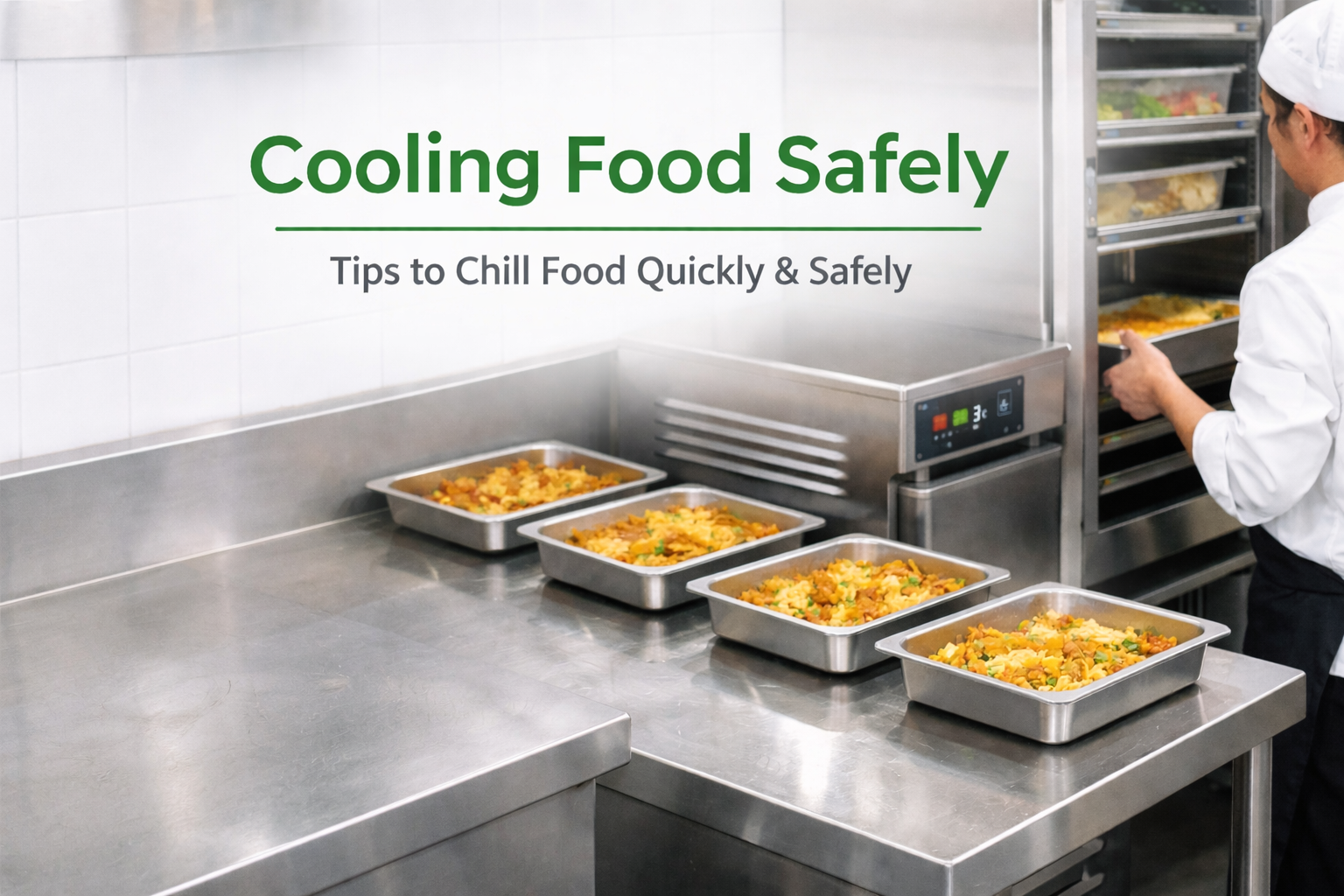
Cooling food safely is one of those jobs that sounds simple but causes a lot of food safety problems. You cook food. You cool it. You store it. Easy, right?
In reality, this step is where many food hygiene ratings drop. It’s also where food poisoning risks creep in if things aren’t done right.
If you run a café, restaurant, takeaway, food truck or production kitchen, this guide will help you cool food safely without stress. We’ll keep it clear, practical and realistic for busy UK kitchens.
Why cooling food safely really matters
Hot food that cools too slowly sits in the danger zone. That’s between 8°C and 63°C. Bacteria love this range. They grow fast and they don’t wait for quiet days.
Environmental Health Officers look closely at cooling methods during inspections. Poor cooling can lead to unsafe food and paperwork problems. It can also hurt your food hygiene rating.
A strong food safety management system should always include clear cooling steps. Going paperless with digital food safety makes this easier to manage and prove.
The 90-minute rule explained
The key target is simple.
You should cool hot food to below 8°C within 90 minutes.
This rule helps stop bacteria from multiplying. It applies to cooked foods like rice, pasta, meats, sauces, stews and soups.
If food is still warm after 90 minutes, it’s a warning sign. Your process needs adjusting.
Simple ways to meet the 90-minute rule:
- Reduce the size of the food portions
- Use shallow containers
- Help heat escape quickly
- Check temperatures and record them
Digital food safety tools make temperature checks faster and easier than paper logs.
Portioning makes cooling quicker
Large batches are one of the biggest cooling risks.
A deep pot of curry or soup can stay hot in the middle for hours. The surface cools but the centre stays warm and unsafe.
The fix is simple. Split food into smaller portions.
How to portion food safely
- Use shallow trays instead of deep containers
- Aim for a depth of no more than 5 cm
- Leave space between trays in the fridge
- Cover food once it’s cold, not while steaming
This method increases surface area so heat escapes faster. It also helps your fridge work properly.
Portioning is easy to train staff on and fits well into food safety training resources.
Ice baths for fast cooling
Ice baths are a great option if you don’t have specialist equipment.
They’re ideal for soups, sauces and liquids cooked in pots.
How to use an ice bath safely
- Fill a sink or container with ice and cold water
- Place the pot into the ice bath
- Stir the food to release heat evenly
- Change the water if it warms up
- Move food to the fridge once it’s cooled
Ice baths speed things up and help you hit the 90-minute target.
Always keep the pot clean and avoid splashing water into the food. Good hygiene matters even during cooling.
Using blast chillers properly
Blast chillers are mechanical units designed to cool food very fast. They use powerful fans and low temperatures to pull heat out quickly.
They’re common in larger kitchens and production settings.
Benefits of blast chillers
- Fast and controlled cooling
- Consistent results
- Less manual handling
- Better food quality and shelf life
- Strong evidence for inspections
Blast chillers are a big help for digital food safety systems. Temperatures can be logged automatically which saves time and reduces errors.
They aren’t essential for every business but they’re a smart investment where volume is high.
Why hot food doesn’t belong in the fridge
It’s tempting to put hot food straight into the fridge and walk away. This is a common mistake.
Putting steaming food in a fridge raises the internal temperature. That puts other foods at risk.
The dangers include
- Warming ready to eat food
- Encouraging bacteria growth
- Overworking the fridge
- Failing inspection checks
Fridges are designed to keep food cold, not cool it down from hot. Always reduce heat first using portioning or ice baths.
This step protects all the food inside, not just the one dish.
Good cooling needs good records
Cooling isn’t just about doing the right thing. It’s about proving it.
Environmental Health Officers want to see clear food hygiene paperwork. Missing or unclear records can cost you points.
Digital food safety makes this easier than paper folders.
What you should record
- Time cooking finished
- Time cooling started
- Time food reached below 8°C
- Final storage location
A paperless food safety system saves time and reduces mistakes. It also keeps everything ready for inspections.
Training staff to cool food safely
Cooling steps only work if everyone follows them.
Keep training simple. Focus on why it matters and how to do it safely.
Short refresher sessions and clear instructions help build good habits. Use food safety training resources that are practical and easy to understand.
Digital systems can prompt staff at the right time so steps aren’t missed.
Small changes make a big difference
Cooling food safely doesn’t need fancy kit or long procedures.
Small changes can have a big impact.
- Split food into smaller portions
- Use ice baths when needed
- Never overload fridges
- Check and record temperatures
- Train staff clearly
These steps protect your customers, your reputation and your food hygiene rating.
Make cooling easier with digital food safety
Cooling food safely is a key part of daily kitchen life. When it’s rushed or forgotten, risks rise fast.
A digital food safety management system helps you stay on track. It reduces food hygiene paperwork, supports paperless food safety and saves time every day.
If you want cooling checks, records and training resources all in one place, it’s worth exploring how the Food Safety App can support your business and make food safety simpler.