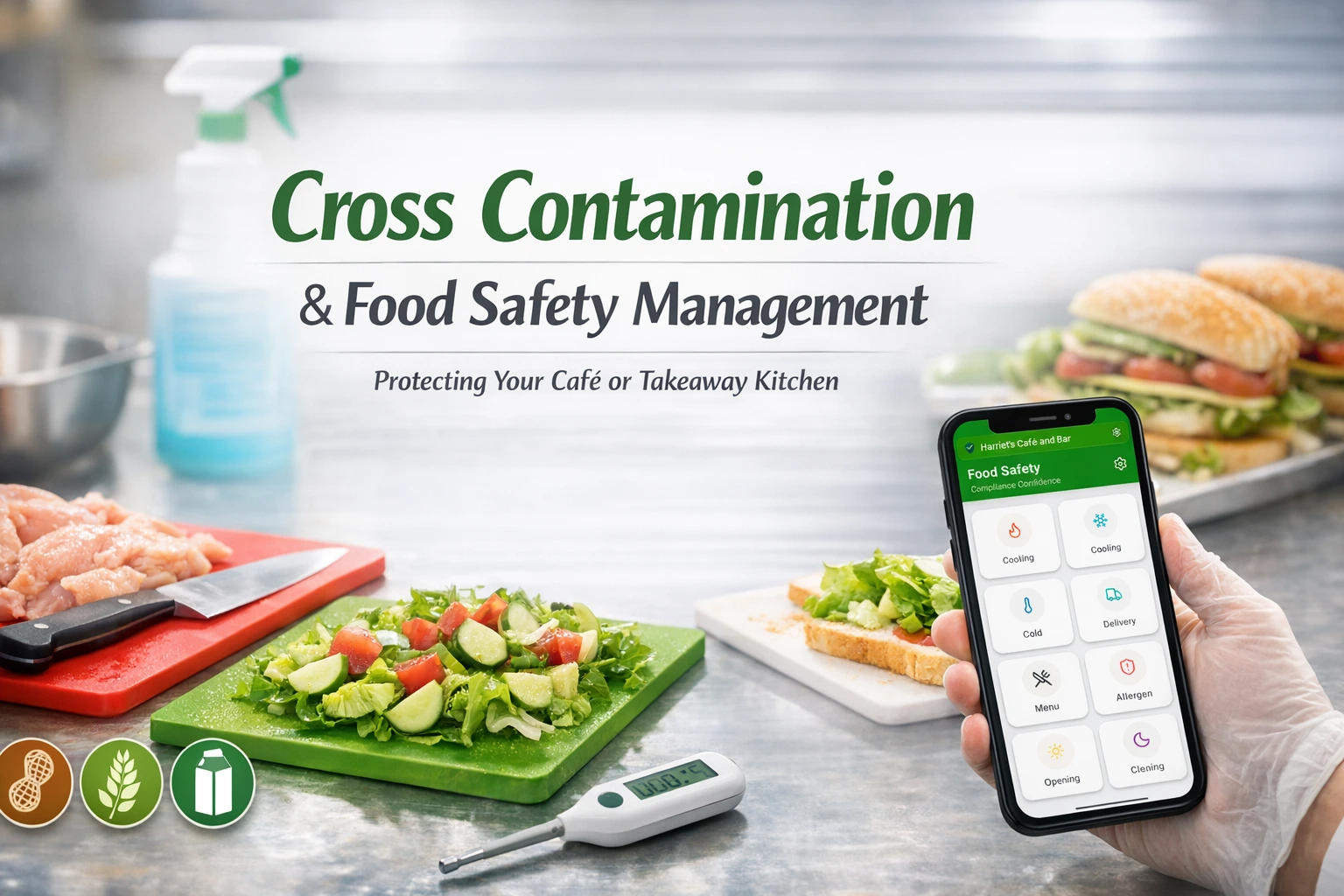
Worried about cross contamination in your café or takeaway? Good food safety management helps protect customers, meet UK regulations, and keep daily checks organised with a food safety app.
Table of Contents
- What is cross contamination?
- Why it matters for cafés and takeaways
- Common cross contamination risks
- How to prevent cross contamination
- The role of HACCP records and digital checks
- How good systems help improve your food hygiene rating
What is cross contamination?
Cross contamination happens when harmful bacteria, allergens, or other contaminants transfer from one surface, food, or person to another.
In catering environments, this often means bacteria moving from raw foods, equipment, or hands onto ready-to-eat food.
For example:
- Raw chicken juices dripping onto salad ingredients in the fridge
- A knife used for raw meat then used to slice bread
- Staff handling food without washing hands after touching bins or phones
Because many café and takeaway foods aren’t cooked again after preparation, contamination can reach customers directly.
The UK’s food hygiene rules require businesses to control these risks as part of their food safety procedures. The Food Standards Agency food hygiene guidance explains that preventing contamination is a core responsibility for every food business.
Why it matters for cafés and takeaways
Cafés and takeaway kitchens often work in smaller spaces with fast service and high turnover. That combination can increase the chances of mistakes.
Typical menu items such as:
- Sandwiches
- Salads
- Cakes and pastries
- Cooked rice dishes
- Prepared sauces
are all considered ready-to-eat foods.
If bacteria from raw meat, poultry, or unwashed produce reach these foods, they may cause food poisoning because there is no further cooking step to kill the bacteria.
Cross contamination can lead to:
- Customer illness
- Enforcement action from Environmental Health Officers
- Poor inspection outcomes
- Damage to reputation
That’s why good food safety management systems are essential for everyday operations.
Common cross contamination risks
Environmental Health Officers frequently identify the same issues in small catering businesses.
1. Fridge storage mistakes
Raw meat stored above prepared foods can drip onto ready-to-eat ingredients.
Best practice is to keep raw meat and poultry on the bottom shelf and ready-to-eat foods above.
2. Shared preparation equipment
Using the same chopping boards or knives for different foods without cleaning and sanitising can spread bacteria.
Many kitchens use colour-coded equipment to reduce this risk.
3. Poor hand hygiene
Hands are one of the most common sources of contamination.
Staff should wash their hands:
- Before preparing food
- After handling raw meat
- After touching waste, phones, or cleaning products
4. Cleaning cloth contamination
Reusable cloths that aren’t sanitised regularly can spread bacteria across work surfaces.
Disposable cloths or properly sanitised cloth systems are safer.
5. Allergen cross contact
Cross contamination isn’t only about bacteria. It can also involve allergens.
For example, using the same spoon for peanut sauce and a nut-free dish can create a serious risk. Effective allergen management is therefore a key part of safe food handling.
How to prevent cross contamination
Most prevention measures are straightforward and practical when they’re built into daily routines.
Separate raw and ready-to-eat foods
Where space allows, use different preparation areas for raw meat and ready-to-eat foods.
If that isn’t possible, schedule separate preparation times and clean thoroughly between tasks.
Use colour-coded equipment
Colour coding helps staff quickly identify which equipment should be used for each type of food.
Typical colour coding includes:
- Red – raw meat
- Blue – raw fish
- Green – salad and fruit
- Yellow – cooked meats
- Brown – vegetables
Clean and sanitise properly
Food preparation surfaces should be cleaned and sanitised between tasks.
Sanitisers should meet recognised standards such as BS EN 1276 or BS EN 13697.
Train staff regularly
Everyone involved in food preparation should understand cross contamination risks and the simple steps needed to prevent them.
Clear procedures and regular reminders help maintain consistency during busy periods.
The role of HACCP records and digital checks
Food businesses are legally required to follow food safety procedures based on HACCP principles.
These procedures typically include documenting:
- Cleaning schedules
- Fridge temperature checks
- Food preparation controls
- Staff hygiene practices
Keeping reliable HACCP records helps show that contamination risks are being actively managed.
However, paper systems can easily become incomplete or difficult to manage during busy service.
Using digital food safety records allows checks to be completed quickly and consistently. Digital systems can also make it easier to review procedures, track trends, and demonstrate compliance during inspections.
How good systems help improve your food hygiene rating
Cross contamination control is one of the areas inspectors pay close attention to.
Environmental Health Officers will often look at:
- Kitchen layout and food storage
- Cleaning systems
- Staff knowledge and training
- Documented safety procedures
Strong processes and clear documentation can help demonstrate that risks are well controlled.
This makes it easier for businesses to improve food hygiene rating outcomes during inspections.
Conclusion
Cross contamination is one of the most common causes of food safety problems in cafés and takeaway kitchens. Fortunately, the steps needed to prevent it are practical and manageable when clear procedures are in place.
Separating raw and ready-to-eat foods, maintaining good hygiene practices, and keeping accurate records all help reduce risks for customers and staff.
Many catering businesses are now choosing digital tools to support these processes. Food-Safety.app is a food safety management system for UK catering businesses designed to make daily checks, HACCP records, and digital food safety records easier to manage.
For busy food businesses, using a food safety app can help make compliance simpler, more consistent, and easier to maintain as the business grows.