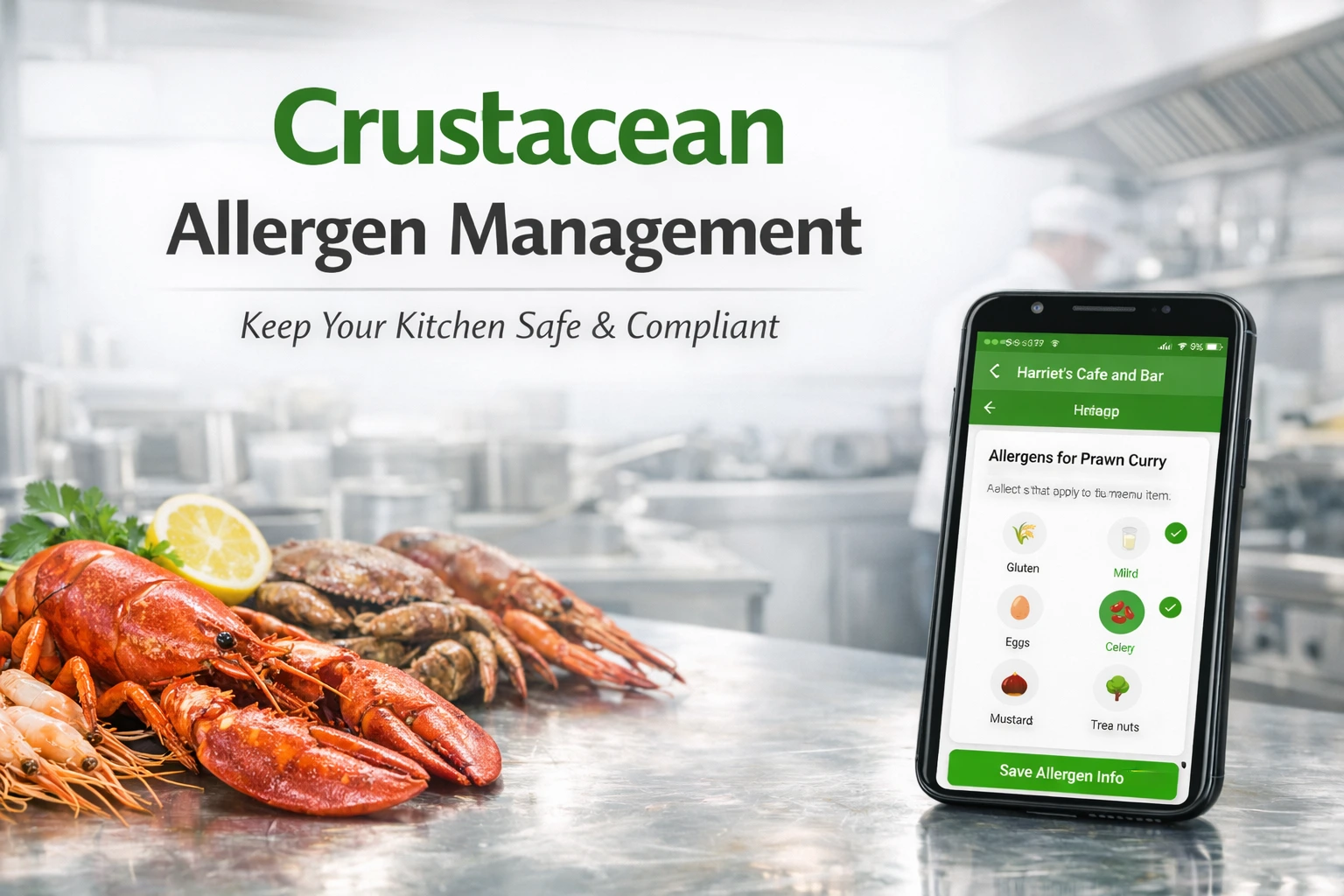
Managing crustacean allergens is essential for allergen management in UK kitchens, helping you stay compliant and protect customers using a reliable food safety management system.
Table of Contents
- What are crustaceans?
- Seafood that is not crustaceans
- UK legal requirements
- Practical steps for food businesses
- Common mistakes to avoid
- Using digital systems to stay compliant
What are crustaceans?
Crustaceans are one of the 14 major allergens that must be declared under UK food law. In a busy catering environment, they’re commonly found in dishes such as prawn curries, seafood pasta, and mixed grills.
Typical crustaceans include:
- Prawns and shrimp
- Crab
- Lobster, including scampi and langoustine
- Crayfish
Less obvious examples can include krill or ingredients like shrimp paste used in sauces.
For food businesses, the key point is simple: if any ingredient comes from a crustacean, it must be treated as an allergen. This applies whether it’s a whole prawn or a small amount of stock used in a soup.
Crustacean allergies can be severe and are often lifelong. Even tiny traces can cause serious reactions, so careful handling is essential.
Seafood that is not crustaceans
One of the most common areas of confusion is the term “seafood” or “shellfish”. These are not legal allergen categories in the UK.
Molluscs (separate allergen)
Molluscs are a different allergen group and include:
- Mussels
- Oysters
- Clams
- Scallops
- Squid and octopus
For example, a seafood chowder might contain both prawns (crustaceans) and mussels (molluscs). These must be declared separately.
Fish (another allergen)
Fish is also its own allergen category, including:
- Salmon
- Cod
- Tuna
- Haddock
Again, this must be identified independently from crustaceans.
Why this matters in practice
If a menu simply says “contains shellfish”, it isn’t compliant. Customers need clear, specific information so they can make safe choices.
UK legal requirements
Under UK law, crustaceans must always be clearly identified when used as an ingredient.
For full guidance, refer to the Food Standards Agency allergen guidance.
Labelling rules
- Prepacked food: allergens must be emphasised in the ingredients list
- Non-prepacked food: allergen information must be available and accurate
This includes restaurants, takeaways, cafés, and mobile caterers.
Natasha’s Law (PPDS)
If you prepare food on-site and package it for direct sale, you must provide full ingredient labelling with allergens clearly highlighted.
Food safety management responsibilities
Your food safety management system must include:
- Identification of allergen risks
- Controls to prevent cross-contact
- Clear communication procedures
Practical steps for food businesses
Managing crustacean allergens doesn’t have to be complicated, but it does require consistency.
1. Know your ingredients
Always check supplier information. Crustaceans can appear in:
- Sauces, such as shrimp paste
- Stocks and broths
- Seasoning mixes
Never assume — always verify.
2. Prevent cross-contact
In shared kitchens, this is one of the biggest risks.
Practical controls include:
- Separate storage for raw crustaceans
- Dedicated utensils where possible
- Thorough cleaning between tasks
For example, don’t use the same fryer oil for scampi and chips intended for an allergen-free order.
3. Keep allergen information accurate
Menus, allergen charts, and verbal communication must all match.
If you change a supplier or recipe, update your records immediately. This is where maintaining clear HACCP records becomes essential.
4. Train your team
Staff should understand:
- What counts as a crustacean
- The difference between crustaceans, molluscs, and fish
- Why removing an ingredient doesn’t make a dish safe
A simple example: picking prawns out of a pasta dish doesn’t remove the allergen risk.
Common mistakes to avoid
Even well-run kitchens can fall into common traps:
- Using vague terms like “seafood” instead of specific allergens
- Confusing molluscs with crustaceans
- Missing hidden ingredients like prawn stock
- Cross-contact through shared equipment
- Staff guessing allergen information
These issues can lead to non-compliance and, more importantly, put customers at risk.
Using digital systems to stay compliant
Keeping allergen information accurate across menus, recipes, and daily operations can be challenging, especially in busy kitchens.
Using digital food safety records can help by:
- Keeping allergen information up to date
- Making it easier for staff to check ingredients
- Supporting consistent record keeping
Food-Safety.app is a food safety management system for UK catering businesses. It helps bring together your allergen controls, records, and checks in one place, making day-to-day compliance more manageable.
Conclusion
Crustacean allergens are a serious risk that require clear identification, careful handling, and accurate communication. Understanding the difference between crustaceans, molluscs, and fish is a key part of staying compliant.
With the right processes in place — and support from a structured system — managing allergens becomes more consistent and less stressful. A digital approach can help you keep everything organised and give both your team and your customers greater confidence.