
Running a food business means juggling a lot. Orders, staff, stock, cleaning and customers all at once. Date marking can feel like just another task, but it’s one of the most important ones you do each day. Get it right and you protect your customers and your business. Get it wrong and the risks are serious.
This guide breaks down use-by dates, best before dates, in-house freezing, daily checks and safe disposal. It’s written for busy UK food businesses that want clear rules and practical tips.
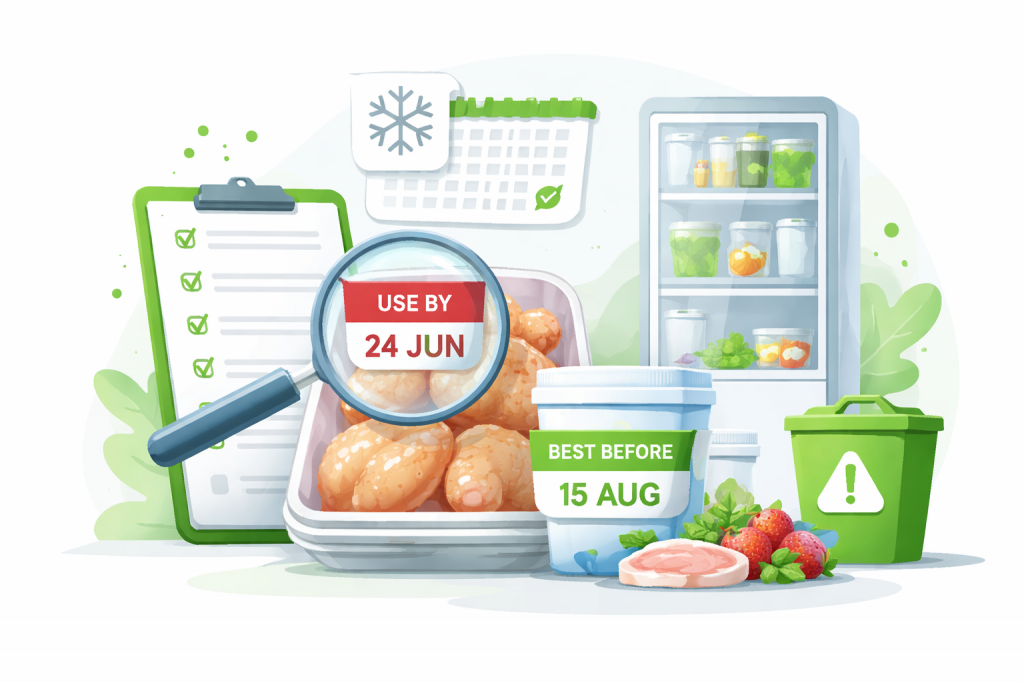
Why date marking really matters
Date labels are not just stickers. They tell you if food is safe to eat or just at its best quality. Environmental Health Officers will always check them. If you serve food past its use-by date, it’s a criminal offence. There’s no warning or grace period.
Clear date control also saves time and money. You waste less food, staff feel more confident and inspections are less stressful. Most problems come from simple mistakes that are easy to avoid.
Use-by dates explained
A use-by date is about safety. After this date, the food could make someone ill. It usually applies to high-risk foods that need chilling.
Common examples include:
- Cooked meats
- Fresh ready meals
- Dairy products
- Prepared salads
- Smoked or cured fish
Once the use-by date has passed, the food must not be sold, served or used. It doesn’t matter how it smells or looks. It must be thrown away.
Key rule to remember
Serving food past its use-by date is a criminal offence. There are no exceptions.
Everyday example
You find cooked chicken in the fridge. The use-by date was yesterday. It looks fine and smells fine. It still goes in the bin. Using it could put customers at risk and land you in serious trouble.
Best before dates explained
Best before dates are about quality, not safety. Food is still safe to eat after this date, but it may not taste or feel as good.
These dates are usually found on:
- Dry goods like rice and pasta
- Tinned foods
- Biscuits and snacks
- Sauces and condiments
You can still use food past its best before date in a food business, but only if it’s been stored correctly and is in good condition.
What to check before using it
- The packaging is intact
- There’s no mould or damage
- The smell and appearance are normal
If in doubt, don’t use it. Quality still matters to your customers.
In-house freezing and date marking
Freezing food can be a great way to reduce waste, but it must be done properly. There are clear rules around freezing food in-house.
Freezing before the use-by date
You must freeze the food before the use-by date expires. Freezing does not extend an expired use-by date. If the date has passed, it’s too late.
Relabelling frozen food
When you freeze food, you need a new label. It should include:
- The name of the food
- The date it was frozen
- A new use-by date after defrosting
A common rule is to use food within 24 hours once it’s fully defrosted, unless your safety checks say otherwise.
Simple freezing example
You have fresh mince with a use-by date of Friday.
You freeze it on Wednesday.
You label it with the freeze date.
You defrost it later and use it within your set defrost time, often 24 hours.
If you don’t relabel it properly, staff won’t know what’s safe to use.
Setting up clear SOPs for date checks
A Standard Operating Procedure, or SOP, keeps everyone working the same way. It removes guesswork and stops mistakes.
Daily date checks
Every fridge and freezer should be checked every day. This includes:
- Delivery fridges
- Prep fridges
- Display fridges
- Freezers
Checks should be done at a set time, often at the start of the day.
What staff should look for
- Items past their use-by date
- Missing or unclear labels
- Faded writing
- Opened foods without a date
Anything unsafe should be removed straight away.
Make it easy for staff
- Use clear labels
- Write dates in plain numbers
- Keep a simple checklist
- Train new starters on day one
If it’s easy, it gets done. If it’s confusing, it gets skipped.
The disposal protocol for expired food
When food is past its use-by date, action must be immediate. There’s no holding area and no second chance.
Correct disposal steps
- Remove the item from the fridge straight away
- Place it in the correct waste bin
- Make sure it can’t be reused by mistake
- Clean any containers or shelves if needed
Never leave expired food on a counter or in a staff area. It could be picked up and used by accident.
Why speed matters
The longer expired food stays in the kitchen, the higher the risk. Clear rules protect staff from making the wrong call under pressure.
Common date marking mistakes to avoid
Even well-run kitchens slip up. These are some of the most common problems seen during inspections.
- Mixing use-by and best before rules
- Forgetting to relabel frozen food
- Stacking new stock in front of old stock
- Relying on memory instead of labels
- Skipping daily checks on busy days
Good systems beat good intentions every time.
Building a strong food safety routine
Date marking works best when it’s part of a wider routine. Link it to:
- Stock rotation
- Cleaning schedules
- Delivery checks
- Staff training
When everyone understands why it matters, compliance becomes normal, not stressful.
A calm, organised kitchen is safer, faster and easier to manage.
Making food safety simpler
Date control doesn’t need to be complicated. Clear rules, simple labels and daily checks go a long way. When systems are easy, staff follow them and mistakes drop.
If you’d like a simpler way to manage date checks, freezing records and daily food safety tasks, it’s worth exploring how a Food Safety App can save time and reduce stress. Small changes can make a big difference to how your business runs every day.