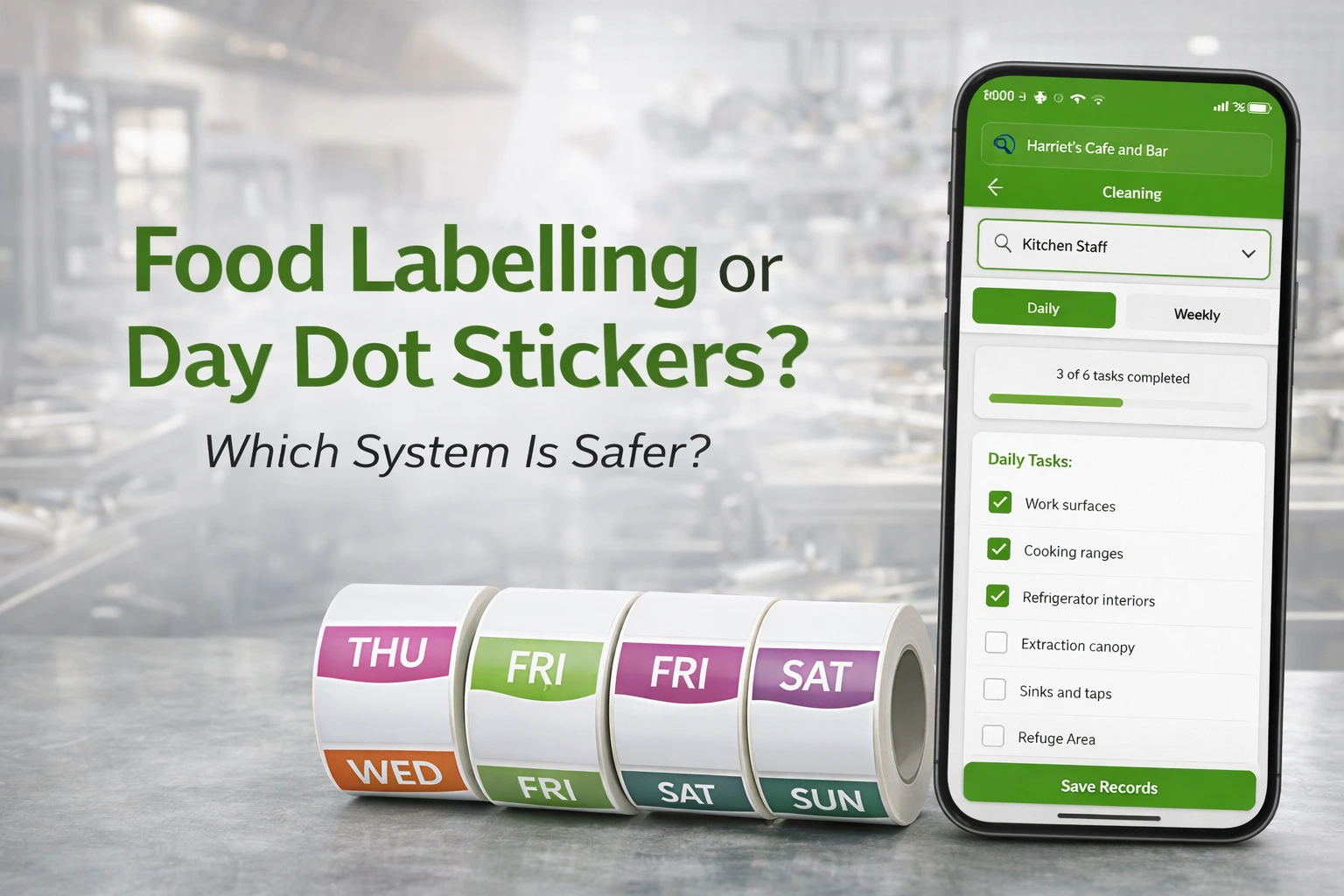
Unsure how to manage food labelling and day dot stickers? This guide explains simple food safety management systems for UK kitchens using Food-Safety.app.
Table of Contents
- What are day dot stickers?
- Do you legally need them?
- What’s the best labelling system?
- How does this fit with SFBB and HACCP records?
- Common mistakes to avoid
- How to simplify your food safety management
What are day dot stickers?
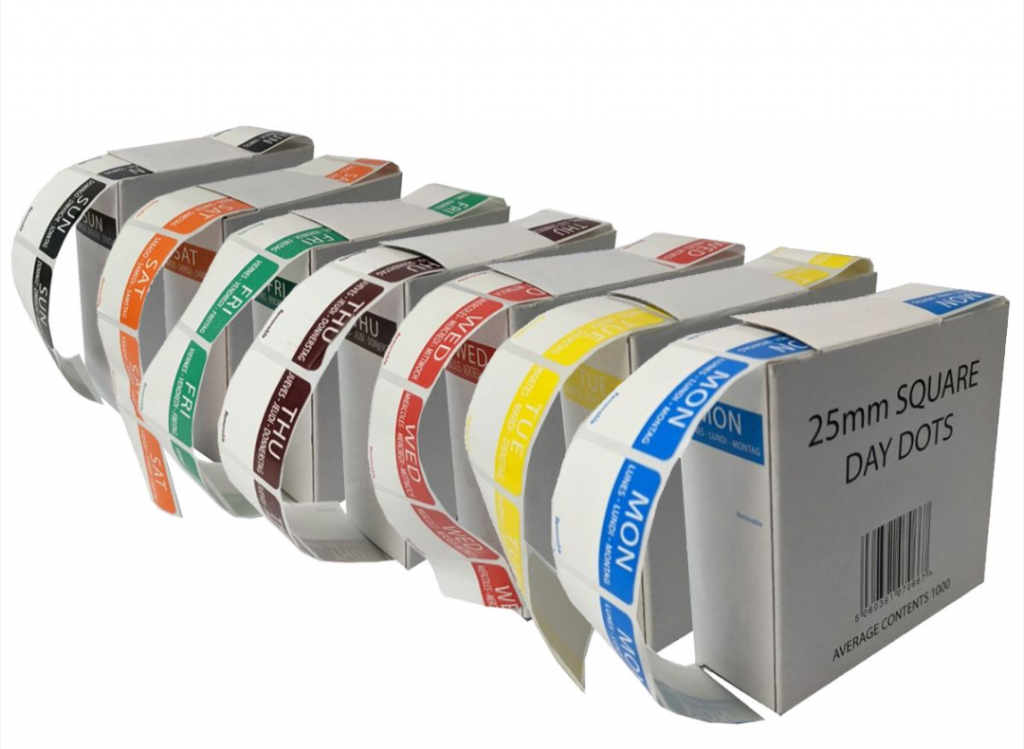
Day dot stickers are colour-coded labels used in kitchens to show when food was prepared or opened, and when it should be used or thrown away.
You’ll often see them in fridges, on prep containers, or on sauces and cooked items. Each day of the week is assigned a colour, helping staff quickly identify how old something is without reading detailed labels.
They’re popular in busy catering environments because they’re quick and visual. However, they’re only one part of a wider food safety management system.
Do you legally need day dot stickers?
No — there’s no UK law that says you must use coloured stickers.
What the law does require is that you keep food safe to eat, clearly manage shelf life, follow effective stock rotation, and maintain accurate HACCP records.
The Food Standards Agency (FSA) expects you to have clear systems in place to prevent unsafe food being served.
Day dots can help with this, but they’re not enough on their own.
What’s the best labelling system for food safety management?
The best approach is a combination of clear written labels and a consistent system, rather than relying on colour alone.
Use clear written labels
Every prepared or opened food item should include what the food is, the date it was prepared or opened, and the use-by or discard date.
This is especially important for foods linked to allergen management, where mislabelling can pose serious risks.
Use colour coding as a support tool
Colour-coded day dots can still be useful. They speed up checks during busy service, help new staff quickly spot older items, and support FIFO stock rotation.
But colours vary between suppliers, and without a clear chart, staff can easily get confused.
Keep your system consistent
Whatever system you choose, use the same colours and rules across your whole business, display a clear guide in prep areas, and train all staff, including temporary workers.
Consistency matters more than the specific colours you choose.
How does this fit with SFBB and HACCP records?
Labelling and day dot systems are part of your wider food safety management responsibilities.
If you’re using SFBB, you’ll already be expected to control safe storage times, monitor chilled food, and keep accurate HACCP records.
Day dots support these controls by making it easier to see whether food is still safe to use.
However, inspectors won’t just look for stickers — they’ll look for clear procedures, staff understanding, and consistent application.
A well-managed system helps protect your food hygiene rating and reduces the risk of enforcement action.
Common mistakes to avoid
Relying only on colour
Colours alone don’t tell you everything. Without dates, staff may guess — and that’s where mistakes happen.
No clear shelf-life rule
A common industry approach is the 72-hour rule for prepared chilled foods, unless you’ve validated a different shelf life.
Without a defined rule, staff may keep food too long.
Inconsistent use across teams
If one shift labels properly and another doesn’t, your system breaks down quickly.
Unreadable or missing labels
Faded ink, missing stickers, or unclear handwriting can all lead to unsafe decisions.
No staff training
New or agency staff may not understand your colour system unless it’s clearly explained.
How to simplify your food safety management
Keeping on top of labelling, shelf life, and records can be difficult, especially in a busy kitchen.
That’s where digital tools can help.
Using digital food safety records allows you to standardise labelling rules across your team, track preparation and discard dates clearly, keep consistent HACCP records, and support better decision-making during inspections.
Food-Safety.app is a food safety management system for UK catering businesses. It helps bring together your labelling, monitoring, and compliance tasks into one simple system.
Conclusion
Day dot stickers can be a helpful tool, but they work best when combined with clear written labelling and consistent procedures.
The key is making sure your team understands and follows the same system every day. That’s what keeps food safe, protects your reputation, and supports your food hygiene rating.
If your current system feels inconsistent or hard to manage, it may be worth exploring a digital approach. A structured food safety management system can make compliance simpler, clearer, and easier to maintain across your whole business.