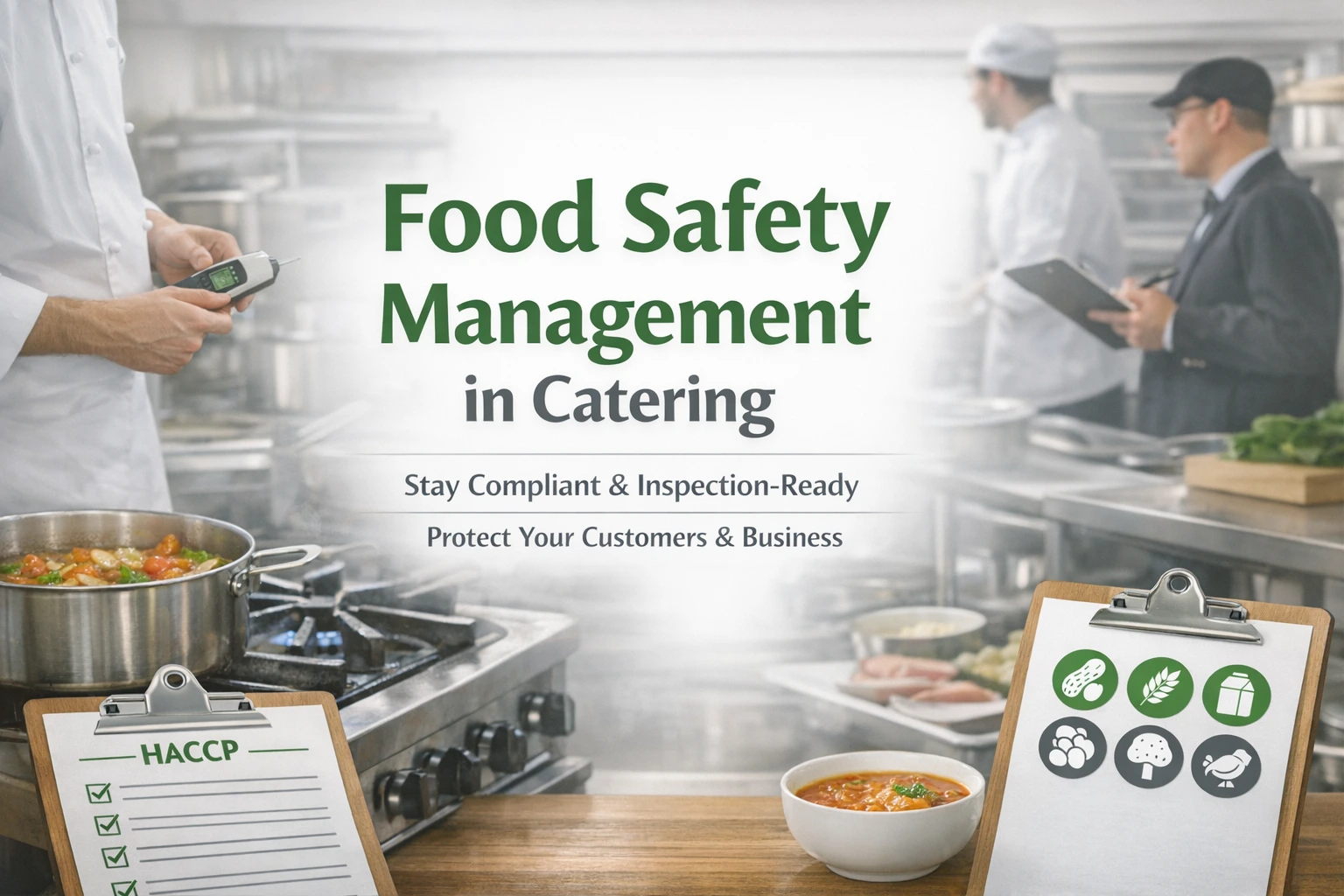
Food safety management doesn’t have to feel like a mountain of paperwork you can’t climb. If you run a kitchen in the UK, you’re in the right place. This guide explains what food safety management really means, who’s responsible, and how digital tools can help busy catering businesses stay compliant and inspection-ready.
Table of Contents
- What Food Safety Management Means in Practice
- Who Is Responsible for Food Safety?
- Why Food Safety Management Matters Day to Day
- Common Compliance Problems in Catering Businesses
- Using Digital Food Safety Records to Stay in Control
- Conclusion: Making Food Safety Easier to Manage
What Food Safety Management Means in Practice
Food safety management is the system you use to make sure the food you prepare and sell is safe to eat. In the UK, this isn’t guidance or best practice — it’s a legal requirement.
Every catering business must identify food safety risks, put controls in place, and keep records to show those controls are working. This is usually done through procedures based on HACCP principles, covering things like temperature control, cleaning, cross-contamination and allergen management.
Importantly, food safety management isn’t just about having documents. Inspectors want to see that safe practices are followed every day, especially during busy service.
Who Is Responsible for Food Safety?
Owners and managers
If you own or run a food business, you’re legally classed as the food business operator. This means you carry overall responsibility for food safety management in your premises.
If unsafe food is sold or hygiene standards slip, enforcement action is usually taken against the owner or operator — even if the mistake was made by a member of staff. That’s why having clear systems, up-to-date HACCP records and proper supervision matters.
The Food Standards Agency sets out these legal duties clearly in its guidance on food safety and hygiene responsibilities, which inspectors use as a benchmark during inspections.
Everyone handling food
Food safety responsibility doesn’t stop with the owner. Every member of staff who handles food has a personal duty to work safely.
This includes:
- Following hygiene procedures
- Checking and recording temperatures
- Preventing cross-contamination
- Reporting illness
- Handling allergens correctly
Managers are expected to make sure staff understand what’s required of them. The Food-Safety.app article on running a safer kitchen explains how responsibilities should be shared across a team and built into daily routines.
Why Food Safety Management Matters Day to Day
Good food safety management protects people first, but it also protects your business.
When systems work well:
- Food safety checks happen even during busy periods
- Staff know what to do without guessing
- Inspections are less stressful because records are easy to show
- You’re more likely to improve your food hygiene rating
Inspectors don’t just look at paperwork. They watch how food is handled, how staff behave, and whether procedures are actually followed. If records are missing or staff don’t understand controls, this can lead to lower scores or enforcement action.
Common Compliance Problems in Catering Businesses
Many food safety issues don’t come from bad intentions — they come from pressure, gaps in systems, or unclear responsibilities.
Common problems include:
- Paper records filled in late or not at all
- HACCP records that don’t match what’s happening in the kitchen
- Poor allergen management between front-of-house and kitchen
- No clear process for checking food deliveries
Delivery checks are a frequent weak point. If unsafe food enters your kitchen, every control after that is compromised. The Food-Safety.app post on deliveries and receipt of food breaks down what inspectors expect and how to make checks routine.
Using Digital Food Safety Records to Stay in Control
This is where digital food safety records can make a real difference.
A food safety management system like Food-Safety.app replaces clipboards and folders with simple digital checks that fit into real working days. Records are time-stamped, stored securely and easy to retrieve during inspections.
For catering businesses, this helps by:
- Keeping HACCP records consistent and complete
- Supporting allergen management with clear, accessible information
- Reducing missed checks during busy services
- Making it easier to demonstrate compliance to inspectors
Many businesses also find that consistent digital records help them improve their food hygiene rating by showing inspectors clear evidence of control.
Conclusion: Making Food Safety Easier to Manage
Food safety management is a legal responsibility for every UK catering business, but it doesn’t have to be complicated or time-consuming.
Clear systems, trained staff and reliable records help you stay compliant, protect customers and run your kitchen with confidence. Inspectors want to see that food safety is actively managed — not just written down.
Food-Safety.app is a food safety management system for UK catering businesses that helps turn daily checks into simple digital routines. By keeping food safety management organised and consistent, it supports safer kitchens and more confident inspections without adding unnecessary workload.