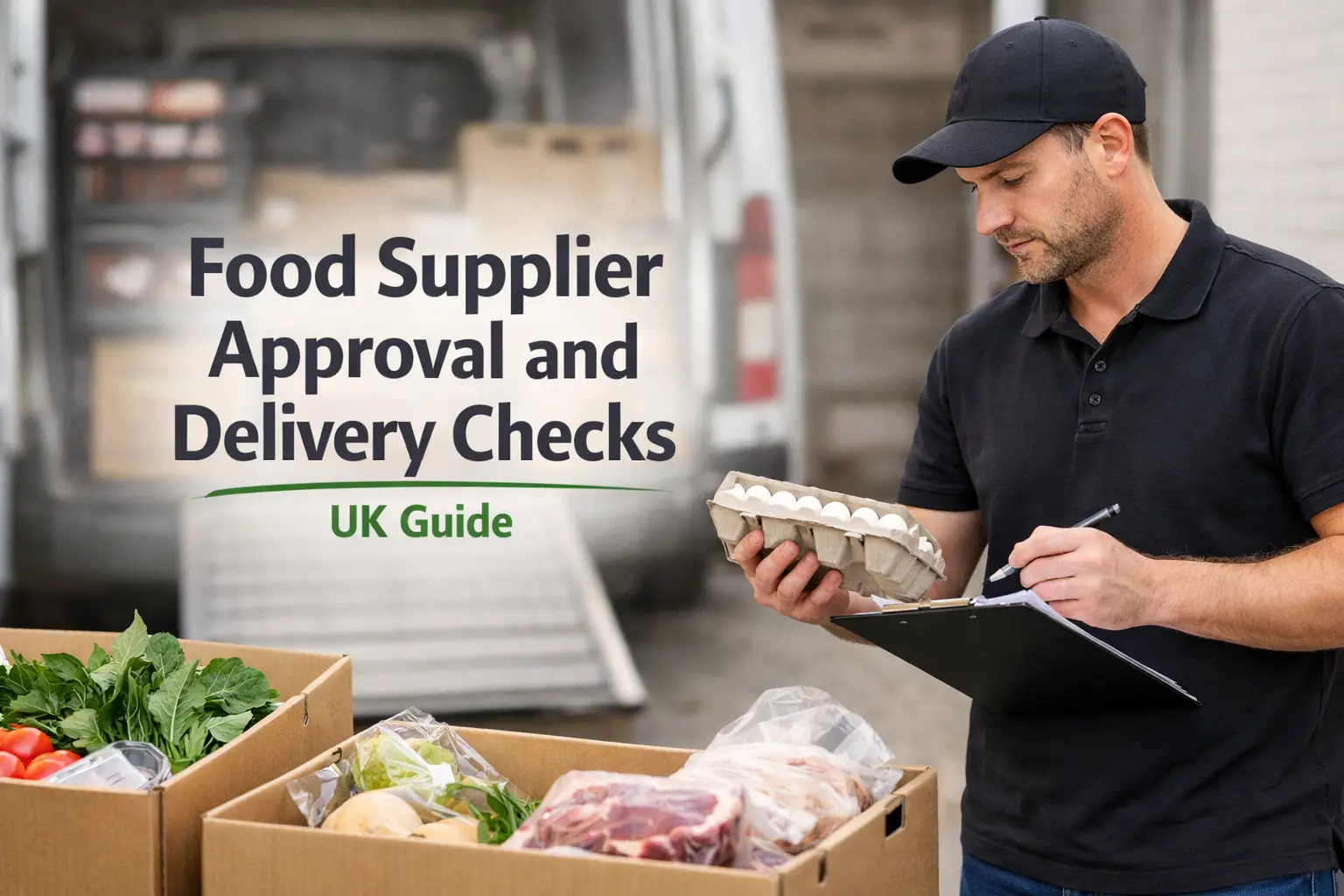
Unsafe food often enters through poor deliveries. Learn how to check suppliers inspect stock reject problems and keep simple traceability records.
Table of contents
Why supplier control matters
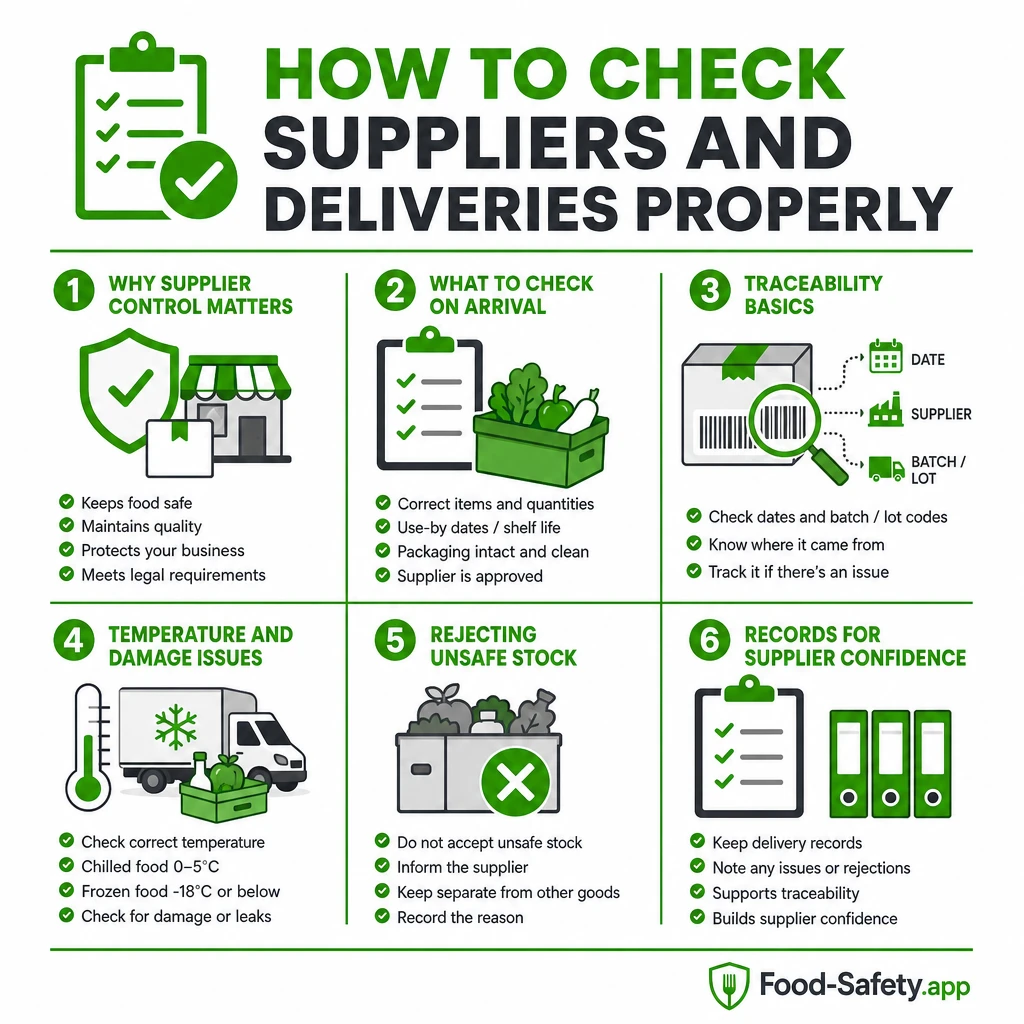
Effective supplier control reduces risk before food enters storage or production. In a busy commercial kitchen, small oversights can lead to waste, regulatory issues, or customer complaints. A clear goods‑in process helps you spot problems early, authorise corrective actions with suppliers, and protect margins and reputation.
Preventing waste and recalls
Detecting compromised stock at delivery stops problems before it propagates through recipes or storage. Promptly isolating or returning items saves waste and lowers recall risk.
Linking to supplier approval
Delivery checks should link to supplier approvals and documented corrective actions. This creates a straightforward trail for audits and demonstrates due diligence in your food safety management.
What to check on arrival
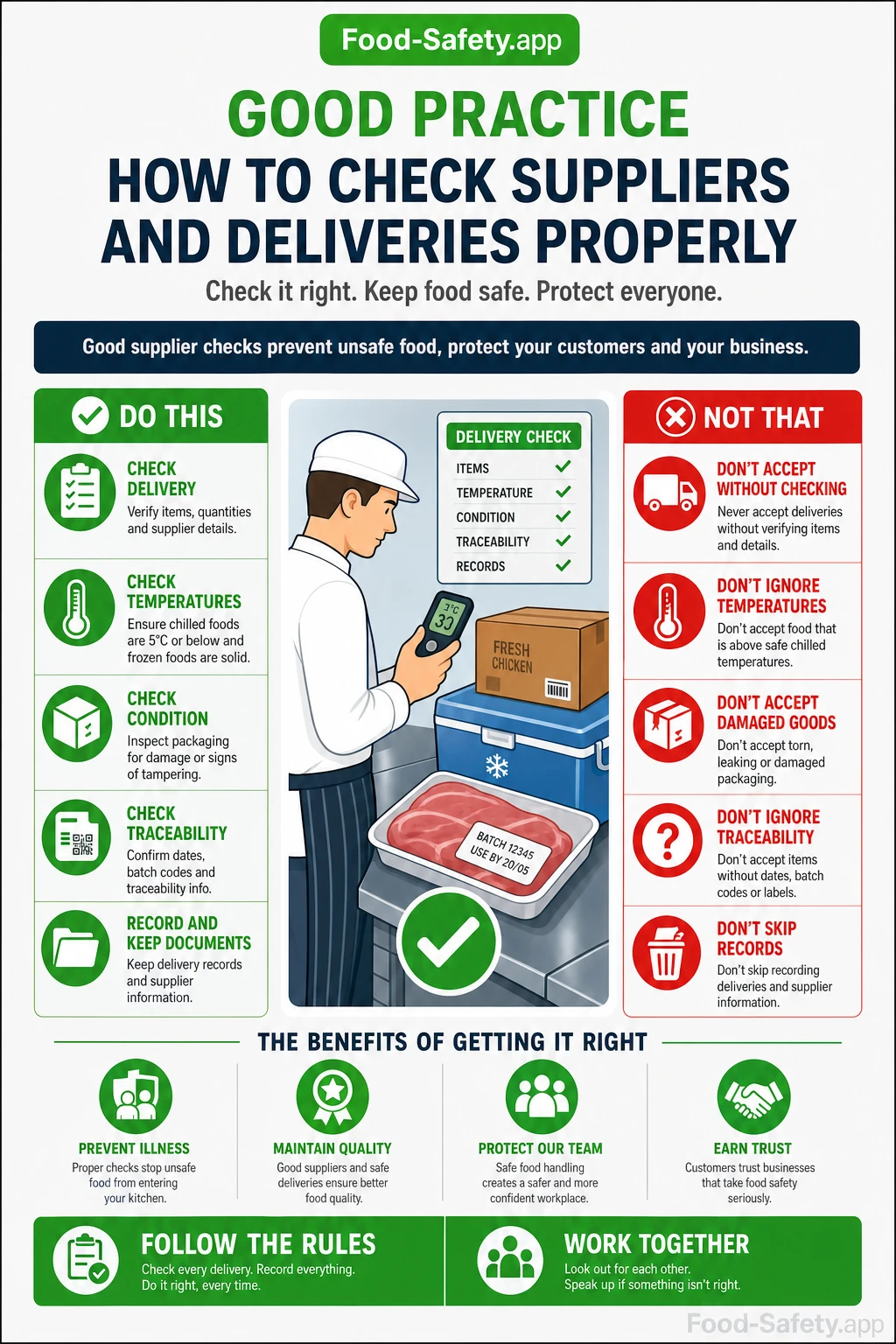
- Correct supplier and delivery vehicle
- Product details match order (item, size, quantity)
- Dates and use‑by or best‑before dates present and legible
- Packaging and labels intact, including seals
- Batch codes or lot numbers visible where applicable
- Delivery notes match items received
- Items in reasonable condition for transport and storage
- Any discrepancies are logged and acted on promptly
For practical steps on reducing cross-contact during deliveries, see how cleaning stops allergen cross-contact.
Temperature checks
- Prepare a simple goods‑in temperature log for each delivery, with time, item, and initial reading
- Chilled foods should be maintained at 5°C or below where possible; check a representative item with a probe or calibrated thermometer
- Frozen items should be at or below –18°C; confirm with a probe and document the reading
- If any item is above these targets, isolate it, record the reading, and notify the supplier for action
- Record the action taken (accept, query, or return) and follow up as needed
For practical temperature checking tips, see delivery temperature checks.
Damage and contamination issues
- Torn or wet packaging, leaks, or visible pest damage
- Signs of thawing in frozen goods or condensation on chilled items
- Mould, unusual odour, or visible spoilage on fresh produce or dairy
- Damaged or compromised seals on tins, jars, or cartons
- Any contamination risk requires immediate separation and escalation
Support your team with practical cross-contamination training. See cross-contamination training that staff remember.
Traceability basics
- Record batch codes and product details for each item
- Keep supplier details and delivery notes with the goods‑in log
- Ensure a clear paper trail exists to trace back to the supplier and transport
- Link delivery records to your allergen and recall procedures
For official guidance on traceability and supplier controls, see the Food Standards Agency: Food Standards Agency.
Link delivery records to your allergen and recall procedures. For more on allergen data management, learn how to create an allergen matrix for your menu.
When to reject stock
- Unsafe temperatures on delivery or during transit
- Broken seals or compromised packaging
- Missing or unreadable traceability information
- Damage that could compromise safety or hygiene
- Signs of spoilage, infestation, or contamination
- Inaccurate or incomplete delivery details or items not matching order
For practical HACCP and record-keeping, see what is haccp in food safety management.
Recording decisions
- Accepted items: note time, item, batch, temperature, and where stored
- Rejected items: specify reason, quantity, and supplier discussion or return method
- Query items: document observations and action required from supplier
- Returned or replaced items: record return reason, date, and follow‑up steps
For practical allergen handling and staff training, see allergen training for new and agency staff.
Practical examples or scenarios
- A chilled delivery arrives too warm after an external transport delay
- Frozen goods show ice crystals and damaged packaging
- Fresh produce arrives with mould or bruising beyond acceptable limits
- A replacement item arrives without the correct label or batch code
- A partial delivery arrives with one item rejected and the rest accepted
Improve staff allergen awareness and handling with dedicated training. See how-to-train-new-staff-without-missing-food-safety.
Recommended compliance or operational focus
- Build a simple goods‑in routine for every delivery
- Train staff to check consistently, not just when problems are obvious
- Link delivery checks to supplier approval and corrective actions
- Keep records ready for audits, inspections, and internal reviews
Food-Safety.app, a food safety management system for catering businesses, helps record goods‑in checks with temperature, condition, and delivery details, timestamp entries automatically, and keeps a clear history for supplier control and traceability.
Food safety management for deliveries
Discover how Food-Safety.app helps you automate goods in checks, maintain detailed traceability, and support supplier controls across busy deliveries and audits.