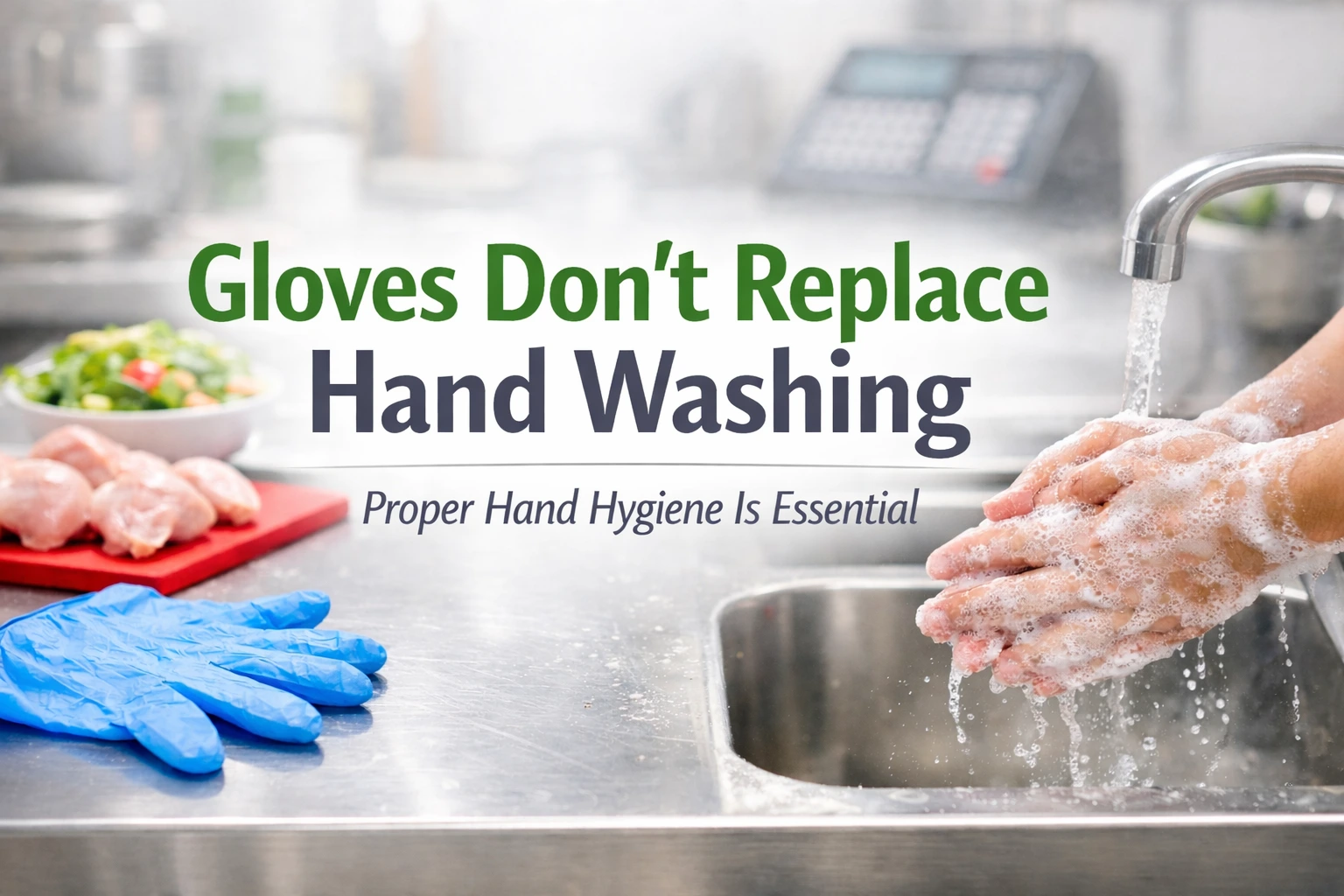
If you run a catering business, you already know that strong food safety management starts with the basics. This guide explains why gloves don’t replace hand washing, and how using the right systems, including digital food safety records, helps you stay compliant and confident.
Table of Contents
- Why gloves aren’t enough
- What the law says about hand hygiene
- When gloves should be used
- Common mistakes with gloves
- Making compliance easier with digital records
Why gloves aren’t enough
It’s common to see staff wearing disposable gloves in kitchens, cafés and takeaways. They look hygienic and professional. But gloves can spread contamination just as easily as bare hands if they’re not used properly.
Gloves become contaminated when staff:
- Handle raw chicken, then touch salad or bread rolls
- Use the till and go straight back to food prep
- Touch bins, door handles or phones
- Wear the same pair for long periods
Once contaminated, gloves transfer bacteria and viruses to anything they touch. They don’t “kill” germs – they simply cover the hands.
That’s why effective hand washing is still one of the most important controls in any food business.
What the law says about hand hygiene
UK food hygiene law requires food handlers to maintain a high standard of personal cleanliness. Under Regulation (EC) 852/2004 (retained in UK law), businesses must provide suitable hand washing facilities and prevent contamination.
According to guidance from the Food Standards Agency , staff must wash their hands:
- Before starting work
- After using the toilet
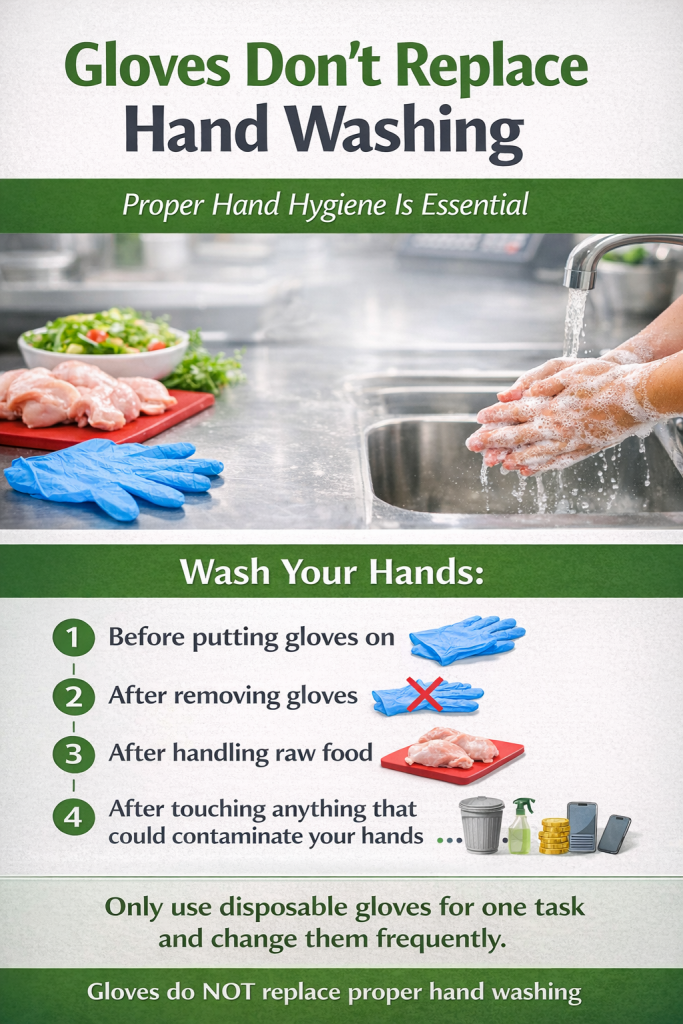
- After handling raw food
- After touching waste, cleaning chemicals, or their face and hair
- After any activity that could contaminate hands
Importantly, hands must be washed:
- Before putting gloves on
- After removing gloves
There is no legal basis for treating gloves as a replacement for hand washing. In fact, failing to wash hands properly can lead to cross-contamination, enforcement action and a lower hygiene score.
If you’re aiming to improve food hygiene rating, visible and consistent hand hygiene is essential.
When gloves should be used
Gloves can be helpful in certain situations, especially when handling ready-to-eat (RTE) foods such as sandwiches, cakes or cooked meats.
They’re also useful:
- To cover a blue waterproof dressing
- When staff have minor skin conditions
- In high-risk areas where direct contact with RTE food can’t be avoided
However, gloves must be:
- Single-use and disposable
- Changed between tasks
- Changed between raw and ready-to-eat food
- Replaced immediately if torn or contaminated
They’re just one control within your wider HACCP records and procedures. If your risk assessment doesn’t justify gloves, using utensils such as tongs or deli paper may be a better option.
Common mistakes with gloves
Environmental Health Officers regularly see similar issues during inspections.
1. Not washing hands before putting gloves on
If hands are dirty when gloves go on, contamination is sealed inside. Bacteria multiply in the warm, moist environment.
2. Wearing the same gloves for too long
Gloves should be task-specific. If a member of staff is prepping salads, then answers the phone, they must change gloves and wash hands before returning to food.
3. Handling money and food with the same gloves
Cash and card machines carry bacteria. Gloves must be changed after handling payments.
4. Assuming gloves fix poor systems
Gloves don’t compensate for gaps in training, weak supervision, or incomplete documentation. They’re not a shortcut.
Repeated issues in these areas can affect your inspection outcome and make it harder to improve food hygiene rating over time.
Making compliance easier with digital records
Strong digital food safety records make it easier to manage hand hygiene expectations clearly and consistently.
Instead of relying on memory or paper files, you can:
- Record staff training on hand washing and glove use
- Build hand hygiene checks into daily routines
- Keep clear, up-to-date HACCP records
- Demonstrate due diligence during inspections
Food-Safety.app is a food safety management system for UK catering businesses. It supports structured food safety management by helping you organise procedures, checks and training in one place.
For example, you can include:
- Clear hand washing rules in your documented procedures
- Task-based reminders for glove changes
- Digital monitoring that shows you’re actively managing risks
This doesn’t replace good practice in the kitchen. It supports it.
The bottom line
Gloves can be useful, but they don’t replace hand washing. In many cases, they can create new risks if they’re not changed properly or if staff skip hand hygiene.
The safest approach is simple:
- Train staff properly
- Make hand washing easy and accessible
- Use gloves only where risk assessment supports it
- Document everything clearly
When your systems are consistent and well recorded, inspections feel less stressful and standards are easier to maintain.
If you’re reviewing your procedures, it may be worth looking at how a digital food safety management system could help you keep hand hygiene, glove use and HACCP records organised and up to date. Food-Safety.app is a food safety management system for UK catering businesses designed to make day-to-day compliance clearer and more manageable.